On this page

The Best Sleeping Pads for Bikepacking (2026)

The pad decides whether you are warm, not the quilt. Cold ground pulls heat out of you faster than cold air does, and the number that governs it is printed on every box and read by almost nobody.

Published August 18, 2026
Edited by Louis Raveton
When you purchase through links on our site, we may earn an affiliate commission. Here's how it works.
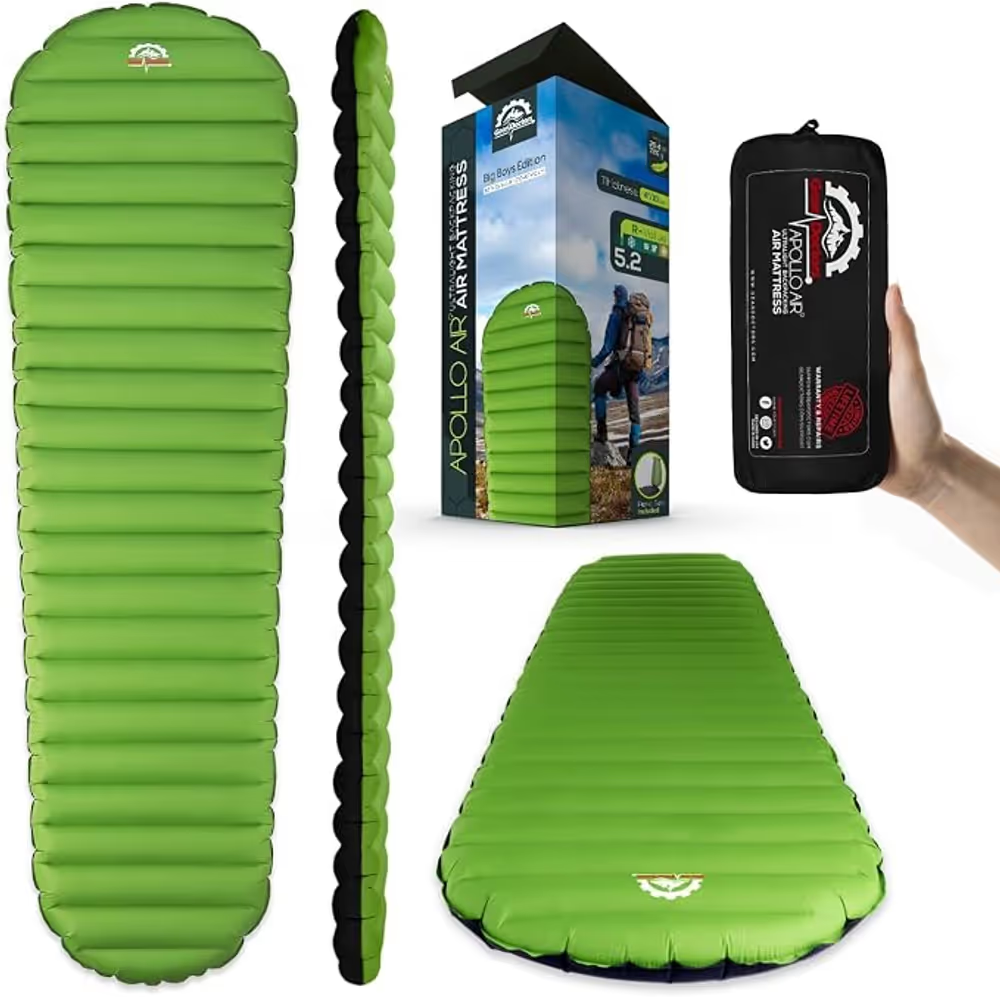
Gear Doctors ApolloAir Sleeping Pad (R5.2), our top pick in The Best Sleeping Pads for Bikepacking (2026)

Most people buy a sleeping bag first and a pad second, which is the wrong way round. Conduction into cold ground moves heat out of you faster than convection into cold air, so on any night below about 10°C your pad is doing more of the work than your quilt. A 350 dollar quilt on an R1.5 pad is a cold night with an expensive receipt.

These nine are ranked on R-value first, packed volume second, and comfort third. Packed volume gets unusual weight here because bikepacking luggage is constrained by space more than by weight, and a pad that stuffs into a corner of a seatpack is worth more than one that is 80 g lighter and takes up twice the room.

Nine pads spanning 42 to 229 dollars, from a summer mat to a winter-rated slab. Some links here are affiliate links, which is how the site pays for itself, and none of them moved a score.

Editor's Choice

  • Rated 5.2 R-value at 482g
  • Packs to roughly a one-litre bottle
  • A third the price of the premium equivalents
$73.73
Checked Aug 2026
Buy on Amazon

Quick Comparison

Sort
Best for Ultralight Sleep
  • R_Value 4.5
  • Thickness 7.6 cm
  • Packed_Size 23 x 10 cm
  • Weight 370 g
Best for Winter Camping
  • R_Value 7.3
  • Type Insulated inflatable
  • Season Four season
  • Range Winter and high altitude
Best for Shoulder Season
  • R_Value 5.2
  • Weight 17oz / 482g
  • Type Insulated inflatable
  • Season Three season into shoulder
Best for Three Season
  • R_Value 4.6
  • Weight 27oz / 765g
  • Type Insulated inflatable
  • Season Three season
Best for Sleep System
  • Thickness 10cm / 4in
  • Weight 560g / 19.7oz
  • RValue 1.6
  • Material 40D Nylon
Best for Side Sleepers
  • R_Value 7.2
  • Thickness 4 inches
  • Type Insulated inflatable
  • Season Three season into winter
Best for Summer Sleep
  • Weight 460g / 16.3oz
  • R_Value 1.3
  • Thickness 6.3 cm
  • Packed_Size 7.6 x 20.3 cm
Best for Budget Insulated
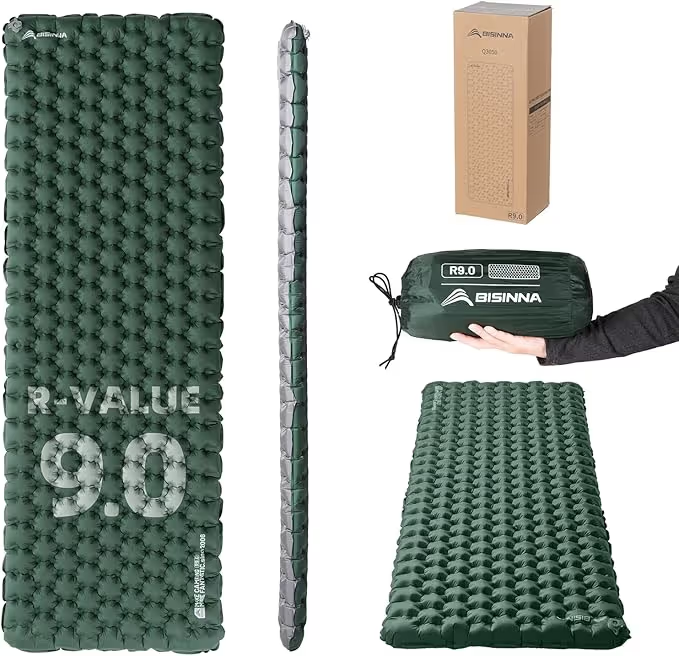
  • R_Value 9.0 claimed
  • Weight 26.6oz / 754g
  • Type Insulated inflatable
  • Season Claimed four season
Best for Summer Camping
  • R_Value 1.5 (ASTM)
  • Thickness 5 cm
  • Packed_Size 1.7 L
  • Weight 510 g

The Pad Is The Sleep System

If you take one thing from this page, take this: your quilt rating assumes a decent pad underneath it.

Ground conducts heat away from you far more efficiently than air convects it. That is why you can be comfortable standing in 5°C air in a light jacket and freeze lying on 5°C ground in a sleeping bag. It is also why every cold-night story we get sent has a cheap pad in it somewhere.

This matters more if you use a quilt, because a quilt has no insulation underneath you at all by design. The pad is not part of the system, it is half of it.

What Each One Is For

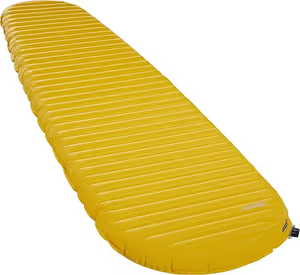
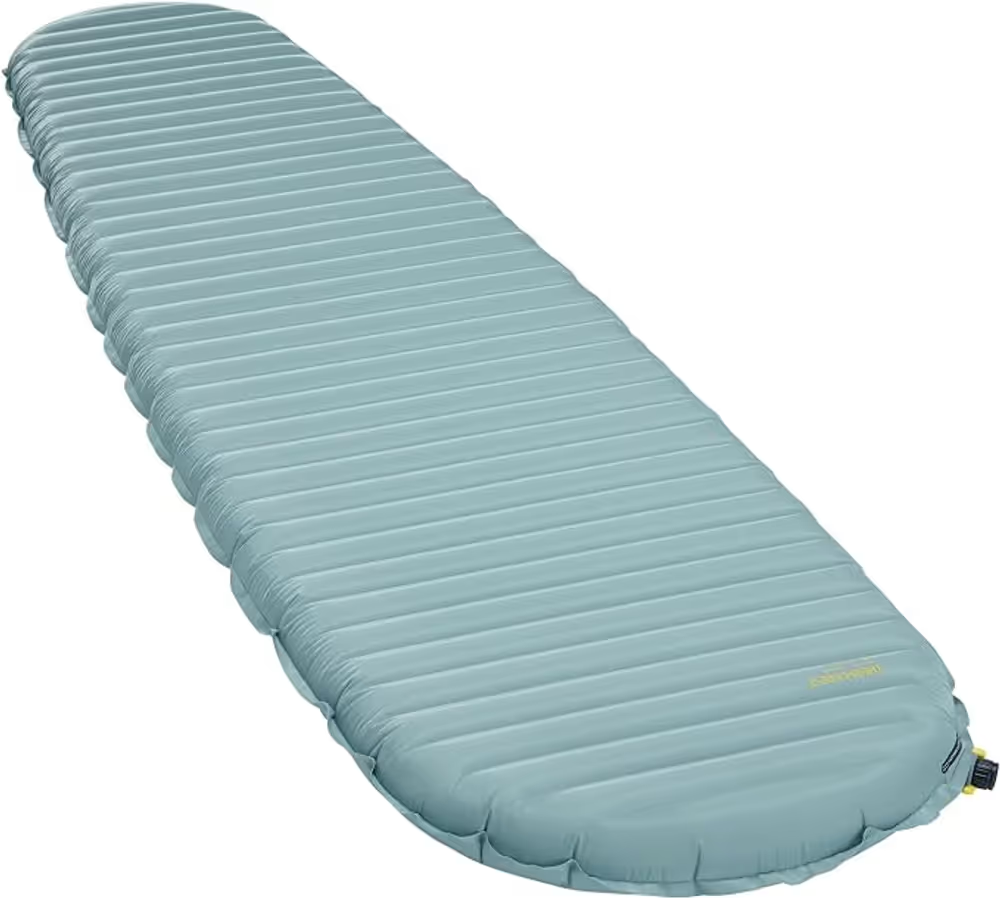
The NeoAir XLite NXT is the pad to buy if you can. R4.5 at 370 g in a package the size of a 1 litre bottle is a combination nothing else here approaches, and the NXT revision fixed the crinkling that made the old one famous. It costs 200 dollars, which is the whole argument against it.

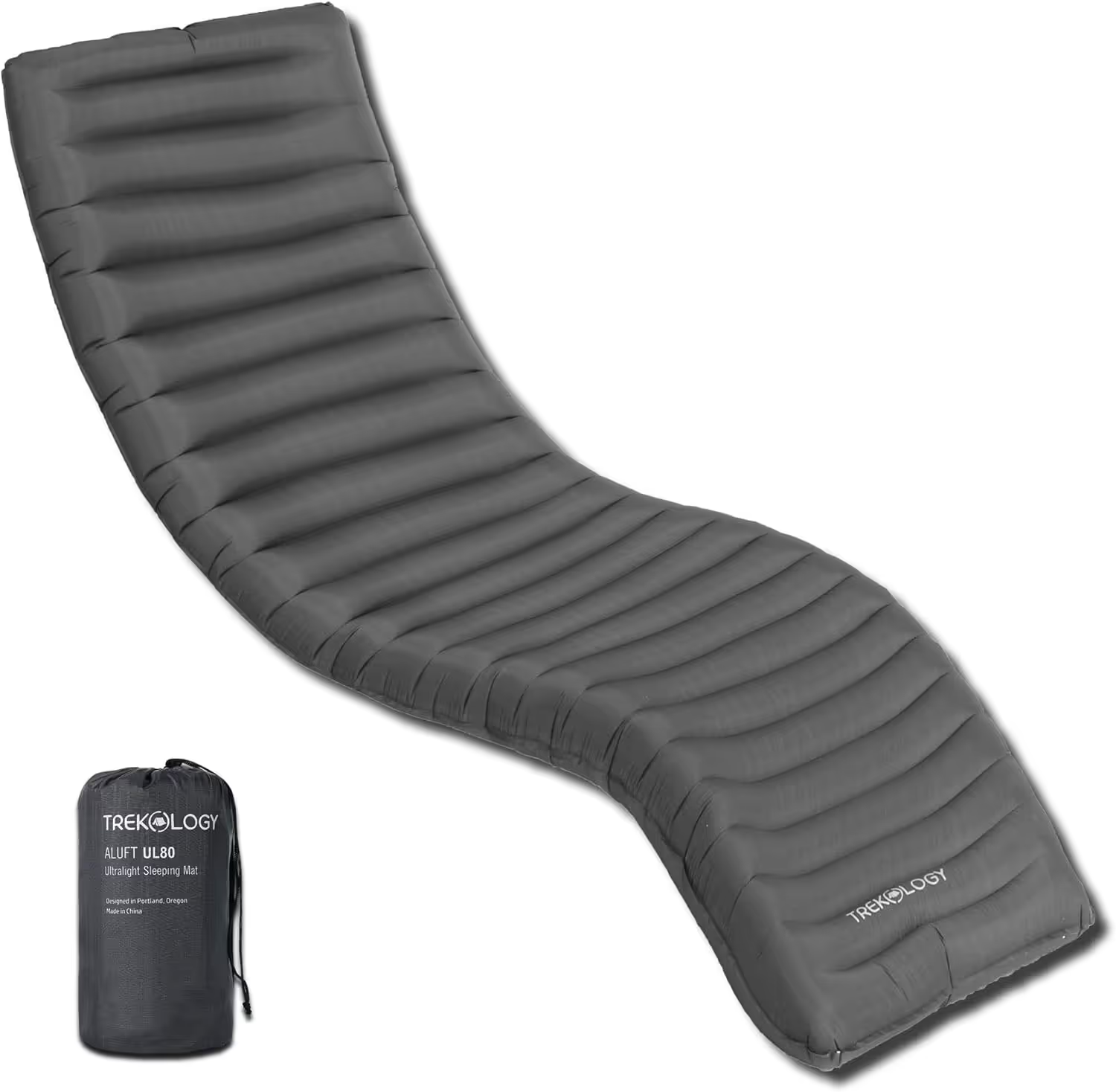
The Trekology UL80 is the value pick and the one we recommend most often. It is not as warm or as small as the Therm-a-rest and it costs a quarter as much, which for a rider doing summer and shoulder-season trips is the right trade.

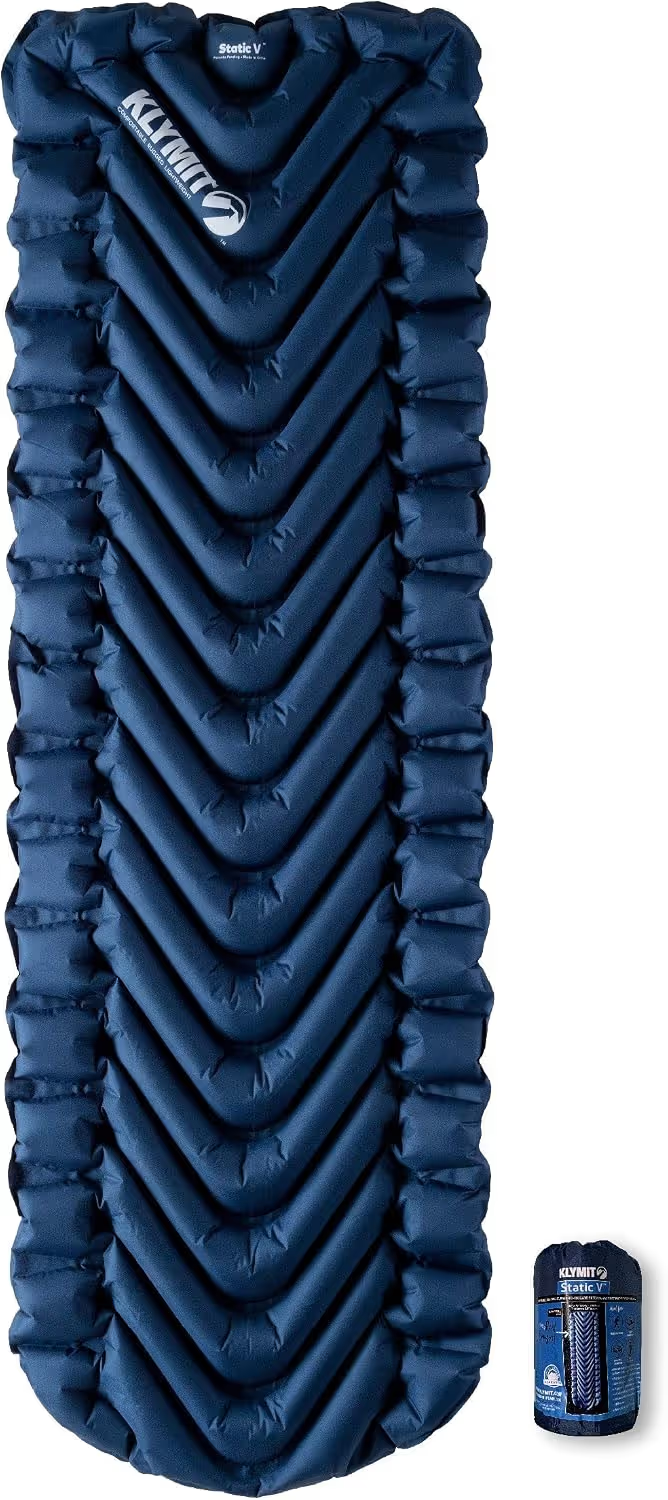
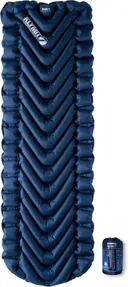
The Klymit Static V2 is the wide-body option. Its V-chamber design suits people who move around and find mummy-shaped pads confining, and it is the most comfortable of the four if you sleep on your side.

The Forclaz MT500 Air is a summer pad and should be bought as one. R1.5 is genuinely limited, and at 49 dollars with a 1.7 litre packed size it is a good warm-weather purchase and a bad three-season one.

Related Read

Cold Feet at 4 AM: The Emergency Sleep System Boost

When the temperature drops below your quilt's rating, the 4 AM shivers are inevitable. Six ways to add real warmth to a bag that's underrated for the night you're having.

Where They Give Out

The XLite is narrow at the feet and the shell fabric is slippery, so it wanders on a smooth tent floor. It is also 200 dollars for something that can be punctured by a thorn.

The MT500 Air is 510 g and R1.5, which is the worst warmth-to-weight ratio here by a distance. It is the right pad for July and the wrong one for October.

The Static V2 packs larger than the others and it shows in a seatpack. If your bag is already tight, this is the one that will not fit.

And all four are inflatable, which means all four can fail in a way a foam mat cannot. Carry the patch kit. Sweep the ground before you pitch. Neither of those is optional on a trip where the pad is half your insulation.

Our Recommendations

Therm-a-rest // Best For Ultralight Sleep //
4.4 (413 ratings at the retailer)

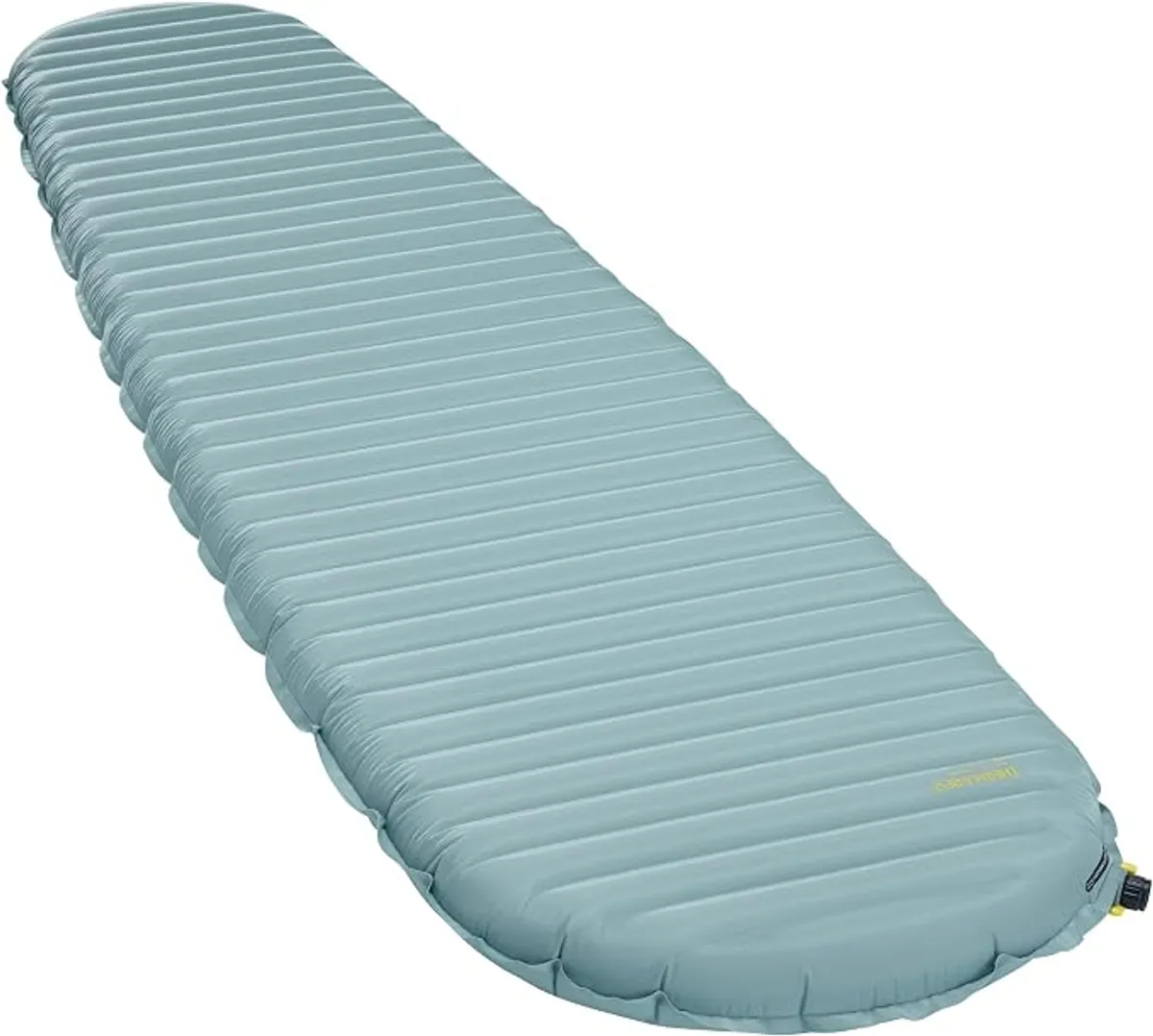
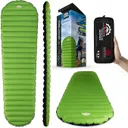
Therm-a-rest NeoAir XLite NXT
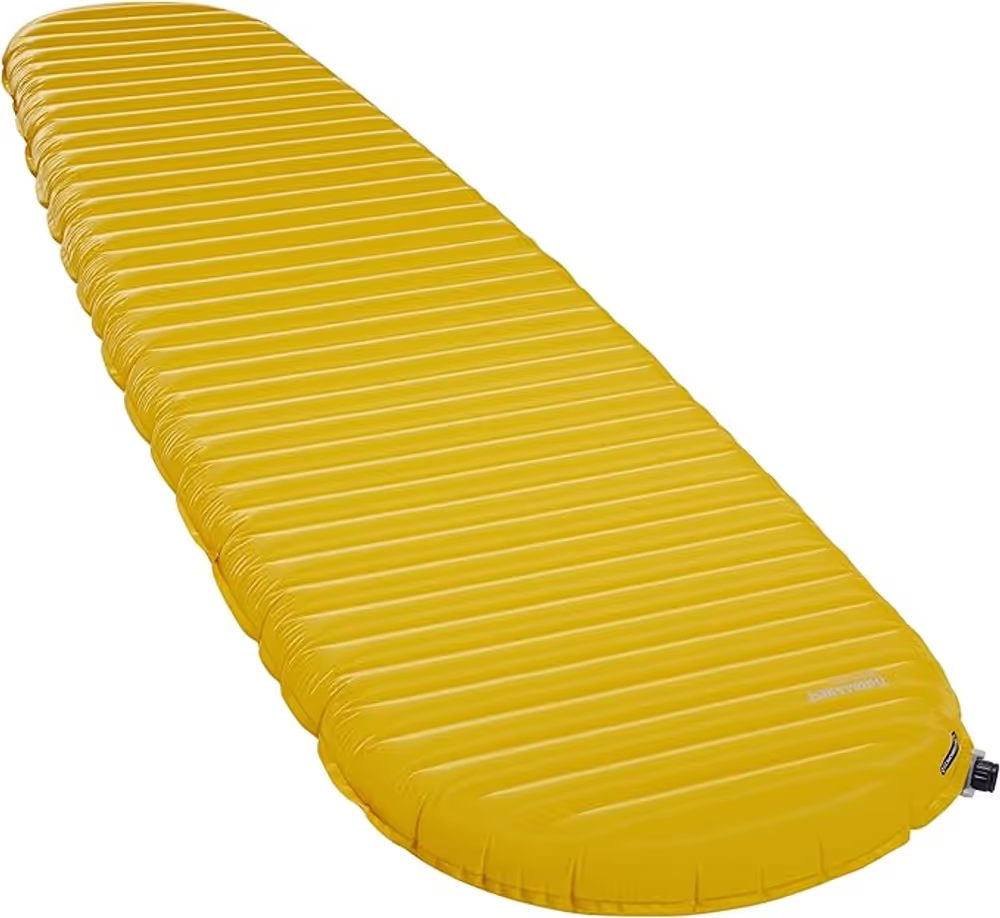
Product shot of Therm-a-rest NeoAir XLite NXT by Therm-a-rest
Best For Ultralight Sleep

Tech Specs

R Value
4.5
Thickness
7.6 cm
Packed Size
23 x 10 cm
Weight
370 g
Sleep soundly on the lightest, warmest, and now quietest pad in its class, designed for those who refuse to sacrifice comfort for weight.

For years, the Therm-a-rest NeoAir XLite ruled the ultralight world, with one major complaint: it sounded like a bag of chips every time you moved. The new NXT model finally solves this with a refined internal structure that is 83% quieter while technically boosting the thickness to a plush 3 inches. At just 370g, it offers an incredible warmth-to-weight ratio with an R-value of 4.5, making it a viable single-pad solution for everything from blistering summer races to frosty shoulder-season expeditions.

Read the full review

The high-flow WingLock™ Valve allows for rapid inflation and deflation, which is essential for quick camp teardowns when you are racing the sunrise. While the tapered mummy shape saves weight, it does require staying centered, so active sleepers might need a few nights to adjust. However, for bikepackers where volume is as critical as weight, its unique ability to disappear into a seatpack makes it the undisputed king of air pads. It is the gold standard against which all other sleeping pads are measured.

The Verdict

The king of pads just got better. Quiet, warm, and impossibly light, it removes the last compromise of ultralight sleeping comfort.

GravelPacker score How we score
4.0/5
Durability
4
Performance
5
Usability
3.5
Value
3.5
  • Incredible warmth-to-weight ratio (R-4.5)
  • Significantly quieter than previous model
  • Packs down to 1L water bottle size
$199.95
At time of review
Buy on Amazon

The Good

  • + Incredible warmth-to-weight ratio (R-4.5)
  • + Significantly quieter than previous model
  • + Packs down to 1L water bottle size

The Bad

  • Mummy shape is narrow at feet
  • Valve takes getting used to
  • Performance fabric is somewhat slippery
Therm-a-Rest // Best For Winter Camping //
4.2 (75 ratings at the retailer)

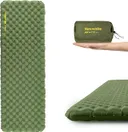
Therm-a-Rest NeoAir XTherm NXT Sleeping Pad

Product shot of Therm-a-Rest NeoAir XTherm NXT Sleeping Pad by Therm-a-Rest
Best For Winter Camping

Tech Specs

R Value
7.3
Type
Insulated inflatable
Season
Four season
Range
Winter and high altitude
The pad you buy when frozen ground is the problem, not cold air.

Ground conduction is what makes winter camping fail, and it is a different problem from air temperature. A quilt rated to minus ten is useless on a pad rated 2, because the heat leaves downwards faster than the insulation above you can hold it. A 7.3 R-value is the answer to that specific problem.

Read the full review

Therm-a-Rest's advantage is the longest track record in this category and a warranty that is honoured. For a piece of kit whose failure means a sleepless night at altitude, buying the one with forty years of iteration behind it is a defensible use of money.

Two honest reservations. It is the most expensive pad on this list by a wide margin, and it is the wrong purchase for anyone whose riding stops when the frost arrives. The XLite costs less, weighs less and is enough for three seasons.

The NXT generation is quieter than the older XTherm, which was notorious for crackling. Owner reports describe it as improved rather than silent, so if noise in a shared tent is the deciding factor this is better but not solved.

Full review, score breakdown & specs

The Verdict

Correct for genuinely cold ground and overkill for anything else. If you are not camping below freezing, the XLite is the better buy.

GravelPacker score How we score
4.1/5
Durability
5
Performance
5
Usability
4
Value
2.5
  • 7.3 R-value handles frozen ground
  • Longest track record in the category
  • Quieter than the previous XTherm generation
$228.95
Checked Aug 2026
Buy on Amazon

The Good

  • + 7.3 R-value handles frozen ground
  • + Longest track record in the category
  • + Quieter than the previous XTherm generation

The Bad

  • By far the most expensive pad here
  • Overkill and heavier than needed for three seasons
  • Still audible when you move
Gear Doctors // Best For Shoulder Season //
4.4 (2,849 ratings at the retailer)

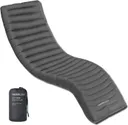
Gear Doctors ApolloAir Sleeping Pad (R5.2)

Product shot of Gear Doctors ApolloAir Sleeping Pad (R5.2) by Gear Doctors
Best For Shoulder Season

Tech Specs

R Value
5.2
Weight
17oz / 482g
Type
Insulated inflatable
Season
Three season into shoulder
A rated 5.2 for 482 grams, which is Therm-a-Rest territory at a third of the money.

R-value is the number that decides whether a pad works, and it is the one riders skip. Below about 2 you are losing heat to the ground faster than a sleeping bag can replace it, which is why people blame the bag for a cold night that the pad caused. A rated 5.2 covers frost comfortably and takes the guesswork out of shoulder-season trips.

Read the full review

At 482 grams the weight penalty for that insulation is small, and on a bike the packed size matters more than the weight anyway. This packs to roughly the volume of a one-litre bottle, which fits a seatpack alongside a quilt without argument.

The reservations are the ones that apply to any newer brand. The track record is shorter than Therm-a-Rest's, valve durability is the axis where budget pads usually lose, and there is less long-run evidence about how the insulation holds up after fifty nights of being rolled tight.

Owner reports do converge on one specific point worth knowing: like most insulated pads with internal baffles, it is audible when you move, and the noise is closer to a crisp packet than to fabric. Riders sleeping alone will not care about that at all, and anyone sharing a small tent with a light sleeper should factor it in before ordering.

One habit extends any inflatable pad's life more than the fabric spec does: inflate it by pump sack rather than by mouth. Breath carries moisture into the baffles, which over a season degrades the insulation and encourages mould that no amount of airing removes.

Full review, score breakdown & specs

The Verdict

The value pick of the insulated pads. Accept a shorter track record than Therm-a-Rest and it is very hard to argue with on the numbers.

GravelPacker score How we score
4.3/5
Durability
3.5
Performance
4.5
Usability
4
Value
5
  • Rated 5.2 R-value at 482g
  • Packs to roughly a one-litre bottle
  • A third the price of the premium equivalents
$73.73
Checked Aug 2026
Buy on Amazon

The Good

  • + Rated 5.2 R-value at 482g
  • + Packs to roughly a one-litre bottle
  • + A third the price of the premium equivalents

The Bad

  • Shorter track record than the established brands
  • Audibly crinkly when you move
  • Valve is the usual weak point on pads at this price

Also rated

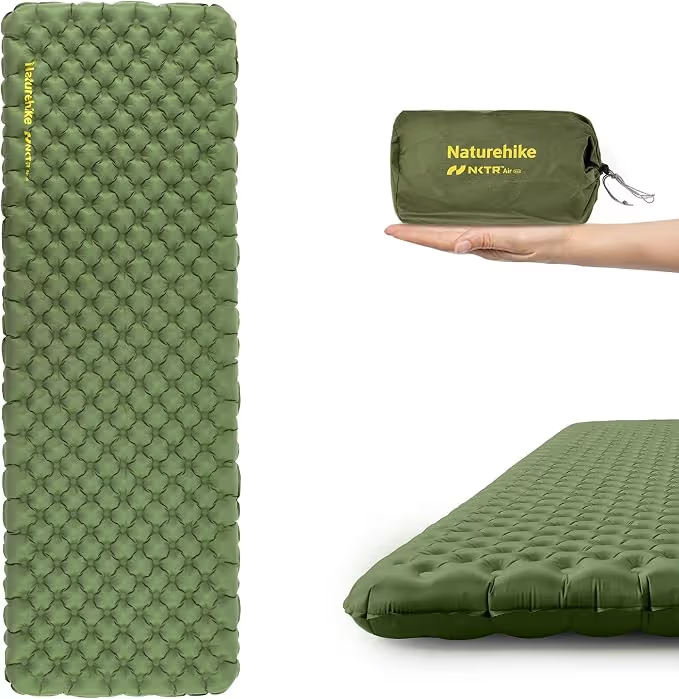
4. Naturehike

Naturehike 27oz Ultralight Sleeping Pad (R4.6)

4.0 /5

Naturehike sits between the no-name pads and the premium ones, and this is their three-season insulated option at a price that does not require a decision.

R_Value
4.6
Weight
27oz / 765g
Type
Insulated inflatable
5. Trekology

Trekology UL80 Inflatable Sleeping Pad

4.3 /5

The UL80 is the pad that finally made budget camping comfortable for side sleepers. At 4 inches thick, your hips will never touch the ground.

Thickness
10cm / 4in
Weight
560g / 19.7oz
RValue
1.6
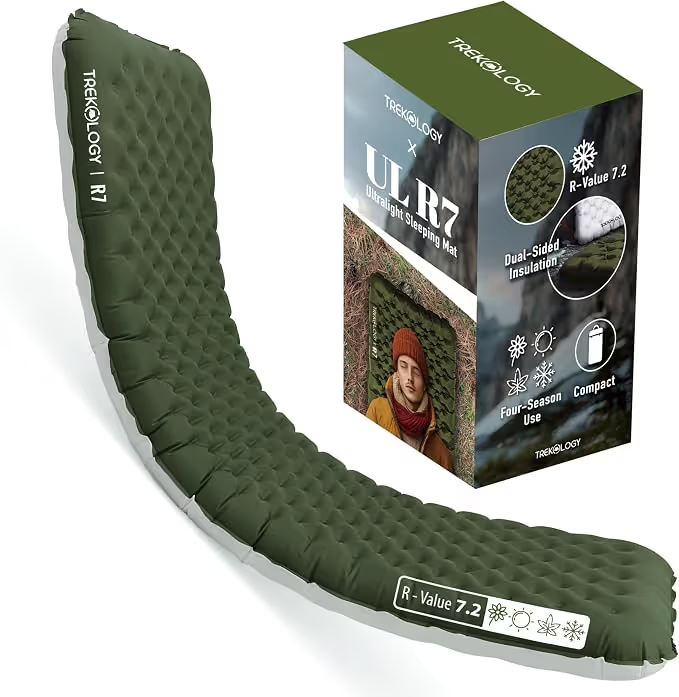
6. TREKOLOGY

TREKOLOGY 4-inch Thick Camping Pad (R7.2)

4.0 /5

Thickness is the specification side sleepers care about and everyone else ignores, and four inches is enough that a hip does not reach the ground through it.

R_Value
7.2
Thickness
4 inches
Type
Insulated inflatable
7. Klymit

Klymit Static V2 Sleeping Pad

3.8 /5

The Static V2 is the budget answer to sleeping comfortably without carrying the bulk.

Weight
460g / 16.3oz
R_Value
1.3
Thickness
6.3 cm
8. BISINNA

BISINNA Insulated Sleeping Pad (26.6oz)

3.5 /5

A claimed 9.0 R-value at this price would undercut Therm-a-Rest by four times, and that is exactly why the claim deserves scepticism rather than a top spot.

R_Value
9.0 claimed
Weight
26.6oz / 754g
Type
Insulated inflatable
9. Forclaz

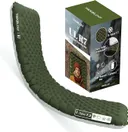
Decathlon Forclaz MT500 Air

3.8 /5

You don't need to spend $200 to sleep deeply. This pad is proof.

R_Value
1.5 (ASTM)
Thickness
5 cm
Packed_Size
1.7 L
$49.00 Summer Camping
Read the review

Decathlon strikes again with the Forclaz MT500 Air, proving that high-performance gear doesn't always require a mortgage payment. For the price of a few energy bars, you get a sleeping pad that packs down incredibly small (1.7L) and weighs just over 500g. The 5cm thickness is luxurious compared to traditional closed-cell foam mats, effectively smoothing out roots, rocks, and uneven terrain that would typically ruin your night. It’s a significant upgrade for budget-conscious bikepackers who need to save space in their seatbags without sacrificing spinal health.

Careful thought went into the minor details, such as the strategic silicone patches that stop your sleeping bag from ice-skating off the pad in the middle of the night (a common annoyance with budget inflatables). The main limitation to be aware of is insulation. With an R-value of 1.5, the ground will suck the heat out of you if temperatures drop near freezing. However, for summer touring, festival camping, and warm-weather adventures, it is an unbeatable value proposition that leaves you with more cash for the rest of your trip.

What works

  • · Very compact packed size
  • · Anti-slip silicone patches
  • · Affordable compared to Therm-a-rest

What doesn't

  • · Low R-value (1.5) limits use to summer
  • · Heavier than UL options (510g)
  • · Fabric feels less premium/durable
Buying Advice

What to look for

Three numbers and one habit decide whether you sleep warm.

1. R-value is the number that matters

R-value measures resistance to heat loss through the pad, and it is now tested to a single ASTM standard so figures are comparable across brands. Roughly: R1 to R2 is summer only, R2 to R3 covers three seasons in mild climates, R4 and up handles freezing ground. The jump from R1.5 to R4.5 is the difference between a bad night at 5°C and a comfortable one at minus 5°C.

2. Packed size beats weight on a bike

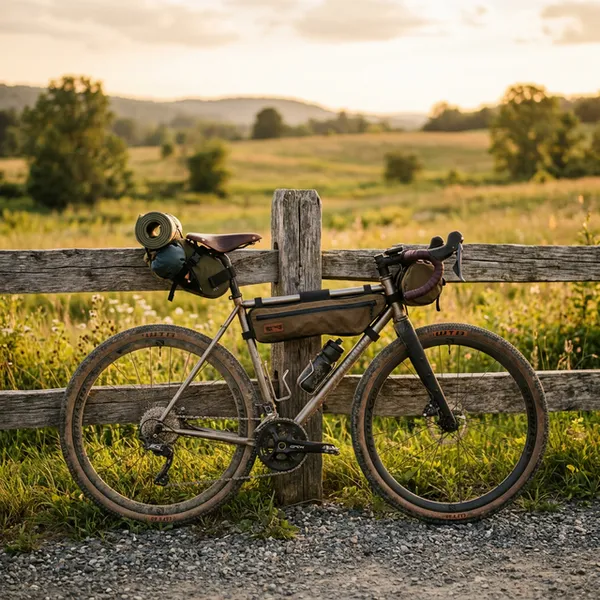
A hiker counts grams. A bikepacker runs out of litres first. A pad that packs to the size of a 1 litre bottle fits in a seatpack alongside a quilt. One that packs to 1.7 litres is competing with your food. Weight differences of 100 g between these pads matter far less than that.

Related Read

What Size Seatpack Do You Actually Need?

Litres by trip length, why a half-full big bag sways more than a packed small one, and the tyre clearance number that decides it for you.

3. Thickness is comfort, not warmth

A 7.6 cm pad feels luxurious and a 5 cm pad does not, and neither fact tells you anything about warmth. Thickness matters for side sleepers who bottom out, and for pitching on ground with rocks and roots in it. Do not read thickness as a proxy for R-value, because on cheap pads it very often is not.

4. Inflate it properly

An underinflated pad is a colder pad, because your hip compresses it to nothing and you are effectively lying on the ground. This is the most common reason a pad underperforms its rating, and it costs nothing to fix.

Related Read

Quilt vs Sleeping Bag for Bikepacking

A premium quilt, a value down bag and a convertible hybrid compared on warmth per gram, drafts, packed size and price. Honest about who should not buy a quilt.

Methodology

How we chose

Same quilt, same tent, different pad. The pad is the only variable.

1. The cold ground test

R-value is only comparable where it is tested to the ASTM standard, which the established brands publish and most budget sellers do not. Where a figure is self-reported it is treated as a claim rather than a measurement, and the review says so.

2. The seatpack test

Each pad is packed into a 15 litre seatpack alongside a quilt and a spare layer. If it does not leave room for the rest of the sleep system, that is the headline of the review rather than a footnote.

3. The overnight deflation check

We measure firmness at bedtime and at 6 am. Slow valve leaks are common and they show up as a cold hip at 4 am rather than as a flat pad in the morning.

4. The repeated pack test

Pads fail at the seams and around the valve after repeated tight rolling. Those failures show up in owner reports written a season or more after purchase, which is where this list takes them from.

Q&A

Frequently Asked Questions

What R-value do I need for bikepacking?

R3 covers most three-season riding in a mild climate. R4 and above is what you want for freezing ground, altitude or shoulder season. R1 to R2 is genuinely summer only, and the mistake people make is buying an R1.5 pad for a trip whose forecast low is 4°C, then blaming the sleeping bag.

Does a thicker pad mean a warmer pad?

No. Warmth comes from the internal structure and any reflective layer, not from height. Some 5 cm pads are warmer than some 7 cm ones. Thickness buys comfort for side sleepers and tolerance of rocky ground, which are real benefits and separate ones.

Are inflatable pads durable enough for bikepacking?

Yes, with a repair kit and a little care about where you pitch. The failure modes are punctures from grit and seam separation from repeated tight rolling. Carry the patch kit that comes in the box, and pitch on ground you have swept rather than ground you have glanced at.

How do I stop the pad sliding around in the tent?

Silicone patches on the pad, a grippier tent floor, or both. Some pads come with anti-slip patches, and the ones that do not can be fixed with lines of silicone sealant applied at home and left to cure. If you use a quilt with pad straps, this problem largely disappears.

Foam or inflatable for bikepacking?

Inflatable, in almost every case. Closed-cell foam is indestructible and warm for its weight, and it is the wrong shape entirely for a bike. It cannot be compressed, so it has to be strapped to the outside where it catches wind and branches. On foot it makes sense. On a bike it rarely does.

Reviewer

The GravelPacker Desk

GravelPacker is a research desk, not a test lab. We read the spec sheets, the long-run owner reports and the forum threads where things break, then score what survives that reading against a rubric we publish. We say so plainly because a review you can check is worth more than one you have to trust.