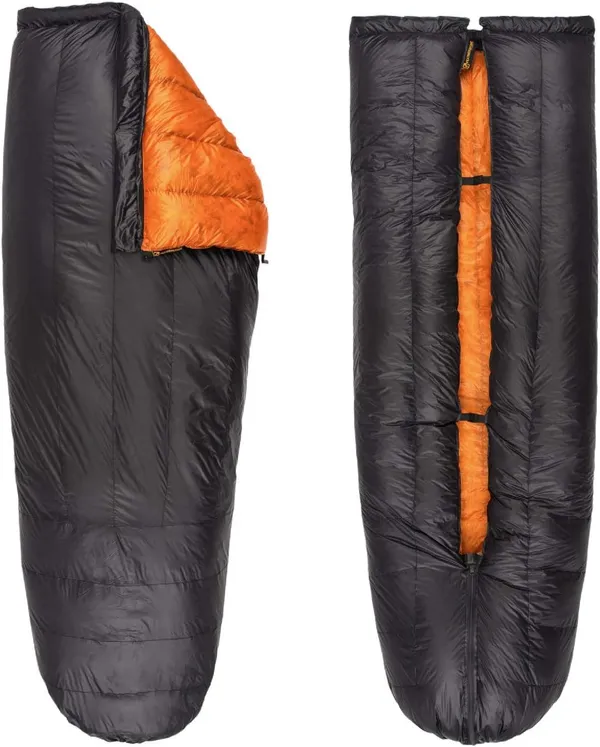
Sleep Systems
Quilt vs Sleeping Bag for Bikepacking
An 850FP quilt, a hooded down bag and a convertible hybrid compared on warmth per gram, drafts, packed size and price, and who should skip the quilt.
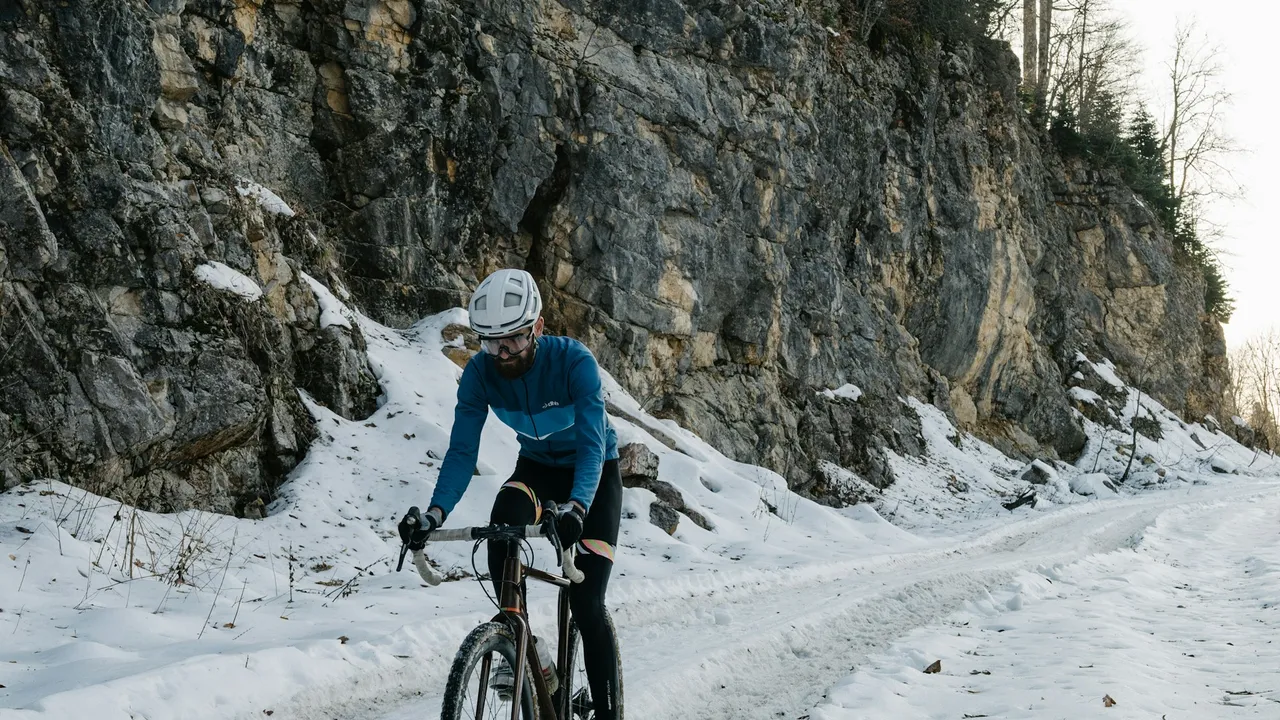
The maths is always the same. You check the forecast, see a projected low of 40°F, and bring the ultralight summer quilt to save a few hundred grams. At 3:30am it drops to 32°F, the wind picks up, and you are shivering hard enough that riding on in the dark starts to sound reasonable.
This is the most common failure in every cold-sleeping thread, and it is worth being precise about why: a bag's comfort rating assumes a sleeping pad with adequate R-value, a dry insulating layer, and someone who went to bed warm and fed. Miss any one of those and the number on the label is fiction.
If you find yourself underdressed for the conditions, you must get creative with the gear you have. You do not need a heavier bag. You need a drastically more efficient system.
This is the single most effective external engine for your sleep system. If you have a stove and a non-insulated water bottle, you can create a localized heater. You must use a hard plastic Nalgene or a specialized silicone bladder for this to work safely.
Boil a liter of water before you crawl in. Pour it into your bottle and ensure the seal is absolutely perfect. Leaking boiling water into your down quilt is a dangerous disaster, not a comfort hack.
Shove the hot bottle directly into the footbox of your sleeping bag. The large arteries in your feet and legs will pick up that radiant heat and circulate it through your core. It acts as a high-output furnace that will last roughly four hours before cooling down.
The Ultimate Bikepacking Gear List for Beginners (2026 Guide)
Everything you actually need for a first multi-day gravel trip in 2026, from bags to sleep systems, with the kit we would skip and why.
The persistent myth here is that sleeping in base layers only is warmer, because it lets the down loft properly. It isn't, and the physics is straightforward: loft is compressed by your body weight underneath you regardless of what you wear, and every additional layer above adds trapped air. If you are freezing, put on every stitch of clothing you own.
Put your rain jacket over your puffy jacket to trap the warm air against your torso. Put your spare riding socks on your hands to protect your extremities. If you have a clean frame bag, empty it out and shove your feet into it for an extra layer of wind protection.
The Minimalist Bikepacking Checklist: 9 Essentials for Your First Overnighter
The 9 things worth carrying on a lightweight overnighter, and the gear most first-timers pack that never comes out of the bag.
Take your damp riding jersey off immediately. If there is even a hint of moisture in your layers, they are actively pulling heat away from your skin through evaporation. Dry skin is warm skin.
Most people blame their quilt when they are cold, but the true culprit is almost always the ground. If you are on an uninsulated pad like the Klymit Static V, rated R 1.3, in freezing temps, the earth is literally sucking the heat out of you.
Lay your empty frame bags and panniers directly under your hips and shoulders for extra insulation. These are your heaviest pressure points, and they require the most thermal separation from the dirt. In a survival situation, clear the snow and pile up dry pine needles under your groundsheet to create natural loft.
If your quilt is warm enough but your back is freezing, wear your down jacket backwards. This puts the insulation between you and the cold sleeping pad. A cold night is a brutal lesson, so use the shivers to refine your gear list for the next trip.
If you woke up cold, check what was underneath you before you blame the bag.
Ground conducts heat away far faster than air does, and the insulation under your body is crushed flat and doing almost nothing. A warm bag on a summer pad is a cold night, every time.
The number to look at is R-value. Below 2 is a summer pad. Three to four covers most three-season riding. Above four is genuine cold. If your pad is a 1.5 and your bag is rated to freezing, the mismatch is the whole problem.
Pads stack, and R-values add. A cheap foam mat under an inflatable adds roughly 2 and weighs a few hundred grams, which is the cheapest warmth available to a bikepacker.
When you are already cold, the order of operations matters, because some things help and some make it worse.
Eat something first. Being cold at night is often being underfed. A body with nothing to burn cannot generate heat no matter how good the insulation.
Put on a dry layer, not the one you rode in. Damp clothing will keep pulling heat out all night. If everything is damp, sleeping in less is usually warmer than sleeping in wet fabric.
Get something under you. An empty pack, spare clothing, even the bag your tent came in, placed under your torso and hips. Those are the areas losing the most.
Do twenty squats outside the bag, not in it. You want to raise your core temperature without adding moisture to your insulation, so stop before you sweat.
Fill a bottle with hot water if you have a stove, seal it properly, and put it between your thighs rather than at your feet. The femoral artery is close to the surface there and it warms your whole body rather than one extremity.
Sealing yourself in feels like the right response and usually makes the night worse.
Moisture from your breath and body has to go somewhere. In a fully closed bag or tent it condenses in the insulation, and wet down loses most of its loft.
Keep a vent open, breathe outside the bag rather than into it, and if you are in a tent, crack both ends so air moves. You will feel marginally cooler for the first ten minutes and considerably warmer by 3am.
Once you know your real comfort limit, plan around it rather than hoping.
Ratings are laboratory figures and the comfort number is the honest one. Most people sleep around five degrees colder than the label suggests by the third night of a trip, when they are tired and short of food.
A liner adds a genuine few degrees for around 200g. An overquilt is more efficient than replacing the bag if you only need the extra occasionally. Replacing the pad is usually better value than replacing the bag.
Usually the pad. Insulation under your body is crushed flat and doing nothing, so the ground pulls heat away directly. Check the R-value: below 2 is a summer pad, and pairing one with a freezing-rated bag is a cold night regardless of the bag.
Eat something, change into a dry layer, and get anything you can under your torso and hips. If you have a stove, a sealed bottle of hot water between the thighs warms you far more effectively than one at your feet.
Dry ones, yes. Damp ones, no. Wet fabric keeps pulling heat out all night, and sleeping in less is usually warmer than sleeping in what you rode in. Avoid anything tight enough to restrict circulation to your feet.
Yes, and R-values add. A closed-cell foam mat under an inflatable adds roughly 2 for a few hundred grams, which is the cheapest warmth available on a bike and doubles as a groundsheet and a seat.
For around 200g it adds a genuine few degrees and keeps the bag cleaner, which matters more than it sounds on a long trip. If you are consistently cold rather than occasionally, though, fix the pad first.
An 850FP quilt, a hooded down bag and a convertible hybrid compared on warmth per gram, drafts, packed size and price, and who should skip the quilt.
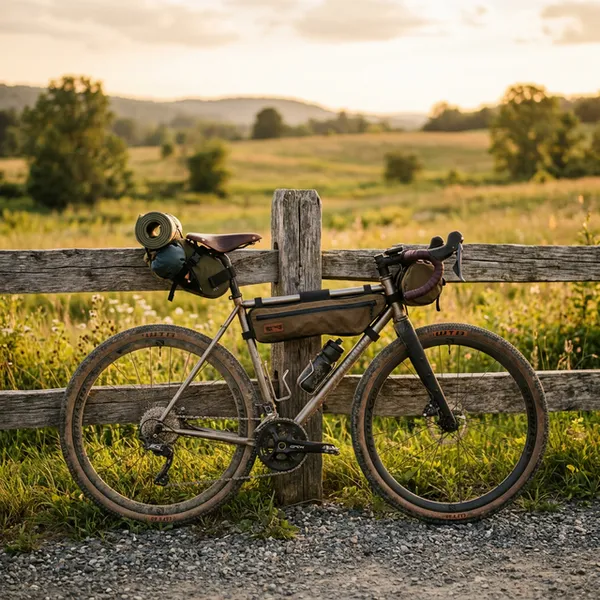
The quilts, bags and pads that pack down small enough for a seat pack and still get you through a cold night. Ten picks from ultralight to budget.
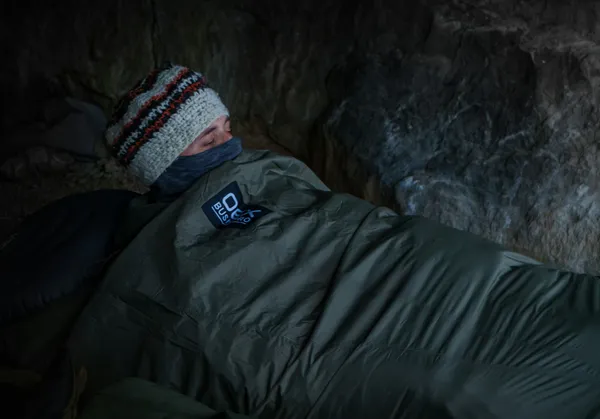
What a wet down quilt actually costs you overnight, how to dry one on the bike with no sun, and the point at which you should have brought synthetic.

GravelPacker is a research desk, not a test lab. We read the spec sheets, the long-run owner reports and the forum threads where things break, then score what survives that reading against a rubric we publish. We say so plainly because a review you can check is worth more than one you have to trust.