On this page

The Best Bikepacking Tents: 7 Shelters That Fit on a Bike

A bikepacking tent has to solve two problems at once. It has to work at camp, and it has to fit on a bike with no rack, no room and no patience for a 45 cm pole bag.

Last Updated August 16, 2026
Edited by Louis Raveton
When you purchase through links on our site, we may earn an affiliate commission. Here's how it works.
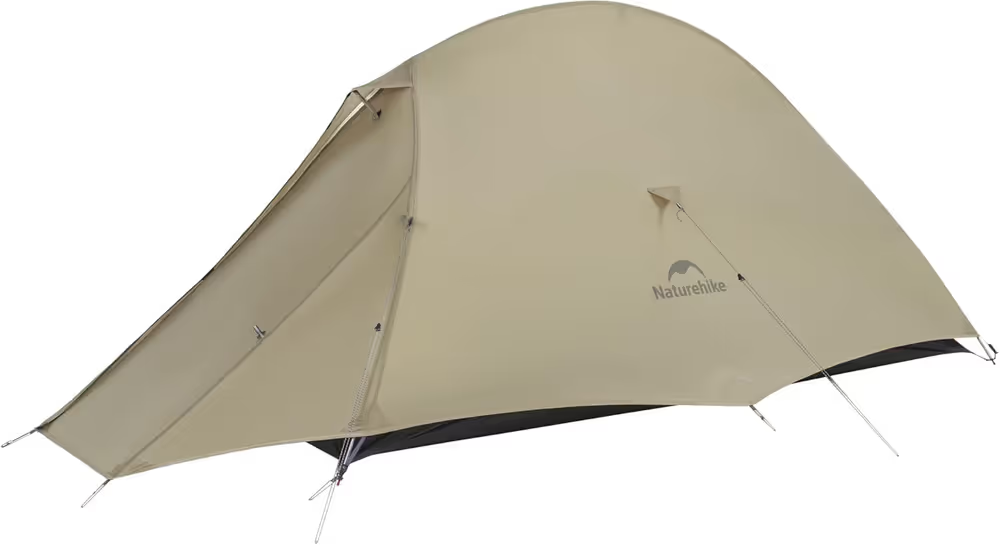
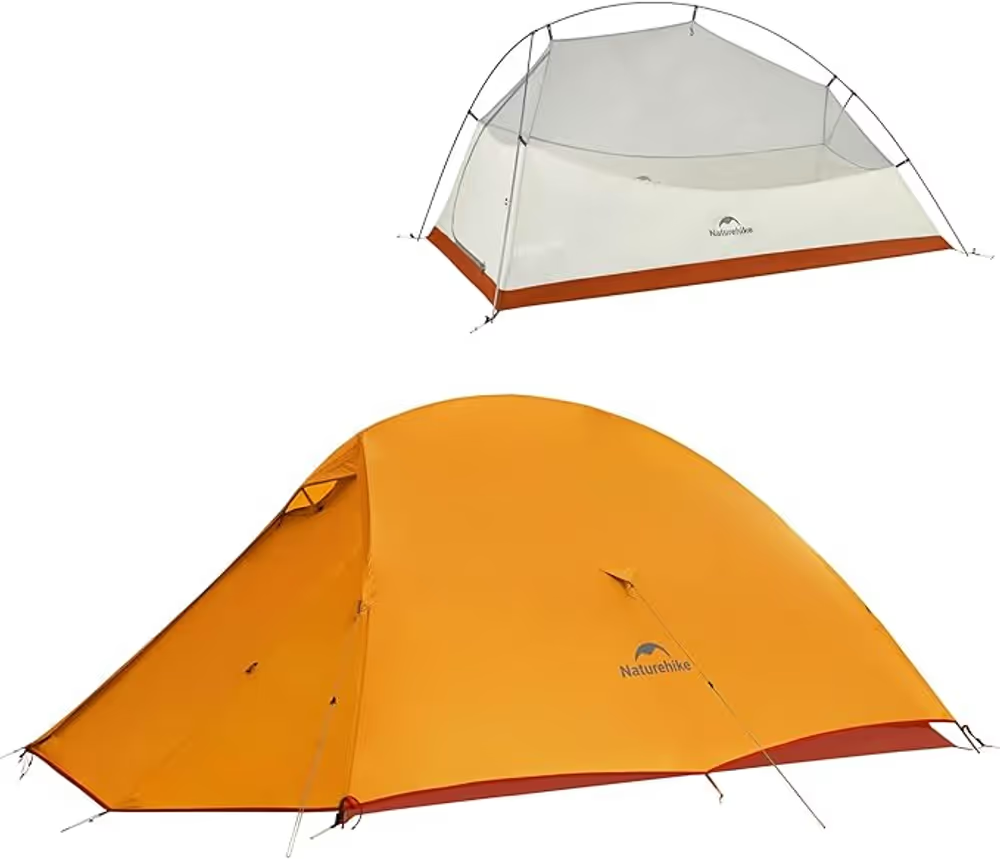
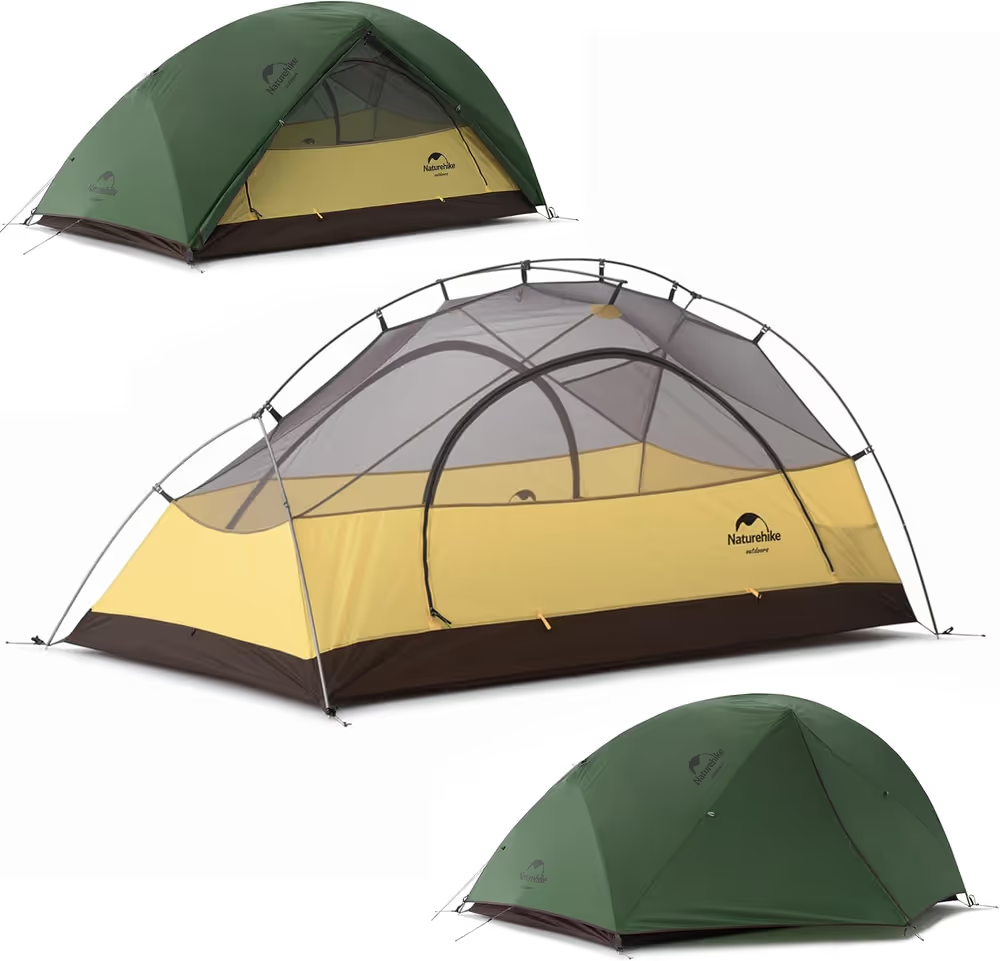
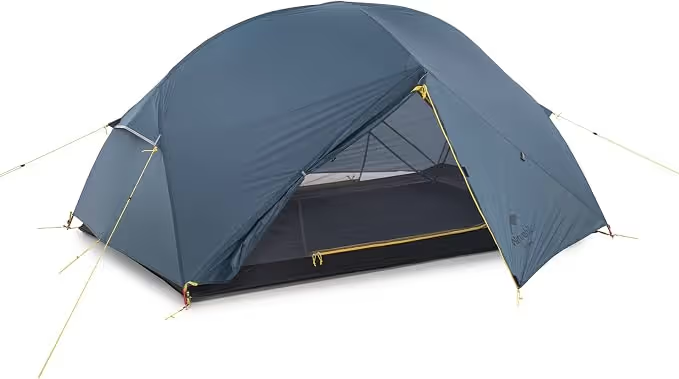
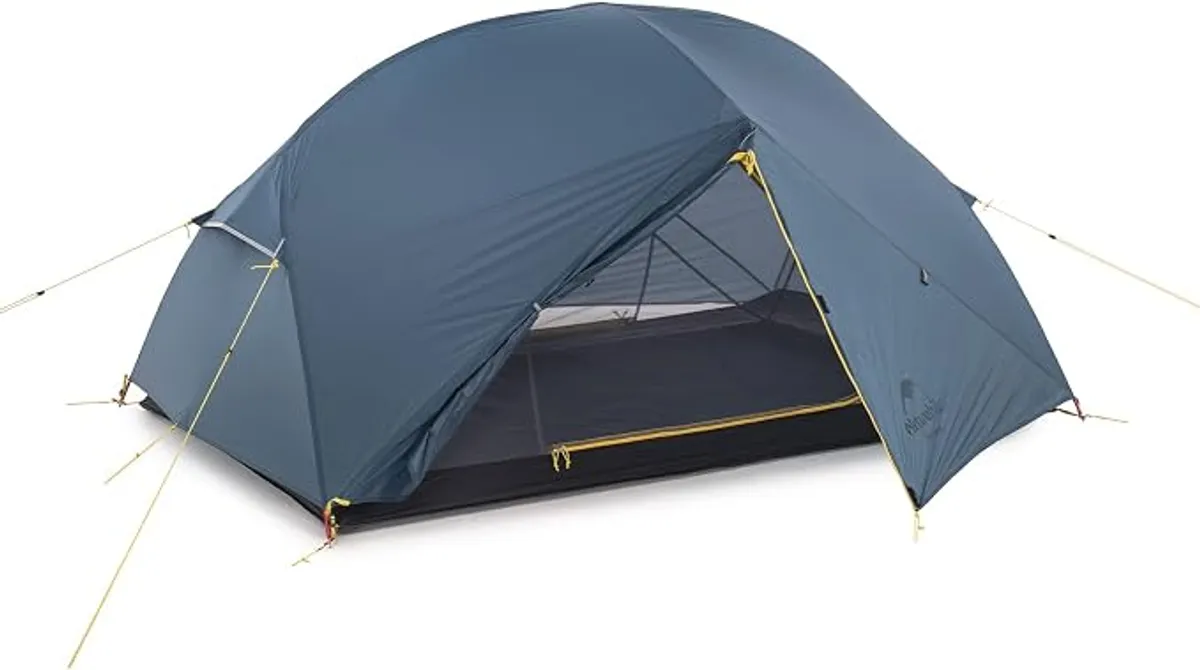
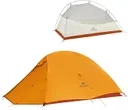
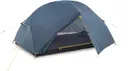
Naturehike Mongar 2 Person Tent, our top pick in The Best Bikepacking Tents: 7 Shelters That Fit on a Bike

A backpacking tent and a bikepacking tent are not the same product, and the difference is the poles. A standard pole set folds to about 45 cm, which is longer than the gap between most drop bars and wider than any frame bag opening. Everything else about choosing a shelter follows from solving that one geometry problem.

These seven are ranked on packed length before packed weight, because a 900 g tent you cannot mount is worse than a 1.5 kg tent you can. After that the deciding factors are pitch order in rain, condensation behaviour on humid nights, and whether the floor denier suits the gritty, compacted ground at the end of a gravel day.

Seven shelters cover the range that matters for gravel riding, from a sub-seventy-dollar first tent to a bike-specific Big Agnes, without padding the list with tents whose published figures say nothing a rider could act on. Some links here are affiliate links, which is how the site pays for itself, and none of them changed a score.

Editor's Choice

  • Two doors and two vestibules
  • Double wall handles condensation properly
  • Over a thousand owner reports
$107.09
Checked Aug 2026
Buy on Amazon

Quick Comparison

Sort
Best for Solo Shelter
  • Capacity 1 Person
  • Weight 3.3 lbs
  • Material 20D Ripstop Nylon / PU4000mm
  • Poles 7001 Aluminum
Best for Wild Camping
  • Weight 1.5kg (20D)
  • Packed_Size 40 x 13 cm
  • Capacity 2 Person
  • Waterproof_Rating PU4000mm
Best for Camping Shelter
  • Weight 1.9kg / 4.2lbs
  • Capacity 2-Person
  • Material 20D Silicone Nylon
  • Waterproofing 4000mm
Best for Bikepacking Shelter
  • Packed_Weight 1.59 kg
  • Trail_Weight 1.33 kg
  • Floor_Area 2.7 m²
  • Peak_Height 102 cm
Best for Solo Ultralight
  • Weight 2.3 lb / 1.04 kg
  • Capacity One person
  • Season Three season
  • Type Ultralight
Best for Two Person
  • Capacity Two person
  • Walls Double wall
  • Doors Two, with two vestibules
  • Season Three season
Best for First Tent
  • Capacity One person
  • Season Three season
  • Type Budget backpacking
  • Use Entry level

Four Tents, Not Ten

Most tent roundups are compiled from spec sheets. This one is not, which is why it is short.

These four cover the range that actually matters for gravel riding: a genuinely cheap solo shelter, the budget two-person tent that half the bikepacking world owns, a freestanding option for when the ground is bad, and one premium tent that was designed around a bicycle rather than adapted to one. If your budget is between 80 and 550 dollars, the answer is in here somewhere.

What is not in here is a tarp setup, which is lighter and cheaper than all of these and asks considerably more of you. That is its own article.

The Short Version

If you want one tent and you are not going to think about it again, buy the Cloud-Up 2. At 1.5 kg and roughly 120 dollars it does the job for the overwhelming majority of trips, and you will replace your bags long before you replace it.

If you camp on hardpack, gravel pads or platforms, the Star-River 2 is freestanding and costs the same. That is a real advantage that people discover the hard way, usually at 10 pm.

If you are riding drop bars, carrying the tent up front, and the money is not the constraint, the Copper Spur Bikepack is the only tent here with poles that were designed for the problem. The 12 inch Shortstik set is the whole argument for it, and it is a good one.

Related Read

The Ultimate Bikepacking Gear List for Beginners (2026 Guide)

Everything you actually need for a first multi-day gravel trip in 2026, from bags to sleep systems, with the kit we would skip and why.

Where Each One Gives Out

The Cloud-Up tents condense. On a still, humid night the inner wall gets damp and your quilt will find it. Vent the fly, pitch away from the low ground near water, and accept it.

The Copper Spur's floor is thin, and Big Agnes are honest about that. Budget for a footprint at purchase rather than after you find the first pinhole.

The Star-River is the heaviest here at 1.9 kg, which is the cost of the freestanding poles. If your trips are all on soft ground where stakes bite, you are carrying 400 g for nothing.

And all four of them are worse than a bivy when the entire trip is one night and the forecast is clear. Owning a tent does not mean bringing it.

Our Recommendations

Naturehike // Best For Solo Shelter

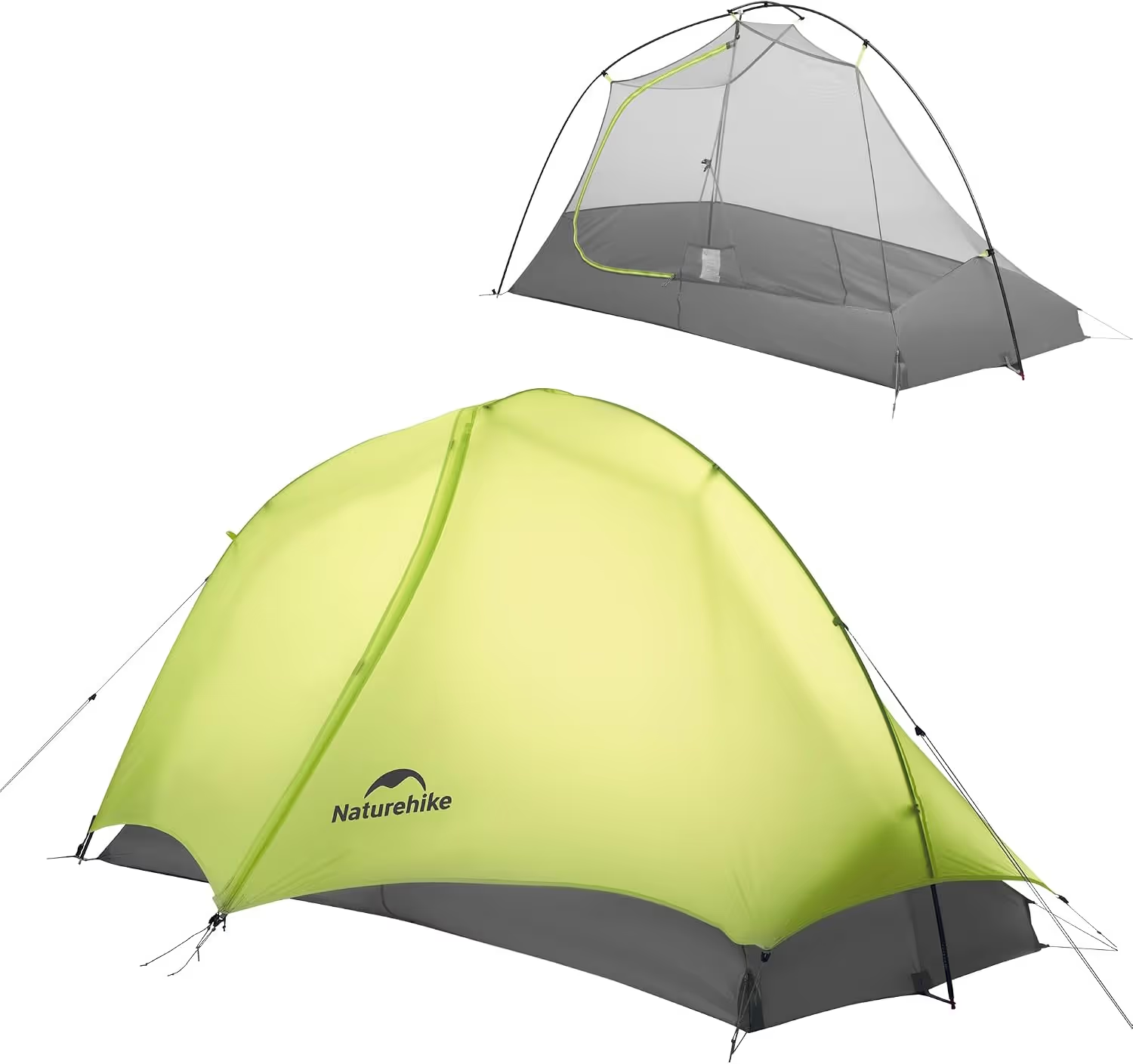
Naturehike Cloud-Up 1 Ultralight Backpacking Tent

Product shot of Naturehike Cloud-Up 1 Ultralight Backpacking Tent by Naturehike
Best For Solo Shelter

Tech Specs

Capacity
1 Person
Weight
3.3 lbs
Material
20D Ripstop Nylon / PU4000mm
Poles
7001 Aluminum
Legitimate solo shelter for 1.5kg. The minimalist's sanctuary.

When going minimalist, every square inch of your pack counts. The Cloud-Up 1 takes the proven blueprint of the Cloud-Up 2 and trims it down for the solo rider. It's a semi-freestanding design, meaning it uses a single Y-shaped pole for the main structure, requiring two stakes at the foot end. This keeps the weight down to a very respectable 1.5kg for the 20D nylon version.

Read the full review

Inside, it's tight (don't expect to be doing yoga in here) but it's exactly what a minimalist needs: a dry, bug-free place to sleep. This high-quality gear is designed specifically for the rigors of multi-day bikepacking adventures across varying terrain. It represents a solid investment for anyone looking to build a reliable and ultralight setup without compromising on essential features or durability.

The vestibule is just bug enough for your shoes and a small bag. The 20D silicone-coated nylon is surprisingly resilient and has kept me bone dry through several Scottish downpours. It's the perfect choice for the solo minimalist who wants a 'real' tent experience without the 'real' tent weight or price tag. This high-quality gear is designed for specifically for the rigors of multi-day bikepacking adventures across varying terrain. It represents a solid investment for anyone looking to build a reliable and ultralight setup without compromising on essential features or durability.

Full review, score breakdown & specs

The Verdict

The king of budget 1-person tents. Light, reliable, and perfectly sized for bikepacking.

GravelPacker score How we score
4.1/5
Durability
4
Performance
4.5
Usability
3.5
Value
4.5
  • Genuine ultralight weight
  • Resilient 20D Nylon
  • Compact pack size
$79.99
At time of review
Buy on Amazon

The Good

  • + Genuine ultralight weight
  • + Resilient 20D Nylon
  • + Compact pack size

The Bad

  • Tight interior space
  • Semi-freestanding (needs stakes)
  • Small vestibule
Naturehike // Best For Wild Camping

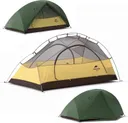
Naturehike Cloud-Up 2 Tent

Product shot of Naturehike Cloud-Up 2 Tent by Naturehike
Best For Wild Camping

Tech Specs

Weight
1.5kg (20D)
Packed Size
40 x 13 cm
Capacity
2 Person
Waterproof Rating
PU4000mm
Genuine ultralight shelter for under £100. This tent is the reason budget bikepacking exists.

The Naturehike Cloud-Up 2 is the most popular budget bikepacking tent for a reason: it genuinely works. At roughly 1.5kg for the 20D version, it packs down small enough to strap to your handlebars or stuff into a large saddle bag. The silicone-coated nylon fly handles heavy rain without issue, and the single-hub pole design means you can have it pitched in under 4 minutes, even in the dark after a long day of riding.

Read the full review

The interior is snug but liveable for one person plus gear, or two people sleeping close. The vestibule is small but functional for muddy shoes. Build quality is where it punches above its weight: the aluminium poles feel solid, the stitching is reinforced at stress points, and the zippers are smooth. The one real friction point is condensation. Like most single-wall-ish tents at this price, the inner can get damp on humid nights. A small price to pay for gear that costs less than a set of bike tires.

The Verdict

The best value tent in bikepacking. Period. You'll upgrade your bags long before you upgrade this.

GravelPacker score How we score
4.0/5
Durability
4
Performance
3.5
Usability
3.5
Value
5
  • Exceptional weight-to-price ratio
  • Packs very small
  • Quality aluminium poles
$101.15
Checked Aug 2026
Buy on Amazon

The Good

  • + Exceptional weight-to-price ratio
  • + Packs very small
  • + Quality aluminium poles

The Bad

  • Condensation in humid conditions
  • Small vestibule space
  • Inner tent touches fly in wind
Naturehike // Best For Camping Shelter

Naturehike Star-River 2-Person Backpacking Tent

Product shot of Naturehike Star-River 2-Person Backpacking Tent by Naturehike
Best For Camping Shelter

Tech Specs

Weight
1.9kg / 4.2lbs
Capacity
2-Person
Material
20D Silicone Nylon
Waterproofing
4000mm
Free-standing, 20D siliconized nylon, under $120. Budget luxury is real.

The Naturehike Star-River 2 represents the absolute pinnacle of budget shelter engineering for bikepackers who need a free-standing design without the premium price tag. While most budget tents require perfect staking to stay upright, the Star-River's Y-shaped pole structure allows it to stand on its own, making it ideal for rocky ground or wooden platforms where pegs won't bite. This high-quality gear is designed specifically for the rigors of multi-day bikepacking adventures across varying terrain. It represents a solid investment for anyone looking to build a reliable and ultralight setup without compromising on essential features or durability.

Read the full review

Internal space is generous for a solo traveler and manageable for two, with dual doors and vestibules that provide essential storage for muddy bags and shoes. The 20D silicone-coated nylon fabric is impressively weather-resistant, handling heavy downpours with ease while keeping the total weight under 2kg. This high-quality gear is designed specifically for the rigors of multi-day bikepacking adventures across varying terrain. It represents a solid investment for anyone looking to build a reliable and ultralight setup without compromising on essential features or durability.

Full review, score breakdown & specs

The Verdict

A robust, free-standing marvel that punches far above its weight class.

GravelPacker score How we score
4.3/5
Durability
3.5
Performance
4.5
Usability
4.5
Value
4.5
  • Free-standing design
  • 20D Silicone nylon
  • Dual vestibules
$119.99
At time of review
Buy on Amazon

The Good

  • + Free-standing design
  • + 20D Silicone nylon
  • + Dual vestibules
  • + Generous headroom
  • + Easy pitch

The Bad

  • Heavier than 1P models
  • Thin flooring material
  • Internal mesh is delicate

Also rated

4. Big Agnes

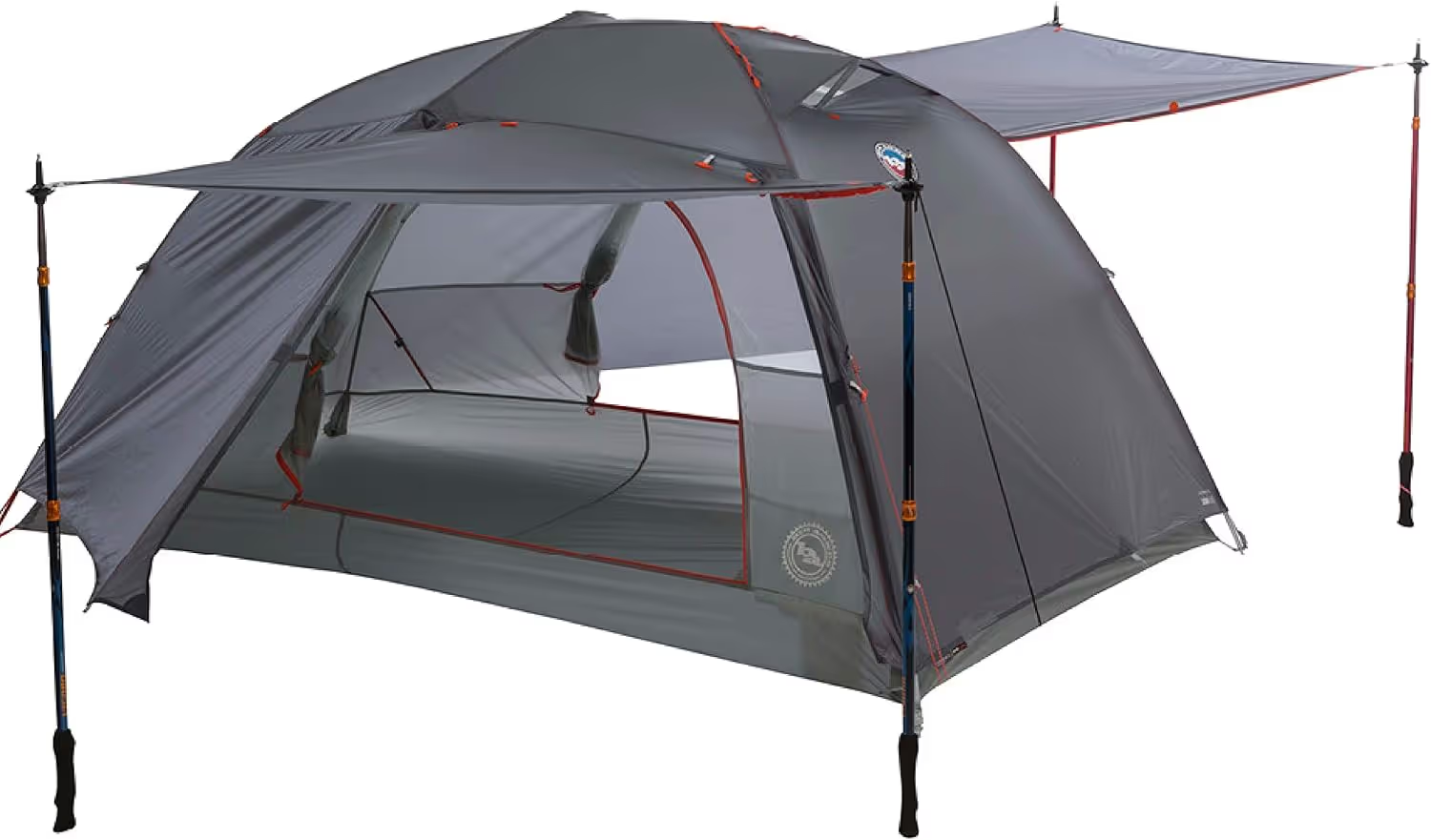
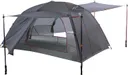
Big Agnes Copper Spur HV UL2 Bikepack

4.0 /5

Designed from the ground up for two-wheeled travel, this tent solves the biggest headache of carrying a shelter: packing the poles.

Packed_Weight
1.59 kg
Trail_Weight
1.33 kg
Floor_Area
2.7 m²
5. Naturehike

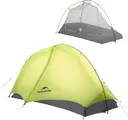
Naturehike Star Trail Ultralight Tent (1P)

4.1 /5

At 2.3 pounds this sits a clear half-kilo below the budget solo tents, and on a bike that half-kilo is the difference between a full bag and a comfortable one.

Weight
2.3 lb / 1.04 kg
Capacity
One person
Season
Three season
6. Naturehike

Naturehike Mongar 2 Person Tent

4.4 /5

The Mongar is the two-person tent most bikepackers should look at first, because two doors solves the problem that makes shared tents unpleasant.

Capacity
Two person
Walls
Double wall
Doors
Two, with two vestibules
7. camppal

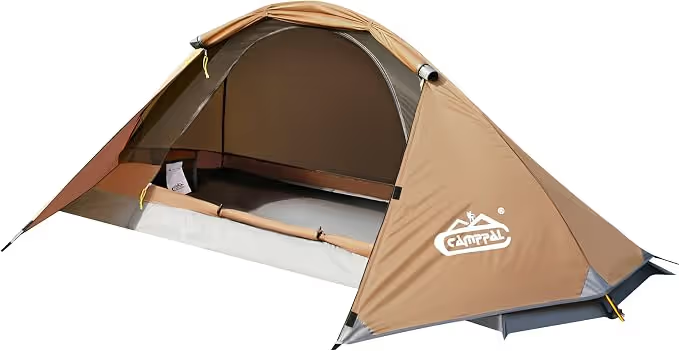
camppal 1 Person Backpacking Tent

3.6 /5

The case for a cheap tent is that it lets you find out whether you like bikepacking before committing four hundred dollars to a shelter.

Capacity
One person
Season
Three season
Type
Budget backpacking
Buying Advice

What to look for

Four things decide whether a tent works on a bike. Everything else is preference.

1. Packed pole length

This is the number that gets ignored and the one that ruins setups. Standard poles fold to roughly 45 cm. Drop bars give you 38 to 42 cm of usable space between the levers, so a standard pole set has to go on the frame, in the seatpack, or strapped somewhere it will rattle. Big Agnes solved it with 12 inch Shortstik poles, and nobody at the budget end has copied them yet.

2. Packed volume, not packed weight

A 1.5 kg tent that stuffs into a 40 x 13 cm roll goes on the handlebars. A 1.2 kg tent in a rigid 50 cm bag does not. Split the tent up: body in the seatpack, fly in a handlebar roll, poles and stakes in the frame bag. Any tent that resists being split is a bad bikepacking tent regardless of its weight.

Related Read

What Size Seatpack Do You Actually Need?

Litres by trip length, why a half-full big bag sways more than a packed small one, and the tyre clearance number that decides it for you.

3. Freestanding or not

Semi-freestanding tents need stakes to hold their shape, which is a problem on the gravel pads, hardpack and wooden platforms you end up on. Freestanding costs you 300 to 400 g and buys you the ability to pitch on anything. On a bike trip where you arrive late and take what is left, that is worth more than the weight.

4. Floor denier

Ultralight floors are 15D to 20D and they do not enjoy the compacted grit of a fire road pullout. A footprint is 150 to 250 g and it is the difference between a tent lasting two seasons and five. Budget tents come with heavier floors and need it less.

5. Pitch order, if rain is likely

A tent that pitches inner-first soaks the sleeping area while you work. Fly-first and all-in-one designs keep the inner dry, which on a wet tour is worth more than a hundred grams of weight saving. This is the one spec that only matters some of the time, and matters enormously when it does.

Related Read

Cold Feet at 4 AM: The Emergency Sleep System Boost

When the temperature drops below your quilt's rating, the 4 AM shivers are inevitable. Six ways to add real warmth to a bag that's underrated for the night you're having.

Methodology

How we chose

A desk selection, built from published dimensions and long-run owner reports. GravelPacker does not run a test lab, so the four checks below are things a specification and a thousand one-star reviews can actually answer.

1. Packed pole length against bar width

Published pole dimensions are checked against the 38 to 42 cm of usable space between the levers on a 42 cm drop bar. Where a tent will not fit, that leads the review rather than sitting in a footnote.

2. Pitch order, from the specification

Whether a tent pitches fly-first, inner-first or all-in-one is a published fact, and it decides whether the sleeping area gets wet while you work. Quoted pitch times are the manufacturer's own and are treated as best-case.

3. Condensation, from owner reports

Single-wall and tight-fly designs draw consistent condensation complaints on humid, still nights. Those reports are the evidence here, not a lab figure, and the pattern across hundreds of them is more reliable than any single night would be.

4. Failure modes, from the one- and two-star reviews

Zipper teeth, stake loops, floor abrasion and pole ferrule play are where tents actually die, and they surface in reviews written a season or two after purchase. That is the part of the record a first-night impression cannot reach.

Q&A

Frequently Asked Questions

Can you carry a normal backpacking tent on a bike?

Yes, but the poles are the problem. A standard 45 cm pole set will not fit between drop bars or inside most frame bags, so it usually ends up strapped along the top tube where it rattles or lashed to a seatpack where it adds leverage. If you already own a backpacking tent, split it up and try mounting it before you buy anything new.

How much should a bikepacking tent weigh?

Between 1.2 and 2 kg for a liveable two-person shelter. Under 1.2 kg you are paying premium prices and accepting a thin floor. Above 2 kg you are carrying weight that a tarp and bivy would save you, unless you specifically want the space to sit out weather.

Is a one-person or two-person tent better for bikepacking?

A two-person tent for one rider, most of the time. The weight penalty is 300 to 500 g and you get somewhere to put wet kit, bags and shoes rather than sleeping with them. A one-person tent makes sense if you are counting grams for a race or you have a very tight handlebar space.

Do I need a footprint?

On a 15D or 20D floor, yes. Bikepacking campsites are gravel pullouts and compacted trailheads, not soft forest floor, and an ultralight floor abrades fast on that. A cut-to-size piece of polycryo weighs 60 g and costs a few dollars, which makes the branded footprint hard to justify.

Where does the tent go on the bike?

Split it. Fly and body roll into a handlebar bag or dry bag up front, poles and stakes go in the frame bag where the weight sits low and central, and the footprint fills a gap anywhere. Putting the whole tent in the seatpack works but it is the worst option for handling, because it is the furthest point from the bike's centre of mass.

Is a bivy bag a lighter option than a tent?

Lighter and much smaller, but you lose the ability to sit out weather, cook under cover or keep bags dry. For a single summer night with a clear forecast it is a fair trade and often the better one. For a multi-day trip with rain in the forecast it usually is not, because the hours you spend waiting out a squall are the hours a tent earns its weight.

Keep Riding

More Shelter →
Reviewer

The GravelPacker Desk

GravelPacker is a research desk, not a test lab. We read the spec sheets, the long-run owner reports and the forum threads where things break, then score what survives that reading against a rubric we publish. We say so plainly because a review you can check is worth more than one you have to trust.