On this page

The Best Water Filters for Bikepacking

A filter is the only piece of kit on the bike where the failure mode is finding out three hours later. The choice comes down to flow rate, cartridge life, and whether it survives a cold night.

Published August 16, 2026
Edited by Louis Raveton
When you purchase through links on our site, we may earn an affiliate commission. Here's how it works.
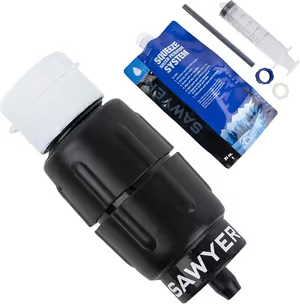
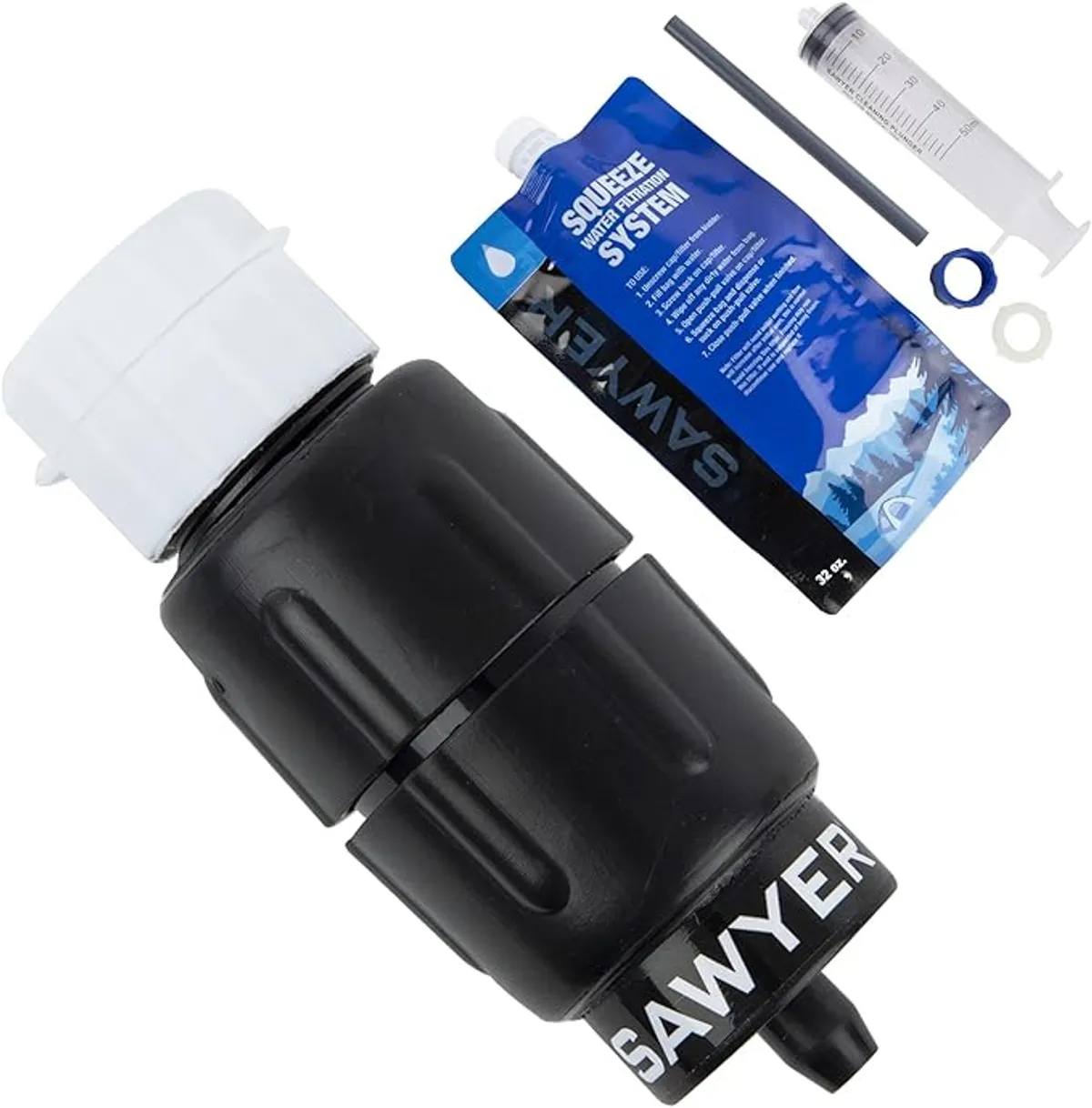
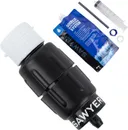
Sawyer Micro Squeeze Water Filtration System (SP2129), our top pick in The Best Water Filters for Bikepacking

Almost every modern lightweight filter uses the same technology, a hollow-fibre membrane at 0.1 or 0.2 microns, and almost all of them remove the same things. Bacteria and protozoa are covered. Viruses and chemical contamination are not, by any filter on this list.

So the choice is not really about what comes out of the water. It is about flow rate, how long the cartridge lasts, whether it threads onto the bottle you already carry, and what happens when it freezes.

Nine items here, including two that are not filters at all. Some links are affiliate links, which is how the site pays for itself, and none of them changed a score.

Editor's Choice

  • • Half the length of the Squeeze, about 2 oz
  • • Threaded at both ends
  • • Faster flow than the Mini
$33.95
Checked Aug 2026
Buy on Amazon

Quick Comparison

Sort
Best for Stream Refill
  • Membrane 0.1 micron hollow fibre
  • Weight About 2 oz / 57 g (Sawyer)
  • Flow Between the Squeeze and the Mini (Sawyer)
  • Threads 28 mm, both ends
Best for Stream Refill
  • Membrane 0.1 micron hollow fibre
  • Weight About 2 oz / 57 g (Sawyer)
  • Flow Slowest of the three (Sawyer)
  • Threads 28 mm, inlet end only
Best for Water Filter
  • Membrane 0.1 micron hollow fibre
  • Weight About 3 oz / 85 g (Sawyer)
  • Flow Fastest of the three (Sawyer)
  • Threads 28 mm, both ends
Best for Fast Refill
  • Weight 63g
  • Filter_Life 1,000 litres
  • Filter_Type 0.1 Micron EZ-Clean Membrane
  • Capacity 1 litre collapsible flask
Best for Fast Refill
  • Weight 94g
  • Filter_Life 1,000 litres
  • Filter_Type 0.2 Micron Hollow Fiber
  • Compatibility Standard 28mm threads
Best for Stream Refill
  • Filter_Life 2,000 litres
  • Filter_Type 0.2 Micron Hollow Fiber
  • Compatibility Standard 28mm threads
Best for Shallow Sources
  • Weight 142g
  • Filter_Life 2,000 litres
  • Filter_Type 0.2 Micron Hollow Fiber
  • Flow_Rate 1 litre per minute (quoted)
Best for Spare Pouch
  • Compatibility All Sawyer Squeeze, Micro and Mini filters
  • Thread Standard 28mm
  • Sold_As Three 32 oz pouches (SP113)
  • Burst_Point About 7 PSI (Sawyer)
Best for Camp Filtering
  • Capacity 2 litres
  • Thread Standard 28mm
  • Compatibility Sawyer Squeeze, Micro and Mini
  • Packed Rolls flat when empty

The Setup Most Riders Should Buy

A Micro Squeeze, a spare pouch, and a 2-litre dirty bag. About 54 dollars, roughly 90 grams, and it covers everything from a bottle top-up to filtering four litres for a dry camp.

The filter itself will outlast the bike. The two cheap items alongside it are there because the pouch is the part that splits and the standard pouch is too small for a camp, which are the two complaints that dominate Sawyer owner reports.

If slow squeezing is the thing that would stop you bothering, buy the Platypus QuickDraw instead and accept the cartridge cost. It flows nearly as fast as the BeFree and still fits the bottle in your cage.

Related Read

How Much Water Should You Carry Bikepacking?

Litres per hour by temperature, how to size a carry to the gap between sources rather than to your bottle count, and the number that has no safety margin.

What Nobody Mentions Until It Happens

Two failures account for most of the bad experiences with lightweight filters, and neither is about filtration.

The first is freezing. A membrane that freezes with water inside cracks, and the filter afterwards looks identical, threads identically and flows identically. You cannot test for it in the field. Any filter that might have frozen is a filter you replace.

The second is silt. Flow rate complaints almost never mean a faulty filter, they mean somebody filtered cloudy water without letting it settle. Ten minutes of standing time, or a bandana over the mouth of the dirty bag, prevents most of the clogging that gets blamed on the cartridge.

Where Each One Gives Out

The Sawyer range is slow, and the Mini is the slowest of the three. It is also the only range here you buy once.

The BeFree and QuickDraw both rate at 1,000 litres, which a long tour will reach. Budget for cartridges as a running cost rather than treating the purchase price as the whole number.

The TrailShot is heavy and expensive and solves a problem the others cannot touch. If your route has water only as shallow seeps, it is the only thing on this list that works.

And none of them address viruses or chemicals. If that is the risk where you are riding, everything on this page is the wrong tool.

Related Read

Water That Tastes Like Plastic: Cleaning Bladders and Bottles on Tour

Your water tastes like a shower curtain because something is growing in the hose. Here is the field clean, the deep clean, and how to stop it coming back.

Our Recommendations

Sawyer // Best For Stream Refill //
★ 4.6 (2,030 ratings at the retailer)

Sawyer Micro Squeeze Water Filtration System (SP2129)
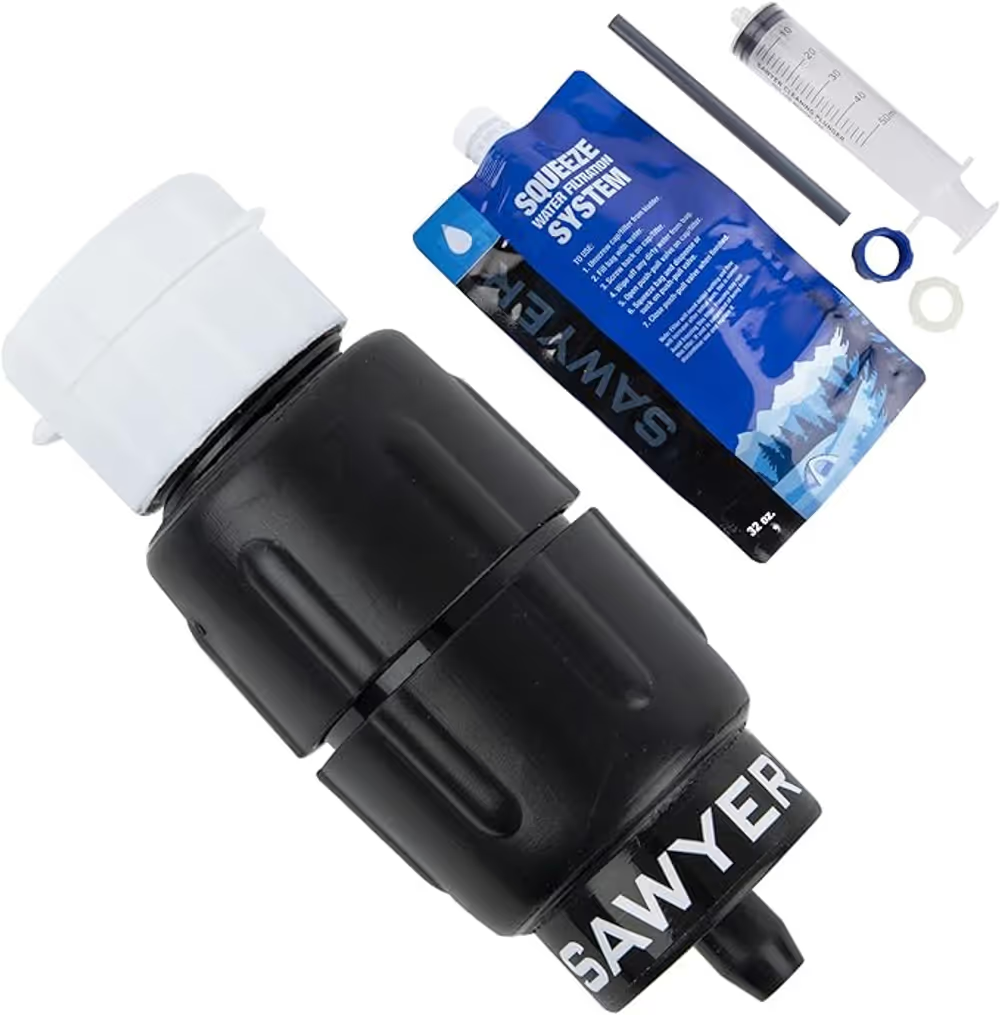
Product shot of Sawyer Micro Squeeze Water Filtration System (SP2129) by Sawyer
Best For Stream Refill

Tech Specs

Membrane
0.1 micron hollow fibre
Weight
About 2 oz / 57 g (Sawyer)
Flow
Between the Squeeze and the Mini (Sawyer)
Threads
28 mm, both ends
Rated Life
Up to 100,000 gallons (Sawyer)
Rated Range
32 to 140°F (Sawyer)
Included
32 oz pouch, straw, coupling, plunger, spare gasket (Sawyer)
Half the length of the Squeeze and about 28 g lighter, with flow between the Squeeze and the Mini. The pocket-sized Sawyer.

The Micro uses the same 0.1 micron hollow-fibre membrane as the rest of Sawyer's squeeze range, and carries the same removal claims for bacteria and protozoa. Sawyer gives it about 2 oz and 4 inches, half the length of the full Squeeze. It threads onto 28 mm bottle necks at both ends, so it works on a bottle, the supplied pouch or inline on a hose.

Read the full review

Sawyer ranks its flow between the Squeeze and the Mini, and says it needs backflushing more often than the Squeeze. FarOut's 2019 tests found it close to the Squeeze on Sawyer's own pouch but slower with other containers. On a bike the saving over the Squeeze is about 28 g by Sawyer's figures, which buys a little room in a small frame bag.

Owners on Amazon US gave it 4.6 stars from 2,030 ratings in October, with about 5 percent at one or two stars. Amazon's review summary describes flow as mixed, and the durability complaints are mostly about pouches splitting at the seam. One owner reports the O-ring falling out, so check it sits in place before each fill.

Sawyer rates its filters for 32 to 140°F and says ice may damage a wetted membrane without any sign, so a filter that may have frozen should be replaced. Keep it in a pocket by day and the sleeping bag at night once frosts start. Like every Sawyer, it does nothing about viruses or chemical contamination.

Full review, score breakdown & specs

The Verdict

The small-bag Sawyer. Lighter and shorter than the Squeeze, a little slower, and threaded at both ends where the Mini is not.

GravelPacker score How we score
4.3/5
Durability
3.5
Performance
4.5
Usability
4
Value
5
  • • Half the length of the Squeeze, about 2 oz
  • • Threaded at both ends
  • • Faster flow than the Mini
$33.95
Checked Aug 2026
Buy on Amazon

The Good

  • + Half the length of the Squeeze, about 2 oz
  • + Threaded at both ends
  • + Faster flow than the Mini

The Bad

  • − Slower than the Squeeze and needs backflushing more often
  • − Pouch seams are the common complaint
  • − A frozen membrane can fail without warning
Sawyer // Best For Stream Refill //
★ 4.7 (41,345 ratings at the retailer)

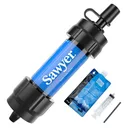
Sawyer Mini Water Filtration System

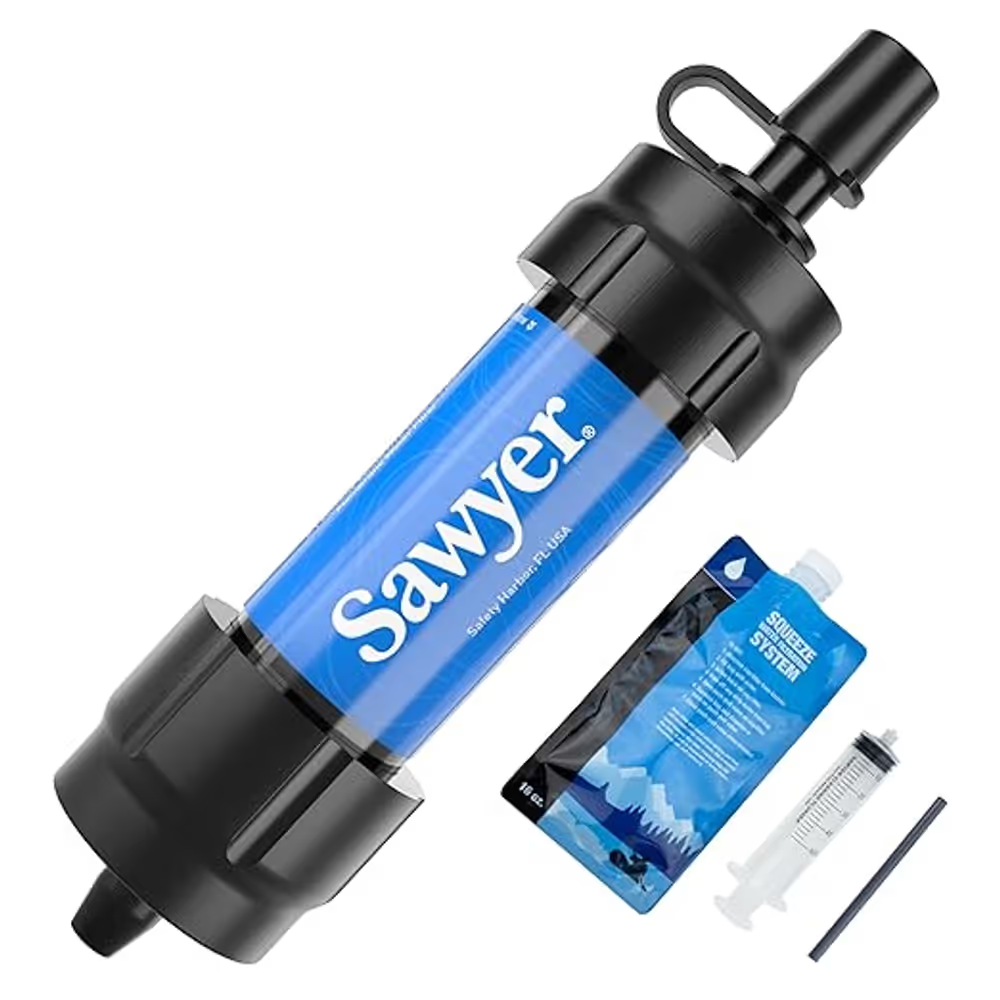
Product shot of Sawyer Mini Water Filtration System by Sawyer
Best For Stream Refill

Tech Specs

Membrane
0.1 micron hollow fibre
Weight
About 2 oz / 57 g (Sawyer)
Flow
Slowest of the three (Sawyer)
Threads
28 mm, inlet end only
Rated Life
Up to 100,000 gallons (Sawyer)
Rated Range
32 to 140°F (Sawyer)
Included
16 oz pouch, straw (Sawyer)
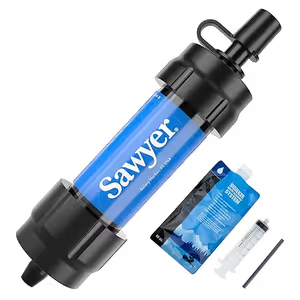
The lightest and cheapest Sawyer, at about 2 oz. Expect the slowest squeeze of the three and keep it out of a frost.

The Mini uses Sawyer's 0.1 micron hollow-fibre membrane, which Sawyer says removes bacteria and protozoa such as E. coli and giardia. It weighs about 2 oz by Sawyer's figure and comes with a 16 oz pouch and a drinking straw. The inlet takes a 28 mm bottle neck, but Sawyer's help pages say the standard Mini is threaded at one end only.

Read the full review

The compromise is flow. Sawyer ranks it slowest of its three squeeze filters and says it needs backflushing most often. FarOut's 2019 tests measured it about 30 percent slower than the full Squeeze, and under half the Squeeze's rate on gravity, which is obvious once you fill four litres at a resupply.

Owners on Amazon US gave it 4.7 stars from 41,345 ratings in October, with about 1 percent at one or two stars, and weight is the most praised feature. It is the cheapest Sawyer by a few dollars, and Sawyer rates its life at up to 100,000 gallons, far beyond touring use. The pouches are the part most likely to fail.

Sawyer rates its filters for 32 to 140°F and says ice may damage a wetted membrane without any sign. Its Mini page states plainly that there is no warranty for a frozen filter, so on cold nights it sleeps in the bag. Like every Sawyer, it does nothing about viruses or chemical contamination.

Full review, score breakdown & specs

The Verdict

The lightest Sawyer worth trusting, and the cheapest. Accept a slow squeeze and frequent backflushing, and never let it freeze once wet.

GravelPacker score How we score
4.0/5
Durability
3.5
Performance
4
Usability
3.5
Value
5
  • • About 2 oz, the lightest Sawyer
  • • Cheapest of the three
  • • 4.7 stars from over 41,000 owners
$28.99
Checked Aug 2026
Buy on Amazon

The Good

  • + About 2 oz, the lightest Sawyer
  • + Cheapest of the three
  • + 4.7 stars from over 41,000 owners

The Bad

  • − Slowest flow, needs backflushing most often
  • − Threaded at the inlet end only
  • − No warranty cover for a frozen filter
Sawyer // Best For Water Filter //
★ 4.7 (10,482 ratings at the retailer)

Sawyer Squeeze Water Filtration System (SP129)

Product shot of Sawyer Squeeze Water Filtration System (SP129) by Sawyer
Best For Water Filter

Tech Specs

Membrane
0.1 micron hollow fibre
Weight
About 3 oz / 85 g (Sawyer)
Flow
Fastest of the three (Sawyer)
Threads
28 mm, both ends
Rated Life
No gallon figure, lifetime warranty on the filter
Rated Range
32 to 140°F (Sawyer)
Included
2 x 32 oz pouches, straw, inline adapters
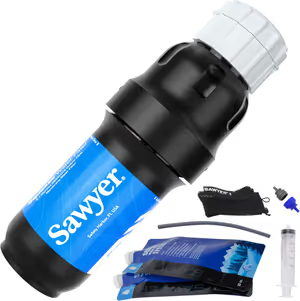
Sawyer's fastest squeeze filter, threaded at both ends, about 3 oz. Keep it out of a frost and swap the pouches for tougher bags.

The Squeeze uses Sawyer's 0.1 micron hollow-fibre membrane, which Sawyer says removes 99.99999 percent of bacteria and 99.9999 percent of protozoa. It weighs about 3 oz by Sawyer's figure and threads onto the 28 mm neck of a Smartwater or Dasani bottle at both ends. That lets it screw onto a dirty bottle and, with Sawyer's cleaning coupling, feed a clean one, or sit inline on a hydration hose.

Read the full review

Flow is the reason to choose it over the smaller Micro and Mini. Sawyer ranks the Squeeze fastest of the three and says it needs backflushing least often, and FarOut's 2019 tests found it faster than the Micro with every container tried. When filling three or four litres at a stream, those minutes add up more than the extra grams do.

The SP129 kit on Amazon US comes with two 32 oz pouches, a drinking straw and inline adapters. The pouches are the weak part of the system, and most low-star owner reports describe a pouch splitting rather than a filter failing. One owner's filter cracked when screwed onto a pouch, which Sawyer put down to overtightening, so finger-tight is the rule.

Sawyer rates it for 32 to 140°F and says there is no reliable way to tell whether a used filter has frozen, so it sleeps in the bag on cold nights. Its warranty covers manufacturer defects for the life of the filter, excludes accessories, and is void after a wetted filter freezes. Owners on Amazon US gave it 4.7 stars from 10,482 ratings in October.

Full review, score breakdown & specs

The Verdict

The Sawyer to buy for a bike. It is the fastest and needs backflushing least, for about 28 g more than the Micro.

GravelPacker score How we score
4.3/5
Durability
3.5
Performance
5
Usability
4
Value
4.5
  • • Fastest flow of Sawyer's three squeeze filters
  • • Threaded at both ends for bottles and inline use
  • • Kit includes two pouches and inline adapters
$45.95
Checked Aug 2026
Buy on Amazon

The Good

  • + Fastest flow of Sawyer's three squeeze filters
  • + Threaded at both ends for bottles and inline use
  • + Kit includes two pouches and inline adapters

The Bad

  • − About 28 g heavier than the Micro and Mini
  • − Pouches are the common failure
  • − Freezing after first use voids the warranty

Also rated

4. Katadyn

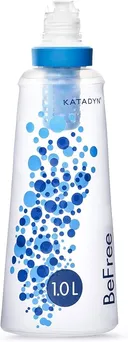
Katadyn BeFree 1L Collapsible Water Filter Bottle

4.1 /5

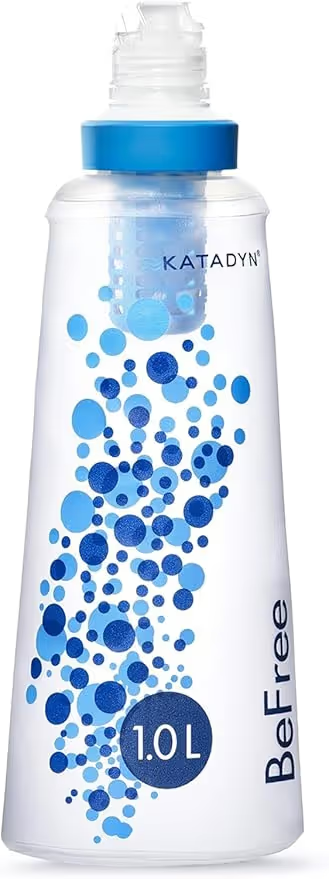
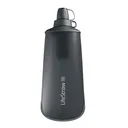
The BeFree pairs a 0.1-micron membrane with a collapsible HydraPak flask, and its defining characteristic is flow: it drinks almost like an unfiltered bottle.

Weight
63g
Filter_Life
1,000 litres
Filter_Type
0.1 Micron EZ-Clean Membrane
5. Platypus

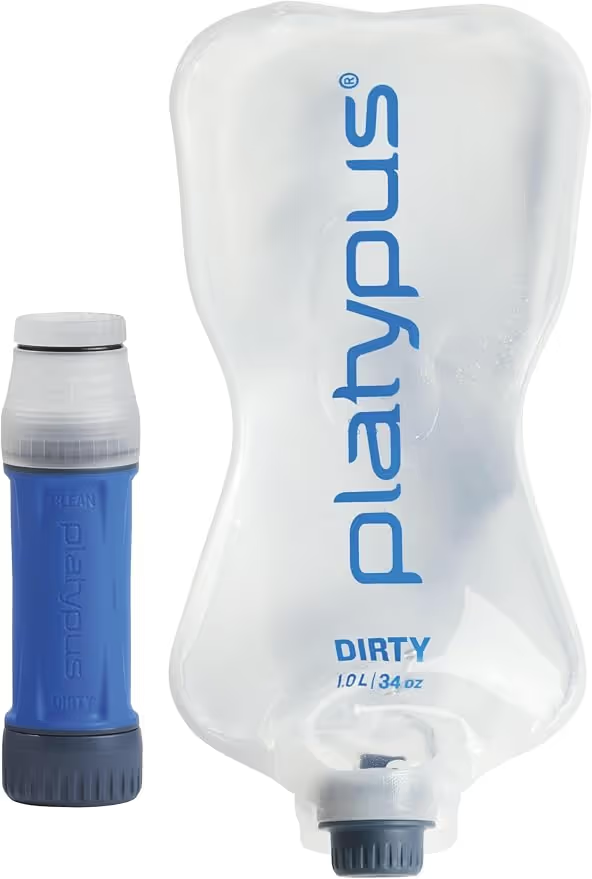
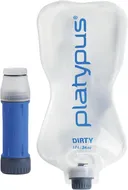
Platypus QuickDraw Microfilter System (1L)

4.1 /5

The QuickDraw is Platypus answering the BeFree, and its trick is combining a fast membrane with the standard 28mm thread that the BeFree gives up.

Weight
94g
Filter_Life
1,000 litres
Filter_Type
0.2 Micron Hollow Fiber
6. LifeStraw

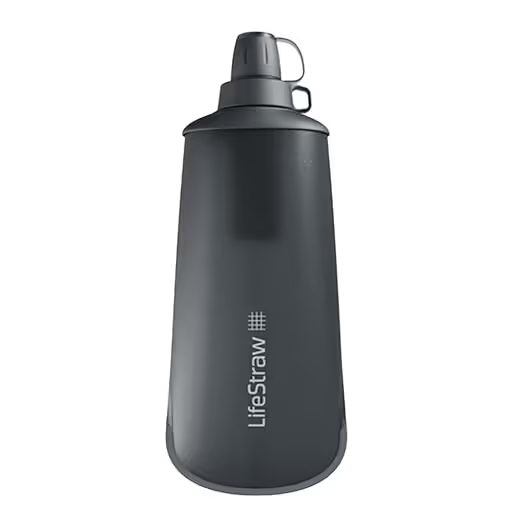
LifeStraw Peak Series Collapsible Squeeze Bottle Filter

4.0 /5

The Peak Series is LifeStraw moving onto Sawyer's ground: a 0.2-micron squeeze filter with standard threads that works on bottles, inline, or straight from the supplied soft flask.

Filter_Life
2,000 litres
Filter_Type
0.2 Micron Hollow Fiber
Compatibility
Standard 28mm threads
7. MSR

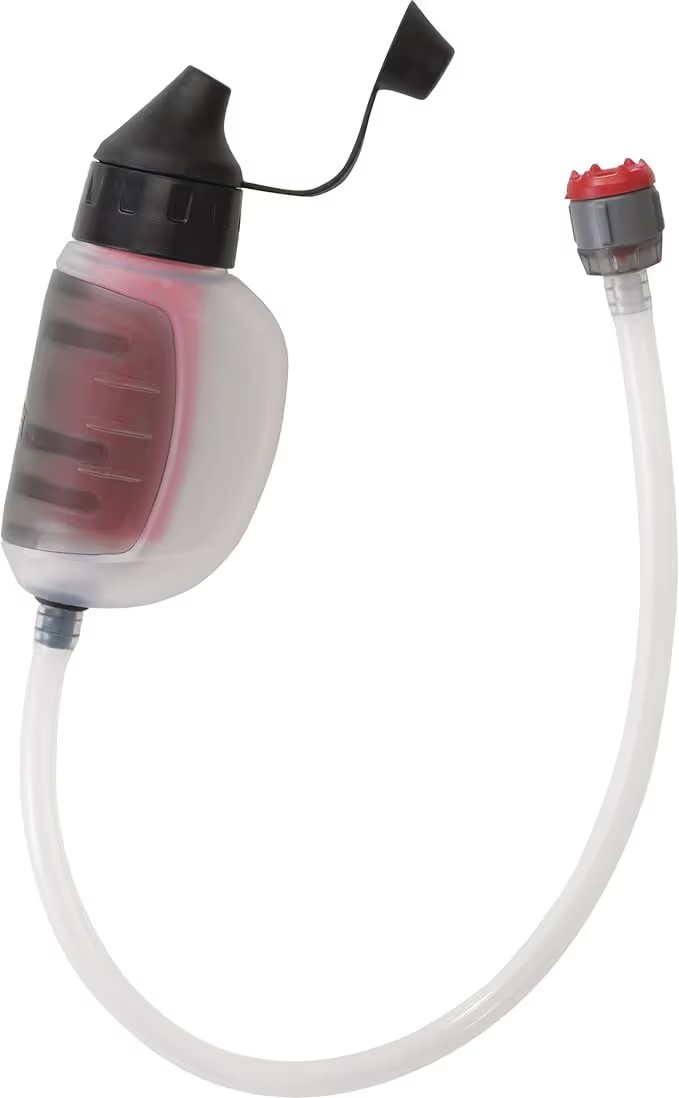
MSR TrailShot Pocket-Sized Water Filter

3.9 /5

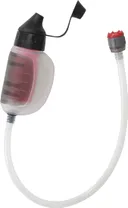
The TrailShot is a squeeze-bulb pump with an intake hose, which sounds like unnecessary complexity until you meet a water source you cannot submerge a bottle in.

Weight
142g
Filter_Life
2,000 litres
Filter_Type
0.2 Micron Hollow Fiber
8. Sawyer

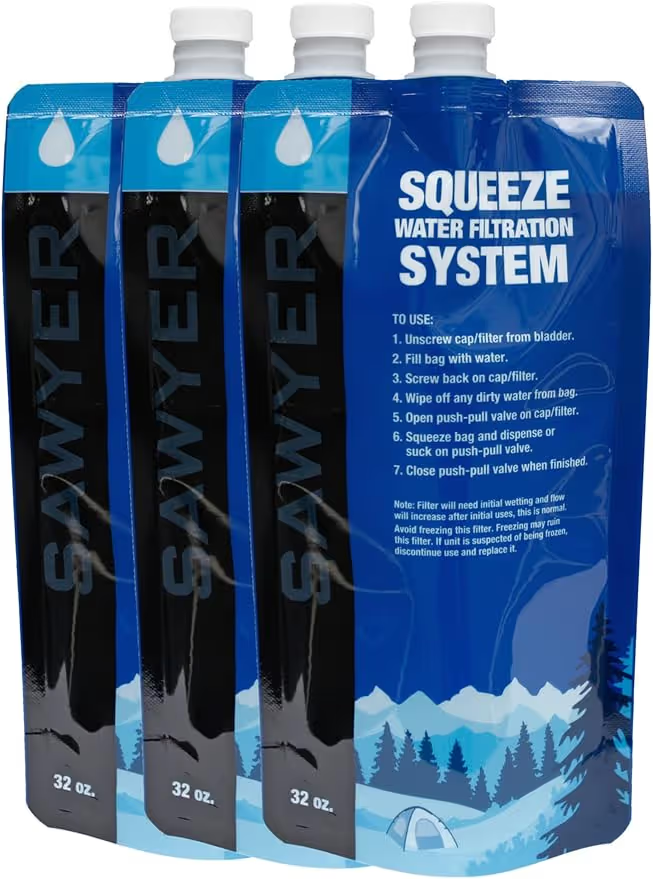
Sawyer Squeezable Pouches, 32 oz, Three-Pack (SP113)

3.9 /5

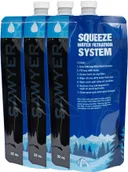
The filter outlasts many seasons of touring and the pouch does not, which makes these the most predictable spare in a Sawyer kit. This listing is a three-pack of 32 oz pouches.

Compatibility
All Sawyer Squeeze, Micro and Mini filters
Thread
Standard 28mm
Sold_As
Three 32 oz pouches (SP113)
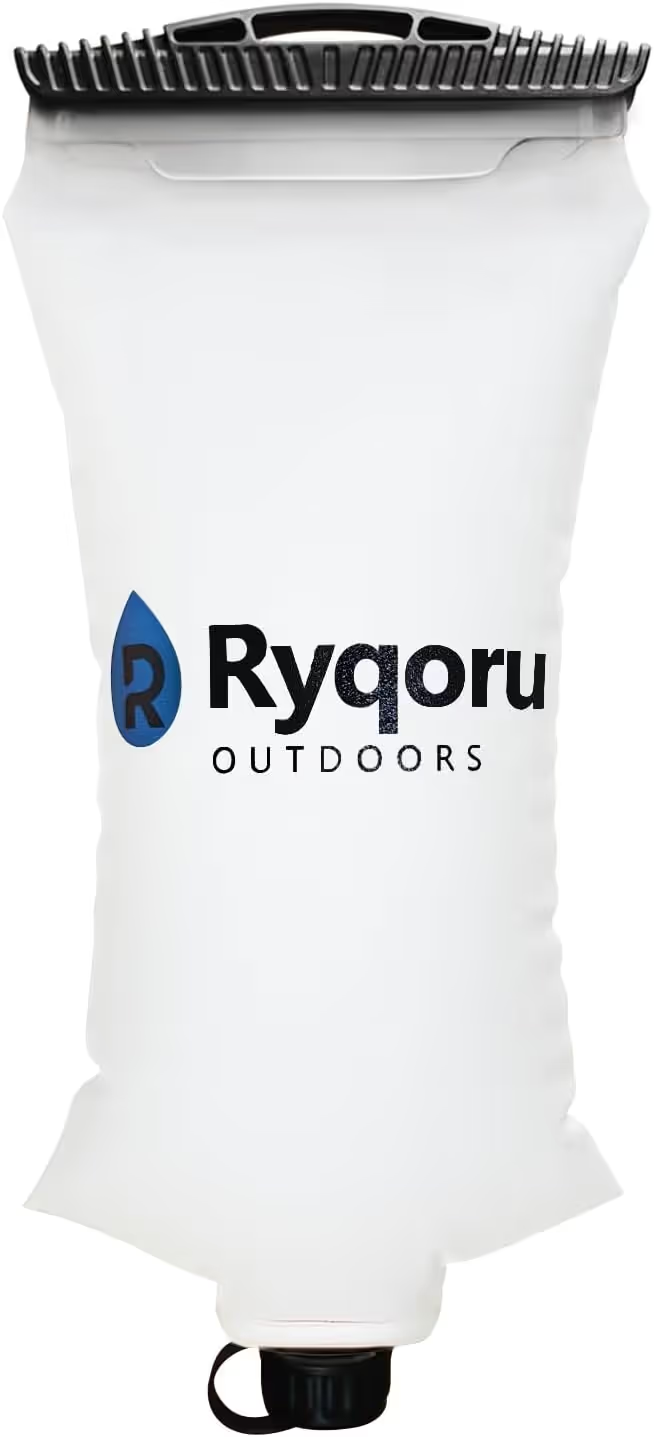
9. Ryqoru

2L Collapsible Water Bag, 28mm Sawyer-Compatible

4.0 /5

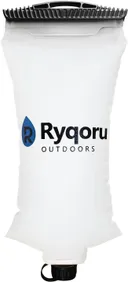
A larger dirty-water reservoir changes how a Sawyer setup works at camp, because the constraint stops being the filter and starts being how often you walk to the water.

Capacity
2 litres
Thread
Standard 28mm
Compatibility
Sawyer Squeeze, Micro and Mini
Buying Advice

What to look for

Four things decide this, and pore size is not one of them.

1. Flow rate is what decides whether you actually filter

A filter you resent using is a filter you skip on a hot afternoon when the stream looks clean. This is the honest reason the Katadyn BeFree and Platypus QuickDraw are worth their price, and the honest argument against the Sawyer Mini for anyone filtering volume rather than topping up.

2. Cartridge life is a cost, not a spec

Sawyer rates its filters at 100,000 gallons, which no touring rider will reach. Katadyn and Platypus rate theirs at 1,000 litres, which a long summer will. One is a buy-once item and the others are a recurring purchase, and that gap is larger than the difference in sticker price.

Related Read

Water That Tastes Like Plastic: Cleaning Bladders and Bottles on Tour

Your water tastes like a shower curtain because something is growing in the hose. Here is the field clean, the deep clean, and how to stop it coming back.

3. Thread compatibility removes kit from the bike

A 28mm thread is the de facto standard, and a filter that uses it turns the bottle already in your cage into the dirty-water container. The BeFree gives this up for its flask, which is a real cost on a bike where every item competes for frame bag space.

4. Freezing is the failure you will not see

A hollow-fibre membrane cracks if it freezes with water inside, and the filter looks and works exactly the same afterwards. On any trip with sub-zero nights the filter sleeps in your bag, not in the frame bag, and that is not optional.

Related Read

How Much Water Should You Carry Bikepacking?

Litres per hour by temperature, how to size a carry to the gap between sources rather than to your bottle count, and the number that has no safety margin.

Methodology

How we chose

A desk selection from published specifications and owner reports. GravelPacker does not run a test lab, so flow rates quoted below are the manufacturer's own and are read as best-case.

1. Flow rate, read as a ceiling

Quoted rates are measured with a clean cartridge and clear water, neither of which lasts. Where owner reports consistently describe flow degrading in silty or tannic water, that pattern carries more weight here than the published figure.

2. Cartridge life against a realistic season

Rated litres are compared against what a rider filtering three litres a day on a two-week tour would actually use. That turns an abstract number into a replacement interval, which is the form the cost is felt in.

3. Thread compatibility, from the specification

Whether a filter takes the standard 28mm thread is a published fact and it decides how much other kit the filter drags along with it. Systems that need a proprietary flask are marked down for it.

4. Failure modes, from the one- and two-star reviews

Split pouches, cracked membranes and clogged cartridges are what filters actually die of, and they surface in reviews written months after purchase. That is the part of the record a specification sheet cannot reach.

Q&A

Frequently Asked Questions

Do I need a water filter for bikepacking?

On any route where resupply is a stream, a spring or a cattle trough, yes. On routes through towns with taps and shops every few hours, a filter is 60g of insurance you may never use. The deciding question is whether there is a stretch where the only water is water you did not choose.

Which filter should most bikepackers buy?

The Sawyer Micro Squeeze. It weighs the same as the Mini, flows noticeably better, threads onto standard bottles, and its rated life means you will never replace it. The faster Katadyn and Platypus filters are better in use but are consumables with a recurring cost.

Do these filters remove viruses?

No. Every filter on this list is a hollow-fibre membrane at 0.1 or 0.2 microns, which stops bacteria and protozoa but not viruses. In North America and most of Europe that is the correct level of protection. Where viruses are a genuine risk you need a purifier, chemical treatment or boiling.

What happens if a water filter freezes?

The membrane cracks and the filter keeps working exactly as before, except it no longer filters. There is no way to detect it and no way to fix it. On any trip with sub-zero nights the filter goes in your sleeping bag, and a filter that may have frozen gets replaced rather than trusted.

Why is my filter so slow all of a sudden?

Sediment, almost always. Silty or tannic water clogs a membrane quickly, and the cure is backflushing for Sawyer and LifeStraw, or shaking for Katadyn and Platypus. Letting cloudy water settle for ten minutes before filtering, or pre-filtering through a bandana, prevents most of it.

Sawyer or Katadyn BeFree?

Sawyer if you want to buy once and never think about it, Katadyn if slow flow is what stops you filtering. The BeFree drinks much faster and cleans more easily, but its 1,000-litre cartridge life against Sawyer's effectively unlimited rating makes it a recurring cost rather than a one-off.

Reviewer

The GravelPacker Desk

GravelPacker is a research desk, not a test lab. We read the spec sheets, the long-run owner reports and the forum threads where things break, then score what survives that reading against a rubric we publish. We say so plainly because a review you can check is worth more than one you have to trust.