Gear
How Many Days of Food Can You Carry?
Grams and calories per day, why four days is the practical ceiling on a bike, and how to plan a route around resupply instead of hauling a week of dinners.
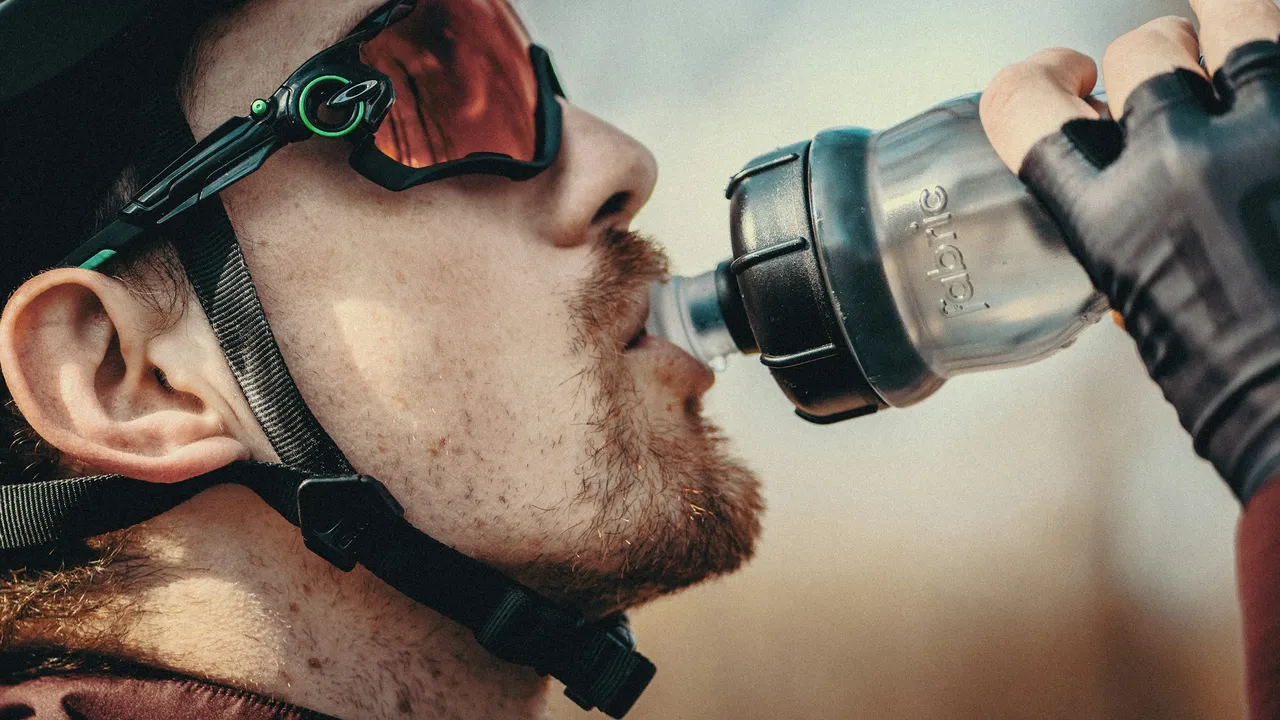
Sweat rate varies between people more than any other figure in this article, so treat these as a starting point you refine on your own rides.
| Conditions | Per hour riding | Three hour gap | Six hour gap |
|---|---|---|---|
| Cool, under 15°C | 400 to 500 ml | 1.5 L | 3 L |
| Mild, 15 to 25°C | 500 to 750 ml | 2 L | 4 L |
| Hot, 25 to 32°C | 750 ml to 1 L | 3 L | 5.5 L |
| Desert, above 32°C | 1 L or more | 3.5 L | Do not plan a six hour dry gap |
Add a litre to every one of those numbers. That litre is not for drinking, it is for the source that turned out to be dry, the mechanical that cost you ninety minutes, and the climb that took longer than the profile suggested.
Note the bottom right cell. In genuine desert heat, a six hour dry gap is not a hydration problem you solve by carrying more, it is a route planning problem you solve by not doing it.
The most common mistake is deciding capacity from the bike's fittings. Two bottle cages, therefore two bottles, therefore 1.5 litres, therefore whatever happens happens.
Do it the other way round. Find the longest gap between reliable water on your route, convert it to hours at your realistic loaded pace, multiply by the rate above, add a litre, and then work out where that volume goes on the bike.
Sometimes the answer is two bottles. On a desert route with one reliable source it is five litres, which means bottles plus a bladder in the frame bag plus one more in a cargo cage. The bike has to accommodate the water, not the other way around.
Hydration on the Down-Tube: The Mud-Free Water Strategy
That down-tube bottle cage is critical real estate for water, but it is also a mud magnet. Here is how to setup a clean, dirt-free hydration system.
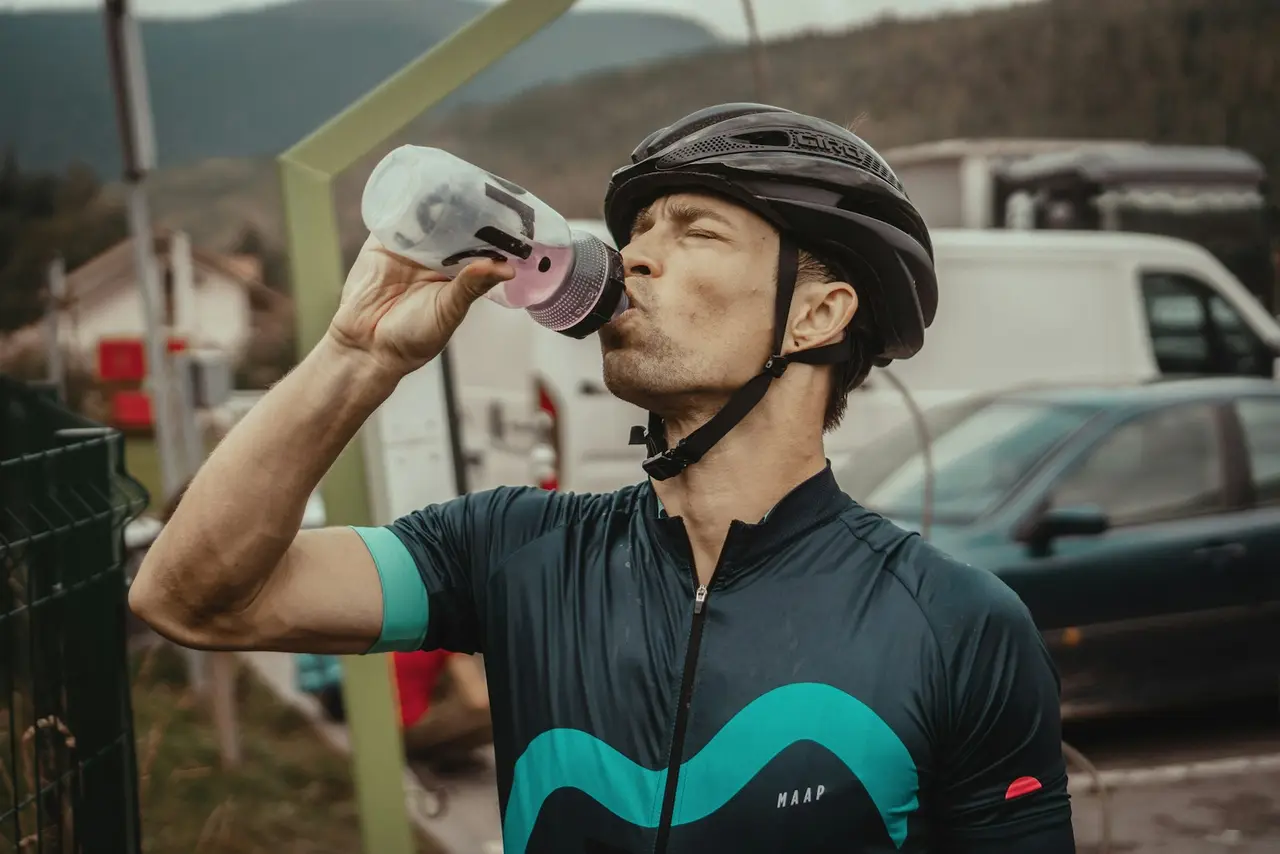
A source is reliable if it runs in the season you are riding, in the year you are riding, and you have checked recently. Almost nothing else qualifies.
A creek marked on a map is not a source. A seasonal river crossing is not a source in March. A general store in a settlement of forty people with unpublished off-season hours is not a source. Every one of those can be a bonus, and none of them can be a dependency.
The practical rule is this: carry enough to reach the next source worth betting money on. Anything less certain than that does not belong in the plan.
Five litres is 5 kg and it is the heaviest thing on the bike by a wide margin. Where you put it changes how the bike rides more than any other packing decision.
Low and central is the answer. A bladder in the frame bag is the single best place for two of those kilos, because it sits inside the wheelbase and below the top tube. Bottles on the down tube and inside the front triangle are next best.
What you do not do is put water in the seatpack. Two litres behind the saddle is 2 kg on the end of a lever, and it will do more damage to the bike's handling than the entire rest of your kit.
How Much Should a Bikepacking Setup Weigh?
Real weights for a weekend bikepacking setup, where the kilos actually hide, and the point at which chasing grams stops making you faster.
Water is the one weight you never trim to hit a number.
Everything else on the bike is negotiable. You can leave the second layer, the book, the third tube, the camp shoes. You can take a lighter tent. Every one of those is a comfort decision with a bad night as the worst outcome.
Carrying too little water in dry country has a different worst outcome, and it arrives faster than people expect. Carry the full amount, ride slower for it, and come back.
Bottles are the wrong unit. Work out the longest gap between reliable water on your route in hours, multiply by your hourly rate for the expected temperature, and carry that plus a litre. Sometimes that is two bottles and sometimes it is five litres across bottles, a bladder and a cargo cage.
Both, for different jobs. A bladder in the frame bag carries volume low and central and is the cheapest place on the bike to put 2 kg. Bottles are easier to fill from a shallow source, easier to clean and easier to monitor, because you can see how much is left. Most desert setups run a bladder for capacity and bottles for the drinking you actually count.
One litre is one kilogram. Five litres is 5 kg, which is more than most people's entire sleep system and shelter combined. This is why water dominates a loaded bike's weight in dry country and why trimming grams elsewhere to compensate is mostly pointless.
In wet country, yes, and a filter is lighter than the water it replaces. In dry country a filter is only as good as the source, and a source that is dry filters nothing. The rule is that a filter reduces how much you carry between known reliable sources, and it never replaces carrying enough to reach the next one.
Dark urine and a headache are late signals, not early ones. The useful early signal is that you have stopped needing to pee at all, which usually shows up an hour or two before you feel bad. On a hot climb with no shade, that is the point to turn around rather than the point to ration.
Grams and calories per day, why four days is the practical ceiling on a bike, and how to plan a route around resupply instead of hauling a week of dinners.
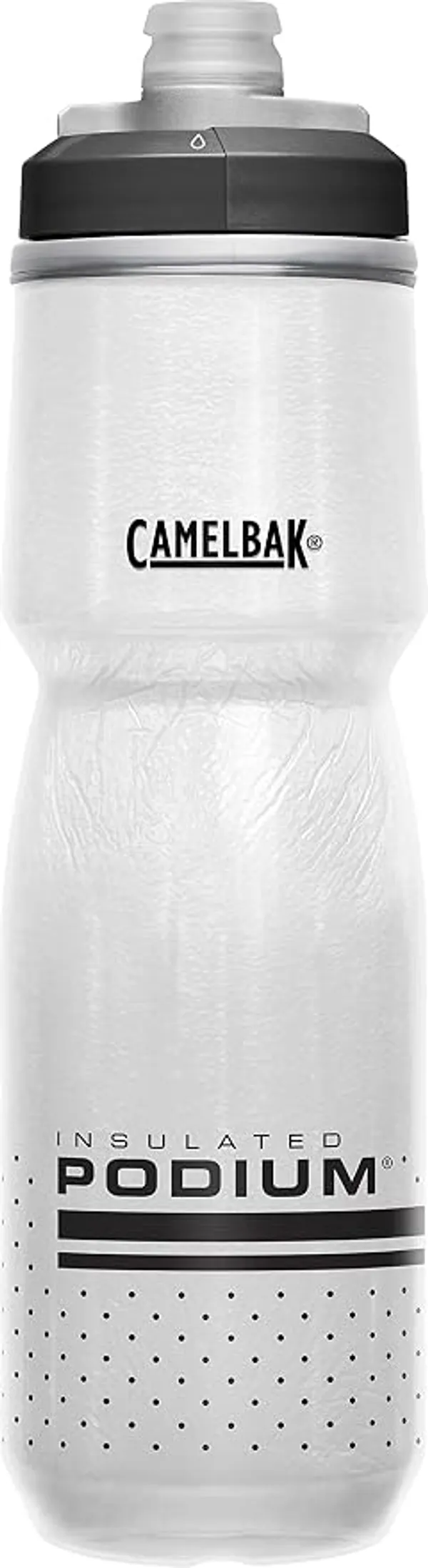
Eight ways to carry water on a loaded bike, from a $8 bladder to a titanium cage. Side-entry cages, insulated bottles, and what a frame bag does to your clearance.
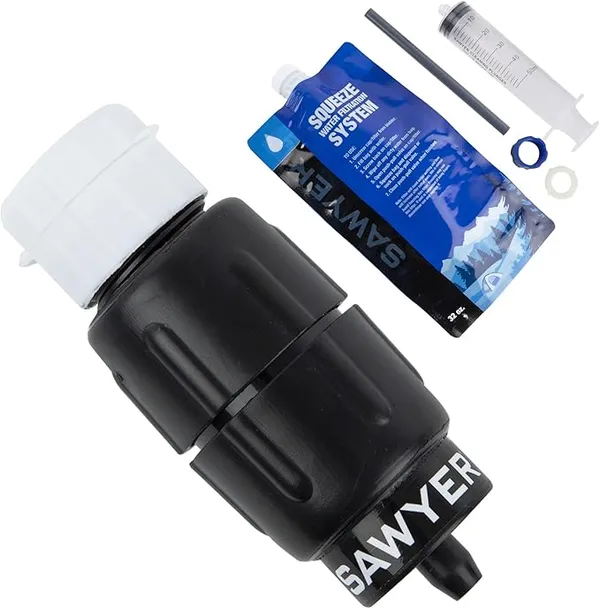
Nine filters and the parts that fail on them, from a $10 spare pouch to a pump that draws from a puddle. Flow rate, cartridge life, and what freezing does.

Louis runs GravelPacker and is accountable for what it publishes. He wrote the scoring rubric the product reviews are graded against and decides what ships. The pieces under his byline are the desk-research ones: comparisons and explainers built from spec sheets, owner reports and the rubric, not from a test lab.