On this page

The Best Bikepacking Water Bottles, Cages and Bladders

Carrying water is the one part of a bikepacking setup that gets worse as the setup gets better. Every bag you add takes space the bottles were using.

Published September 3, 2026
Edited by Louis Raveton
When you purchase through links on our site, we may earn an affiliate commission. Here's how it works.
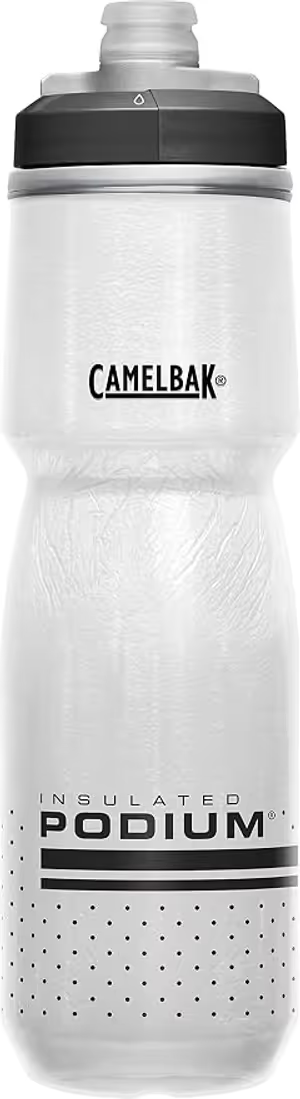
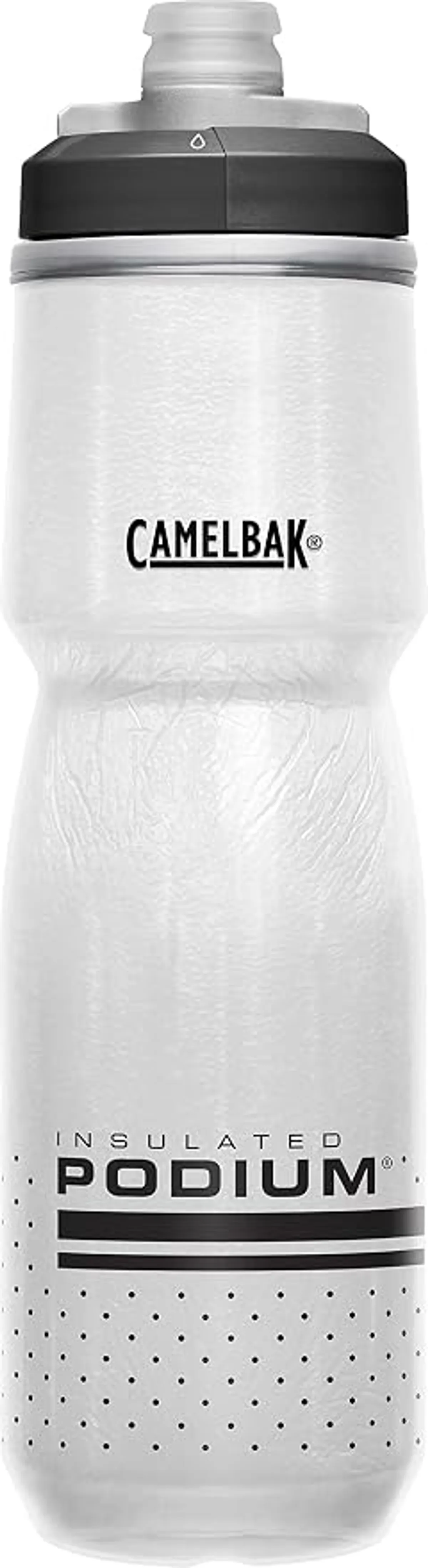
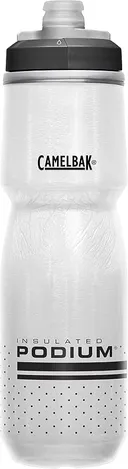
CamelBak Podium Chill Insulated Bottle (24oz), our top pick in The Best Bikepacking Water Bottles, Cages and Bladders

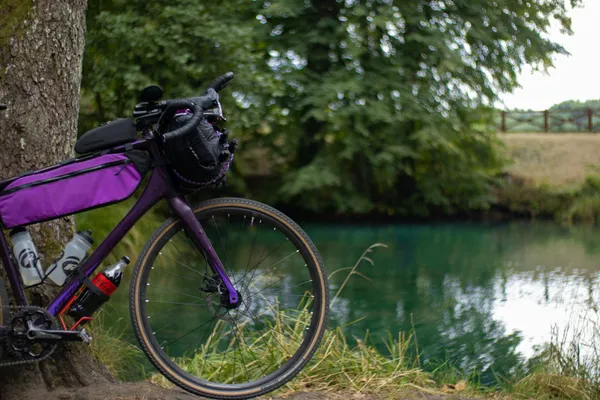
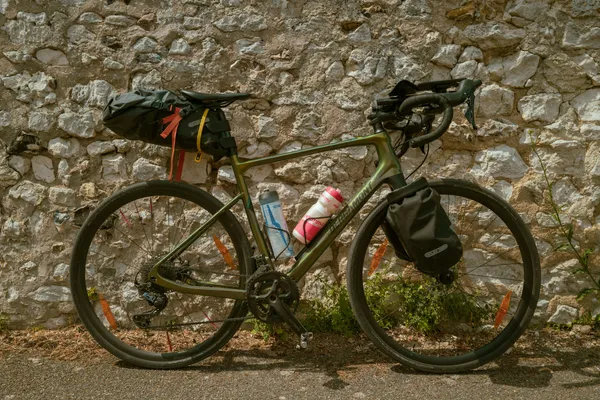
A stock bike carries two bottles in the frame triangle and nobody thinks about it. Add a frame bag and one of them stops fitting. Add a full-frame bag and both do.

So this is really two questions. Which bottle, which almost nobody gets wrong, and how to keep carrying it once the triangle is full, which almost everybody does.

Eight items here, from an $8 bladder to a $70 titanium cage. Some links are affiliate links, which is how the site pays for itself, and none of them changed a score.

Editor's Choice

  • Self-sealing valve does not leak into a bag
  • Insulation roughly doubles how long water stays cold
  • High flow rate for drinking under effort
$17.95
Checked Aug 2026
Buy on Amazon

Quick Comparison

Sort
Best for Daily Hydration
  • Capacity 24oz / 710ml
  • Insulation Double-wall
  • Valve Self-sealing Jet Valve
  • Cage_Fit Standard round profile
Best for Daily Hydration
  • Capacity 24oz / 710ml
  • Insulation None, single wall
  • Valve Self-sealing Jet Valve
  • Cage_Fit Standard round profile
Best for Bottle Cage
  • Mounting Standard bottle bosses
  • Entry Top load
  • Material Lightweight composite
  • Included Mounting screws
Best for Tight Clearance
  • Entry Side load, right hand
  • Mounting Standard bottle bosses
  • Use_Case Compact frames and frame bags
  • Handed Right and left versions
Best for Bottle Cage
  • Function Bottle cage plus two tyre levers
  • Mounting Standard bottle bosses
  • Material Reinforced composite
  • Weight_Saving Removes levers from the tool kit
Best for Bottle Cage
  • Material Titanium
  • Mounting Standard bottle bosses
  • Entry Top load
  • Adjustable Tension can be bent to fit
Best for Dry Stretches
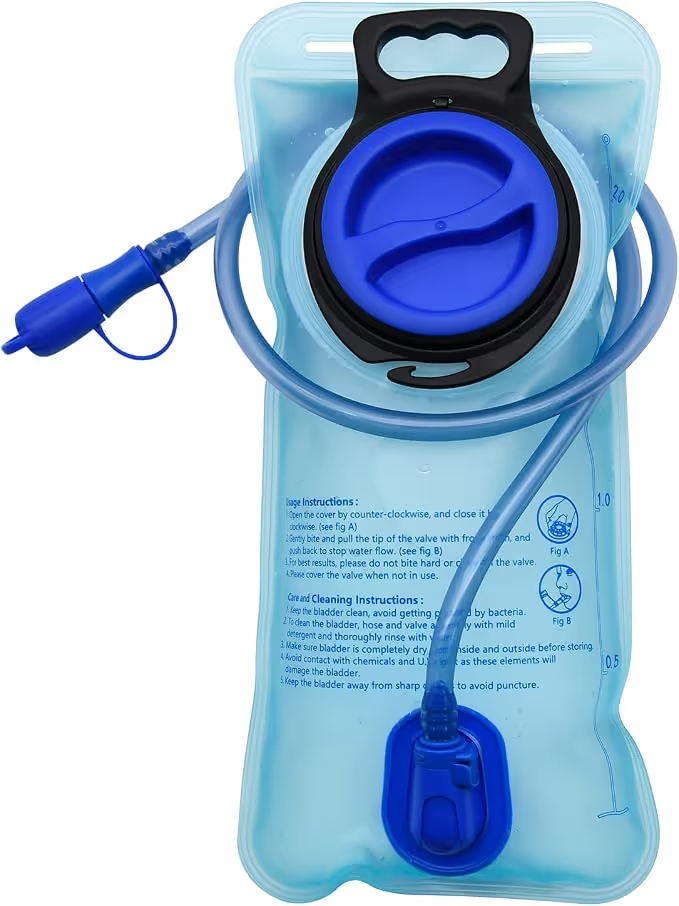
  • Type Hydration reservoir
  • Fill Wide screw cap
  • Hose Quick-disconnect with bite valve
  • Use_Case Long dry stretches
Best for Dry Stretches
  • Capacity 1.5L to 3L options
  • Fill Large opening
  • Hose Bite valve included
  • Use_Case Occasional dry routes

The Setup Most Riders Should Buy

Two Podium Chills and two ten dollar cages, about 56 dollars.

The bottle is not where the interesting decisions are. The self-sealing valve is what makes a cycling bottle different from a water bottle, and the insulated version costs four dollars more and is worth it in anything warm. Cheap composite cages hold them perfectly well and cost little enough to replace when they eventually crack.

Change one thing if you run a frame bag: make one of those cages a side-entry model. That is the single purchase that decides whether adding a frame bag costs you a bottle.

Related Read

Will a Frame Bag Fit a Small Frame With Two Bottle Cages?

Usually not both, and the reason is geometry rather than bag choice. What actually fits inside a size S main triangle, measured against real bag dimensions.

What A Frame Bag Actually Does To Your Water

This is the part that surprises people, and it happens the day the bag arrives.

A top-loading cage needs the full height of the bottle in clear space above it to get the bottle out. A half-frame bag usually eats exactly that space on the seat tube position, and sometimes on the down tube too. The bottle still fits in the cage. You just cannot remove it while riding, which makes it luggage rather than water.

Side-entry cages need almost none of that clearance. Twelve dollars, and the problem disappears. It is the cheapest meaningful upgrade in this whole category and almost nobody knows it exists until they need it.

Where Each One Gives Out

Composite cages lose tension with age and UV, then crack at a mounting boss. Expect two or three seasons and treat them as consumable.

Insulated bottles are physically bigger than their capacity suggests, and on a tight frame the insulated bottle is sometimes the one that will not fit where the plain one does.

Bladders fail at the bite valve and the hose connector, never the bag. Both are replaceable, and the thing that actually kills them is being stored damp.

And titanium solves the cracking permanently for seventy dollars, which is either the last cage you will buy or six cages you did not need to buy, depending on how long you keep the bike.

Related Read

How Much Water Should You Carry Bikepacking?

Litres per hour by temperature, how to size a carry to the gap between sources rather than to your bottle count, and the number that has no safety margin.

Our Recommendations

CamelBak // Best For Daily Hydration //
4.7 (13,534 ratings at the retailer)

CamelBak Podium Chill Insulated Bottle (24oz)
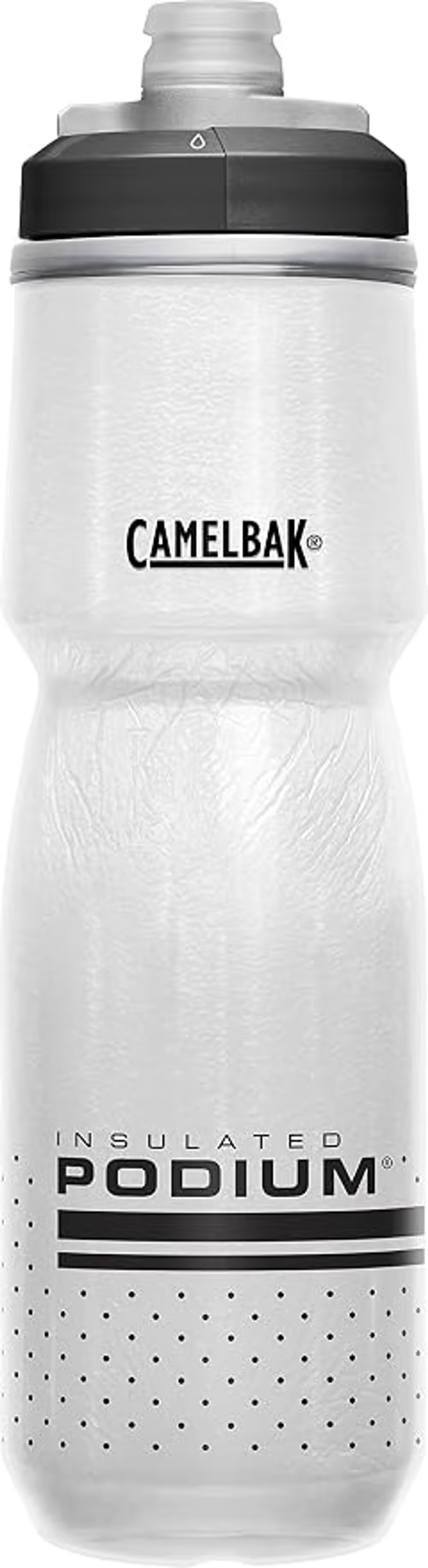
Product shot of CamelBak Podium Chill Insulated Bottle (24oz) by CamelBak
Best For Daily Hydration

Tech Specs

Capacity
24oz / 710ml
Insulation
Double-wall
Valve
Self-sealing Jet Valve
Cage Fit
Standard round profile
Keeps water cold for about twice as long, for four dollars more.

The self-sealing valve is what separates a cycling bottle from a water bottle. It opens under bite pressure and closes on its own, which means it does not leak into a frame bag when the bike goes over and does not need a cap flipped one-handed at speed. The high-flow rate matters more than it sounds when you are breathing hard.

Read the full review

Double-wall insulation roughly doubles how long the contents stay cold. That is the whole argument for the Chill over the standard Podium, and on a hot day it is worth the four dollars and the small weight penalty. In cold weather it works the other way and keeps a warm drink drinkable for longer.

Two things to know. The insulated wall reduces capacity for the same external size, so a 24oz Chill is physically the size of a larger plain bottle and can be tight in some cages. And the valve needs occasional disassembly to clean, because the self-sealing mechanism is exactly the sort of place that grows things if you fill it with electrolyte drink and forget it.

Owner reports converge on one durability point: the cap threads and the valve are the parts that fail, not the bottle body. Both are replaceable, and CamelBak sells the caps separately, which is worth knowing before replacing a whole bottle that only needs a three dollar part.

Full review, score breakdown & specs

The Verdict

The bottle to buy unless weight is the only thing you care about. Double-wall insulation costs 4 dollars and roughly 40g and changes how the last two hours of a hot ride feel.

GravelPacker score How we score
4.4/5
Durability
4
Performance
4.5
Usability
4.5
Value
4.5
  • Self-sealing valve does not leak into a bag
  • Insulation roughly doubles how long water stays cold
  • High flow rate for drinking under effort

$17.95
Checked Aug 2026
Buy on Amazon

The Good

  • + Self-sealing valve does not leak into a bag
  • + Insulation roughly doubles how long water stays cold
  • + High flow rate for drinking under effort
  • + Replacement caps sold separately

The Bad

  • Physically larger than its capacity suggests
  • Valve needs periodic disassembly to clean
  • Around 40g heavier than an uninsulated bottle
CamelBak // Best For Daily Hydration //
4.5 (12,093 ratings at the retailer)

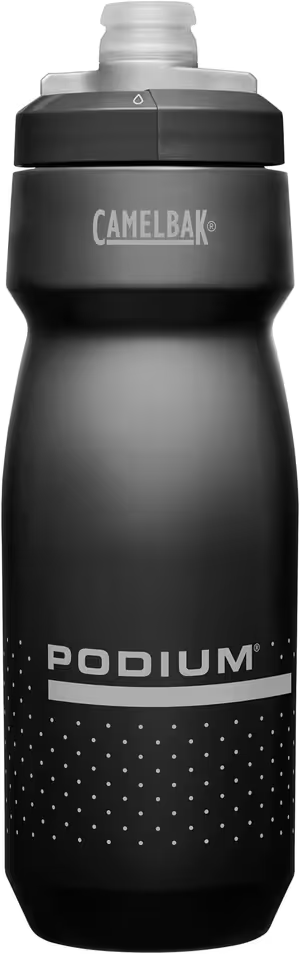
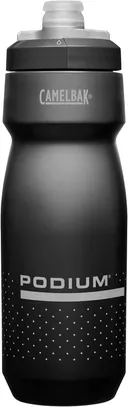
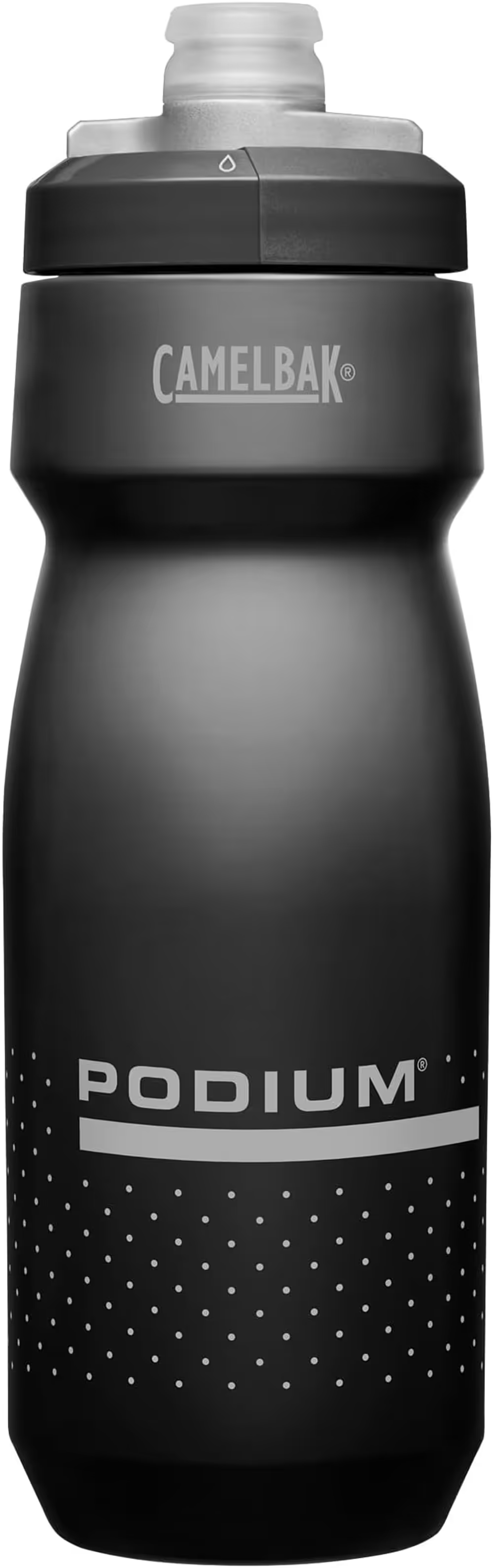
CamelBak Podium Bottle (24oz)

Product shot of CamelBak Podium Bottle (24oz) by CamelBak
Best For Daily Hydration

Tech Specs

Capacity
24oz / 710ml
Insulation
None, single wall
Valve
Self-sealing Jet Valve
Cage Fit
Standard round profile
The same valve and a lower price, for riders who do not need cold water.

Everything that makes the Podium the default cycling bottle is here. The self-sealing valve opens under bite pressure and closes itself, so the bottle can live in a frame bag or upside down in a cage without wetting anything, and the flow rate is high enough to drink properly while breathing hard.

Read the full review

Without the insulating wall it is lighter and slimmer for the same stated capacity, which matters on a bike where the cage may be competing with a frame bag for clearance. On a compact frame this is sometimes the bottle that fits when the Chill does not.

The obvious limitation is temperature. In summer the contents reach ambient within an hour or two, and on a long hot gravel day that is genuinely unpleasant. Riders who run one insulated and one plain bottle usually drink the plain one first for exactly this reason.

As with the Chill, the cap and valve are the wear parts rather than the body, and both are replaceable. Buying two plain bottles and one spare cap costs less than two insulated ones and covers more situations, which is a reasonable way to start.

Full review, score breakdown & specs

The Verdict

The correct second bottle. Same valve, same fit, less money, and in anything under about 20°C the insulation you are not paying for was not doing much anyway.

GravelPacker score How we score
4.1/5
Durability
4
Performance
3.5
Usability
4.5
Value
4.5
  • Same self-sealing valve as the Chill
  • Lighter and slimmer than the insulated version
  • Cheapest way into a proper cycling bottle
$13.99
Checked Aug 2026
Buy on Amazon

The Good

  • + Same self-sealing valve as the Chill
  • + Lighter and slimmer than the insulated version
  • + Cheapest way into a proper cycling bottle

The Bad

  • Contents reach ambient temperature within an hour or two
  • No advantage in cold weather either
  • Valve still needs periodic cleaning
ROCKBROS // Best For Bottle Cage //
4.4 (5,907 ratings at the retailer)

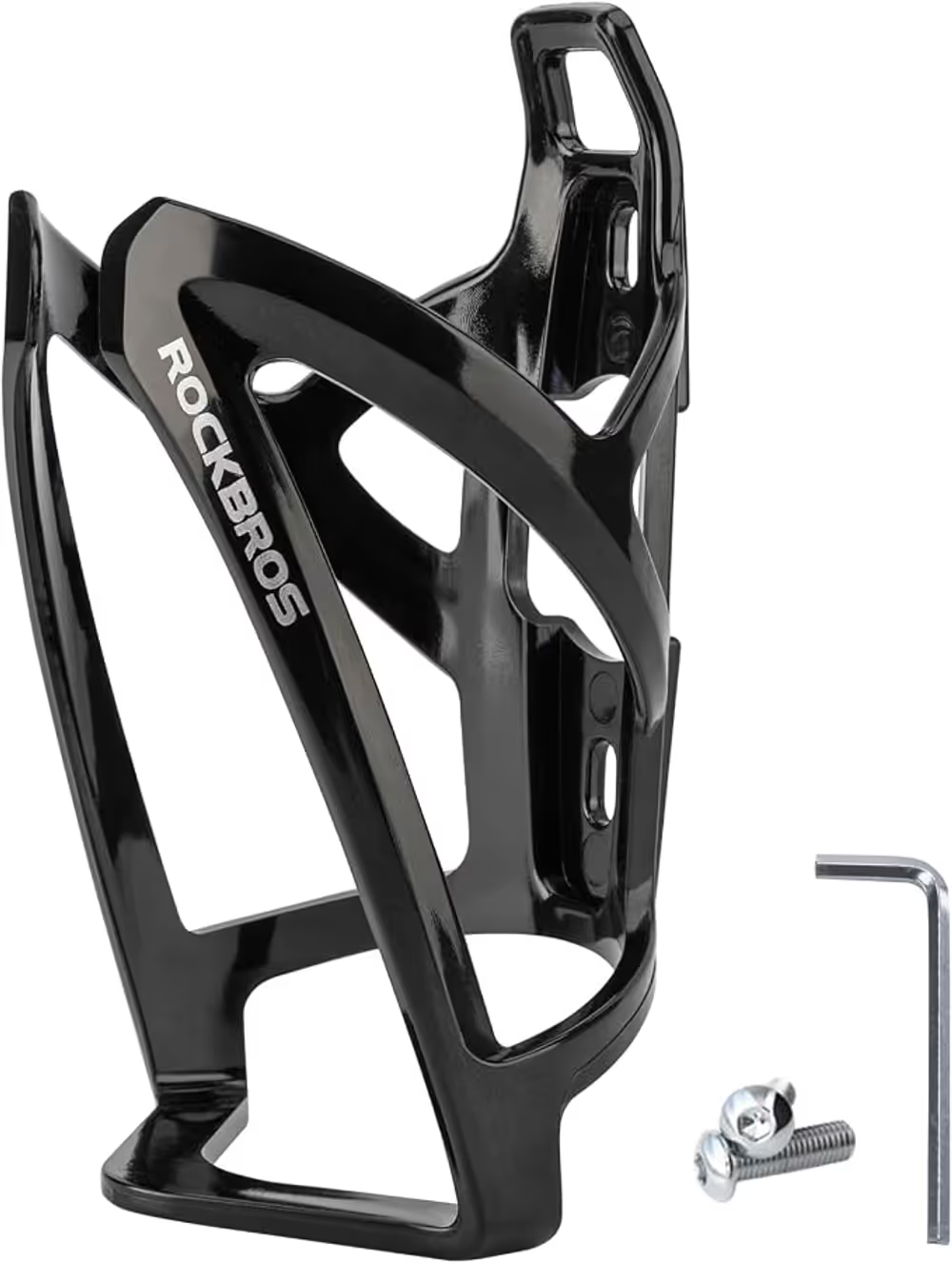
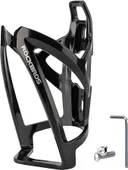
ROCKBROS Ultralight Bottle Cage

Product shot of ROCKBROS Ultralight Bottle Cage by ROCKBROS
Best For Bottle Cage

Tech Specs

Mounting
Standard bottle bosses
Entry
Top load
Material
Lightweight composite
Included
Mounting screws
Ten dollars, light, and nearly six thousand people have an opinion about it.

There is not much to a bottle cage, and the main way one fails a rider is by losing grip and ejecting a bottle on a rough surface. Owner reports at this volume are the best available evidence on that, and they describe grip as adequate for standard bottles on gravel while noting that oversized or very heavy bottles are a different question.

Read the full review

Being light is worth something here mainly because the alternative is not. A cage is one of the few places where the cheap option and the light option are the same option, and spending forty dollars more buys titanium and a marginal gram saving rather than better function.

The screws being included matters more than it should, because bottle boss bolts are the small part nobody has a spare of, and the wrong length either bottoms out before it clamps or protrudes through into the frame. Keep the spares somewhere you will find them, because the next cage you buy may not include any.

Composite cages age by losing tension and eventually cracking near a mounting boss, usually after a couple of seasons of UV and flex. At this price that is a replacement rather than a disappointment, and it is the reason to prefer two cheap cages over one expensive one unless weight is genuinely your constraint.

Full review, score breakdown & specs

The Verdict

The sensible default at ten dollars. Buy two, keep the screws, and spend the difference on a bottle that is actually worth having.

GravelPacker score How we score
4.1/5
Durability
3.5
Performance
4
Usability
4
Value
5
  • Very large body of owner evidence
  • Light and cheap at the same time
  • Mounting screws included
$9.89
Checked Aug 2026
Buy on Amazon

The Good

  • + Very large body of owner evidence
  • + Light and cheap at the same time
  • + Mounting screws included

The Bad

  • Grip is marginal with oversized or heavy bottles
  • Needs full vertical clearance to load
  • Composite loses tension after a couple of seasons

Also rated

4. CATEYE

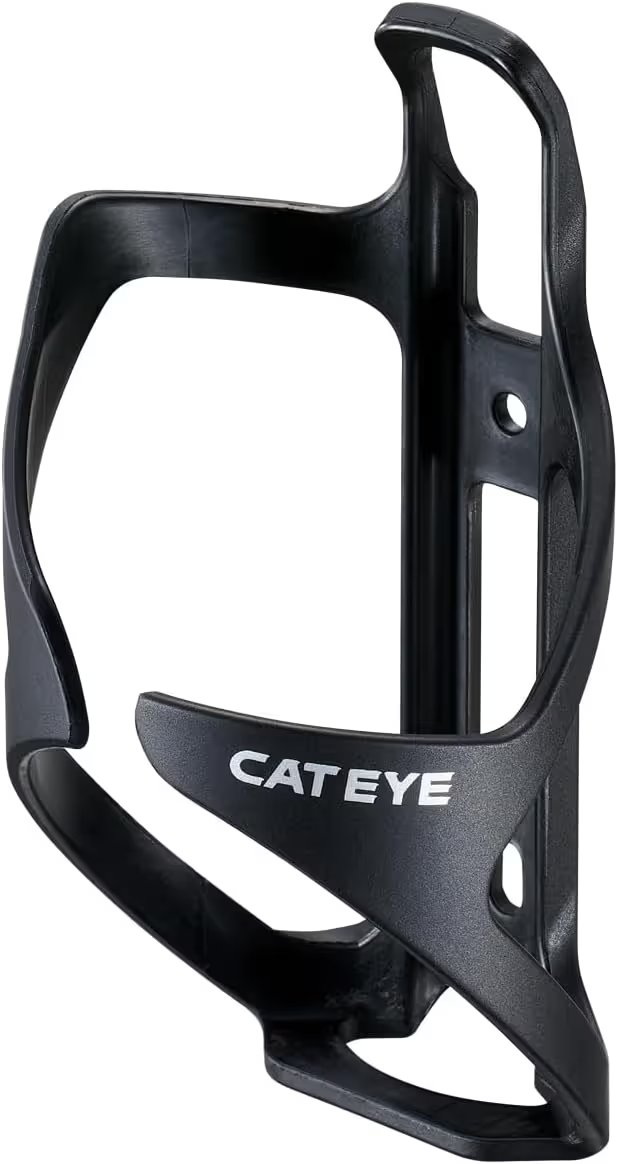
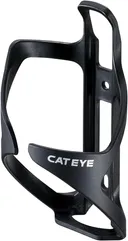
CATEYE BC-500 Side Load Bottle Cage

4.1 /5

Side entry solves one specific and very common problem: a frame bag, a small frame or a full-suspension layout leaves no room to lift a bottle straight up.

Entry
Side load, right hand
Mounting
Standard bottle bosses
Use_Case
Compact frames and frame bags
5. ROCKBROS

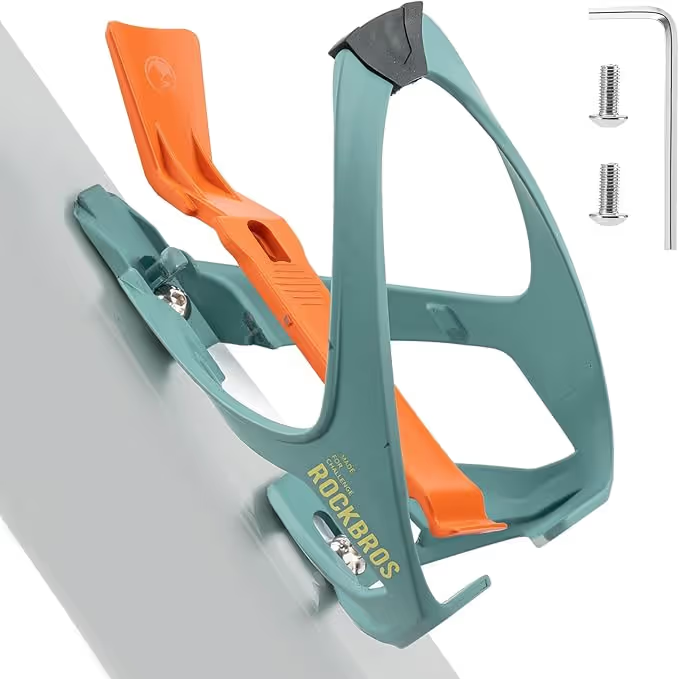
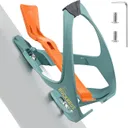
ROCKBROS 2-in-1 Bottle Cage with Built-in Tire Levers

4.0 /5

The arms of this cage pull out and work as tyre levers, which sounds like a novelty until you remember how often people arrive at a puncture without them.

Function
Bottle cage plus two tyre levers
Mounting
Standard bottle bosses
Material
Reinforced composite
6. SILCA

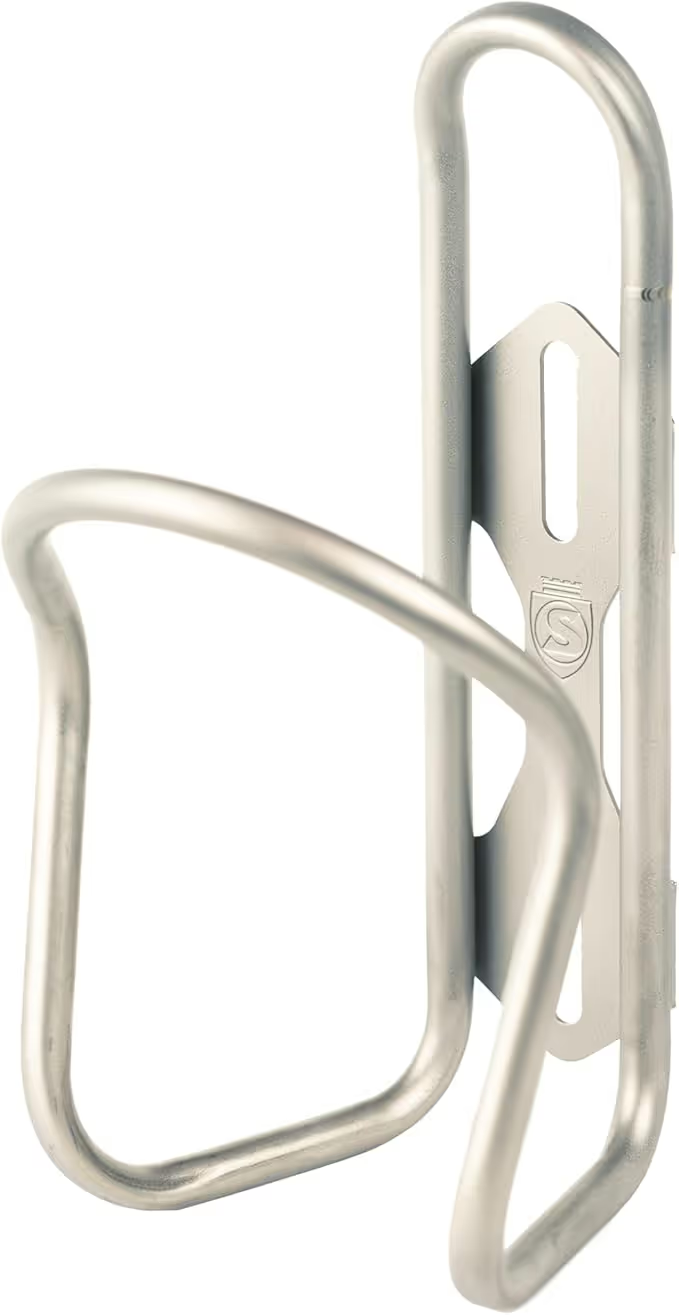
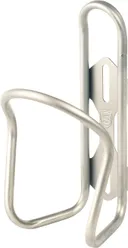
SILCA Sicuro Titanium Bottle Cage

3.9 /5

Titanium does not fatigue the way composite does, and a titanium cage can be bent to adjust its grip rather than replaced when it loosens.

Material
Titanium
Mounting
Standard bottle bosses
Entry
Top load
7. CamelBak

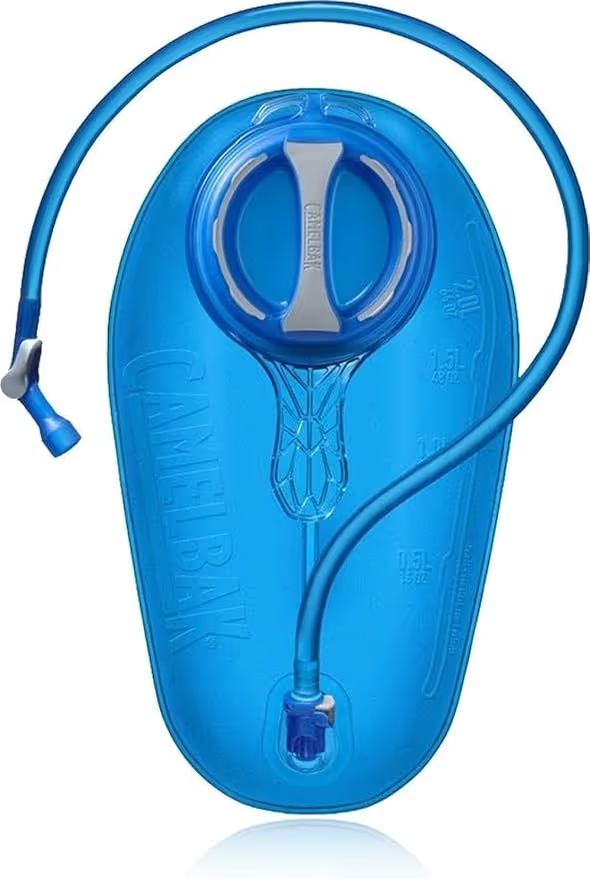
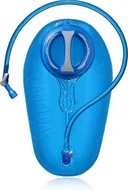
CamelBak Crux Water Reservoir

4.0 /5

A bladder is not a everyday bikepacking solution, it is what you add when a specific stretch of route carries more water than your cages can.

Type
Hydration reservoir
Fill
Wide screw cap
Hose
Quick-disconnect with bite valve
8. Mdvora

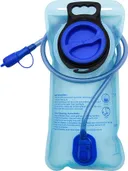
Mdvora Large Opening Hydration Bladder (2L)

4.0 /5

Most bikepackers need a reservoir rarely enough that paying forty dollars for one is hard to justify, and this is the argument for the cheap version.

Capacity
1.5L to 3L options
Fill
Large opening
Hose
Bite valve included
Buying Advice

What to look for

Four things decide this, and the bottle is the easy part.

1. Measure your vertical clearance first

A top-loading cage needs the bottle's full height in clear space above it. With a frame bag fitted, most frames no longer have that, and the bottle you already own will not come out. Check this before buying anything, because it decides whether you need a side-entry cage.

2. Side entry is the fix, and it is handed

A side-load cage removes the bottle sideways and needs almost no clearance above. They come in right-entry and left-entry versions, and the wrong one opens into your top tube. Pick the side away from your frame bag zip.

Related Read

Will a Frame Bag Fit a Small Frame With Two Bottle Cages?

Usually not both, and the reason is geometry rather than bag choice. What actually fits inside a size S main triangle, measured against real bag dimensions.

3. Insulated or not, by climate not by price

The insulated and plain versions of the same bottle differ by about four dollars and 40g. In real heat the insulation is worth both. Below about 20°C it is dead weight, and the plain bottle is also slimmer, which matters when clearance is tight.

4. A bladder is route kit, not standard kit

Two bottles is roughly a litre and a half. If a stretch of your route carries more than that with no resupply, add a reservoir for that trip. Carrying one every trip means carrying weight on your back that the frame should be holding.

Related Read

How Much Water Should You Carry Bikepacking?

Litres per hour by temperature, how to size a carry to the gap between sources rather than to your bottle count, and the number that has no safety margin.

Methodology

How we chose

A desk selection from published specifications and owner reports. GravelPacker does not run a test lab, so cage grip below is assessed from the pattern in owner reports rather than from a shake test.

1. Entry geometry against real frame constraints

Cages are assessed on how much vertical clearance they need, because that is the specification that decides whether a bottle survives adding a frame bag. Side-entry designs are weighted up for exactly that reason.

2. Grip, from the volume of owner reports

Ejected bottles on rough surfaces are the failure that matters, and it shows up reliably in reviews. Cages with thousands of reports carry more weight here than newer models with better-looking specifications and no history.

3. Insulation claims read against price

Manufacturer claims about how long a bottle stays cold are treated as best-case. What is comparable is the difference between the insulated and plain versions of the same bottle, which is a real and consistent gap.

4. Failure modes, from the one- and two-star reviews

Composite cages lose tension and crack at a mounting boss, bottle valves fail before bottle bodies, and bladders fail at the bite valve and hose connector. All three are wear patterns that only appear months in.

Q&A

Frequently Asked Questions

Can I still use bottle cages with a frame bag?

Usually, but often not the ones you have. A half-frame bag typically leaves enough room for one bottle and not two, and a top-loading cage may no longer have the vertical clearance to lift the bottle out. A side-entry cage fixes that for about twelve dollars. A full-frame bag removes in-frame bottles entirely.

What is a side-load bottle cage for?

Removing the bottle sideways instead of upwards, which needs almost no clearance above the cage. That matters on small frames, on full-suspension bikes, and on any bike with a frame bag. They are handed, so order the entry side that faces away from your bag.

Are insulated cycling bottles worth it?

In hot weather, yes. The insulated version of the same bottle costs about four dollars more and roughly doubles how long the contents stay cold, which changes how the last two hours of a summer ride feel. Below about 20°C the plain bottle is lighter, slimmer and cheaper.

How much water should I carry bikepacking?

Two bottles covers most riding with normal resupply. Plan by the gap rather than by the day: work out the longest stretch with no reliable water, and carry that plus a margin. If that number exceeds about a litre and a half, you need a third bottle, fork cages or a reservoir.

Do I need a hydration bladder for bikepacking?

Only for specific routes. A reservoir puts two or three litres on your back, which is less comfortable over a long day and loads your hands and saddle. Most bikepackers carry one for desert or high-plateau stretches and leave it at home otherwise.

Why do my bottles keep falling out on gravel?

Either the cage has lost tension or the bottle is too heavy for it. Composite cages soften with age and UV, and an oversized insulated bottle is heavier than the cage was designed around. A metal cage can be bent tighter, a composite one cannot, which is the practical argument for titanium or alloy.

Reviewer

The GravelPacker Desk

GravelPacker is a research desk, not a test lab. We read the spec sheets, the long-run owner reports and the forum threads where things break, then score what survives that reading against a rubric we publish. We say so plainly because a review you can check is worth more than one you have to trust.