Bags
The Best Bikepacking Frame Bags
Seven frame bags from $18 to $85, split by the decision that actually matters: whether you keep your bottle cages or give the whole triangle over to luggage.
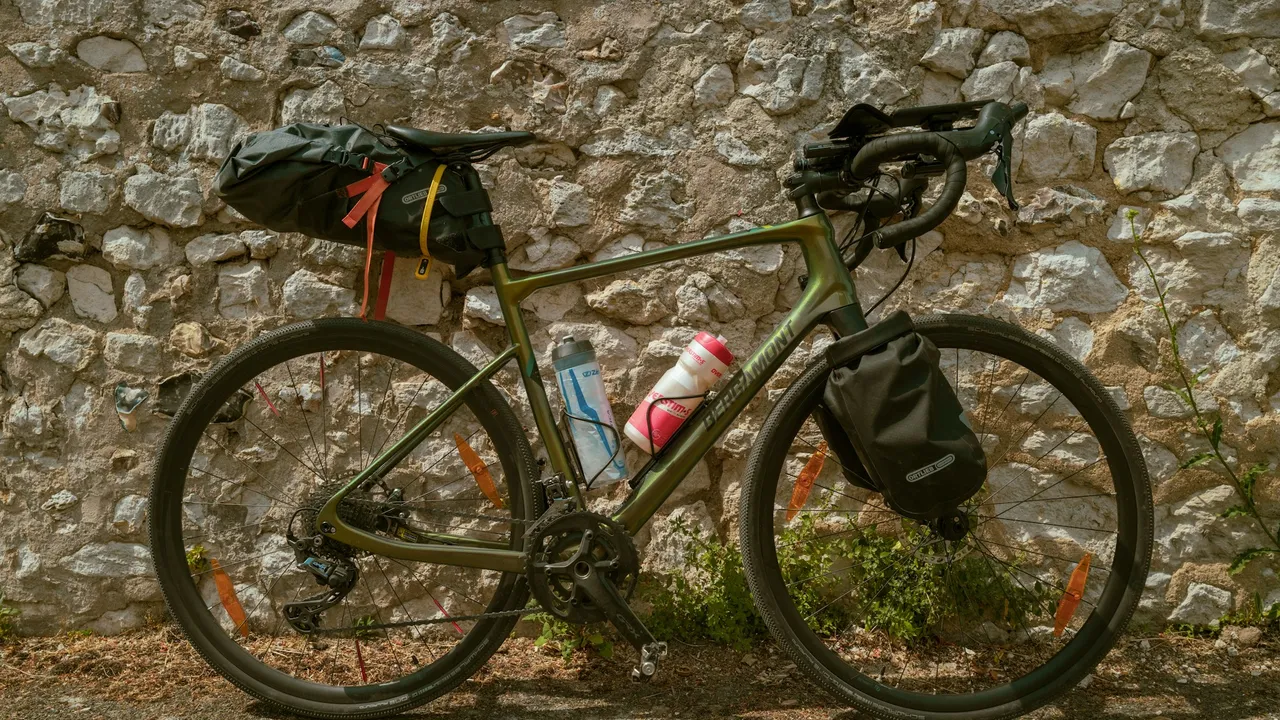
Nobody actually wants to know whether a frame bag fits. They want to know whether they can add one and still carry water, and on a small frame those two things compete for the same space.
The short answer is that a full frame bag takes both cages, a half bag usually takes one, and the interesting part is what you do about the water rather than which bag you buy.
Bag capacity is quoted in litres, but the constraint on a small frame is length and depth, not volume.
A size S gravel frame typically gives you somewhere around 45–52cm along the top tube and a main triangle depth that shrinks fast because the down tube slopes steeply. A size L on the same model might have 8–10cm more in both directions. That is not a small difference when a bag is 40cm long before you start.
Compare a few real bags against that:
| Bag | Capacity | Stated length | Notes |
|---|---|---|---|
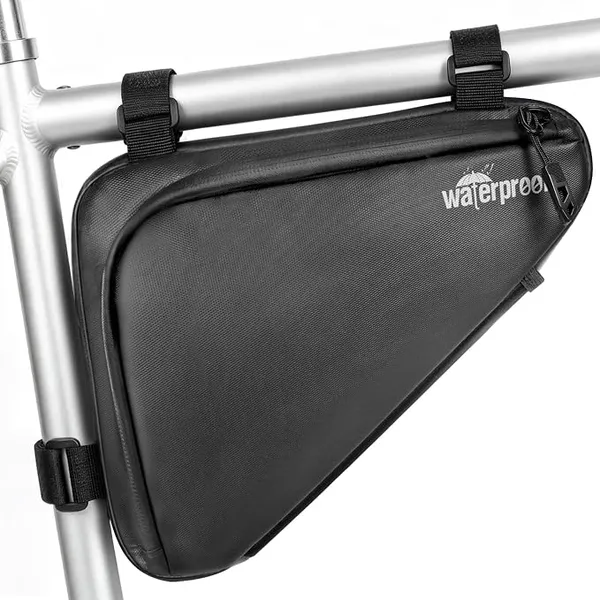
| Rockbros triangle frame bag | ~1.5L | — | Slim wedge, designed to clear cages |
| Rockbros 2.5L triangle frame bag | 2.5L | 30cm | 19cm at its deepest, 6cm wide |
| Blackburn Outpost (medium) | 4.3–5.8L | 45.7cm | 17.8cm deep |
On a frame with 47cm of usable top tube, the 30cm Rockbros fits with room to spare for straps. The 45.7cm Blackburn is touching both ends before it is even loaded, and at 17.8cm deep it reaches well down the down tube — straight through where the cage bolts are.
Rule of thumb: measure the shorter of your top tube and down tube runs, and subtract 5cm for strap anchors and the taper. That is the bag length you can actually use.

The down tube cage goes first, every time. It sits in the deepest part of the triangle, which is exactly where a frame bag's main volume is, and a bottle needs about 73mm of diameter plus clearance to swing out — that is more lateral room than most frame bags leave.
The seat tube cage survives more often, because bags taper toward the seat tube and a bottle there only needs to clear the bag's rear edge. On a small frame it is still marginal: a 500ml bottle is roughly 210mm tall, and if the bag's rear panel drops low there is nowhere for the bottle to go.
The practical test, before buying anything: put both bottles in, and see how much unobstructed flat area is left inside the triangle. That, not the frame size on the sticker, is what you are shopping for.
Half bag, one cage, fork bottles. The most common working setup. A half bag in the top of the triangle, the down tube cage kept, and the second bottle moved to a fork three-pack if the fork has bosses. This is the layout most small-frame riders converge on, and it also keeps weight low and central.
Slim wedge plus both cages. A 1.5L bag like the Rockbros triangle is designed around exactly this compromise — narrow enough to sit above the cages rather than through them. You get somewhere for tools and a phone rather than a real storage volume, but you keep all your water.
Full bag, bladder inside. The maximum-capacity answer. Both cages go, and a 2L bladder rides inside the bag itself. It carries the most and it is the most tedious to refill, because refilling means opening the bag every time.
Full bag, top tube bottle. Works, looks odd, and puts a bottle exactly where your knees are on out-of-the-saddle efforts. Fine for shorter riders on flatter routes, irritating otherwise.
How to Pack a Frame Bag Without Wrecking the Handling
The frame bag is the only place weight is genuinely free. Here is what belongs in it, what does not, and the packing order that keeps the bike steady.
Two bags of identical stated volume can behave completely differently on a small frame depending on their cut.
A bag with a tapered lower edge follows the down tube and sits flush against it. A bag cut square leaves a triangular gap along the down tube, which does two things: it wastes the space you bought the bag for, and it makes the lower straps pull at an angle, which is how bags start rubbing paint.
Listings rarely state the taper, but the product photo shows it. Look at the bottom edge of the bag against the down tube in the manufacturer's own image — if there is a visible wedge of daylight, that is what you will get.
Fixing Frame Bag Rub: How to Save Your Paint (And Your Straps)
A loose frame bag sands through paint in 20 miles. How to stop frame rub and harness movement before the damage reaches carbon or bare metal.
If the answer comes out at under 35cm of usable length, you are in slim-wedge territory rather than frame-bag territory, and the storage you were hoping for belongs in a seat pack or a bar roll instead.
How Many Litres Do You Actually Need? Bikepacking Bag Sizing
10L, 14L, 17L — bag capacity numbers mean less than they appear to. Here is how much volume a real setup needs, where it should sit, and why the biggest seat pack is rarely the right one.
On a size S frame, almost never with a full frame bag and rarely with a half bag. The down tube cage is the first to go because that is where the bag's largest panel sits. Plan to move at least one bottle to the fork, the bars or inside the bag.
Three measurements: along the underside of the top tube, along the top of the down tube, and the vertical drop from top tube to bottom bracket at the seat tube. Any bag whose stated length exceeds the shorter of the first two will not sit flat, whatever the litre rating says.
Half bag, in most cases. It occupies the top half of the triangle and usually leaves the down tube cage usable, which on a small frame is the difference between carrying water and not. The capacity penalty is real but smaller than the water problem it solves.
Fork-mounted cages are the standard answer if your fork has three-pack bosses. Failing that, a top tube bottle, a bar-mounted bottle, or a bladder inside the frame bag itself. A bladder is the highest-capacity option and the most annoying to refill.
It fits worse. Small frames have steeply sloping down tubes, so a bag cut with a matching taper sits flush while a rectangular one leaves a wedge of dead space and pulls unevenly on the straps. Shape matters more than volume at this size.
Seven frame bags from $18 to $85, split by the decision that actually matters: whether you keep your bottle cages or give the whole triangle over to luggage.
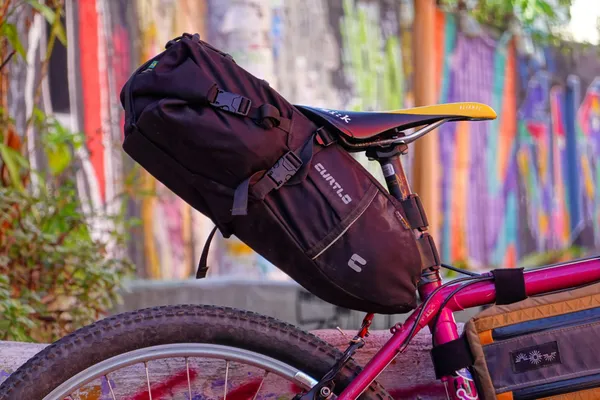
Bag makers quote a minimum clearance and almost nobody checks it. Across eight seat packs the requirement ranges from 5cm to 15cm — and it does not track capacity the way you would expect.
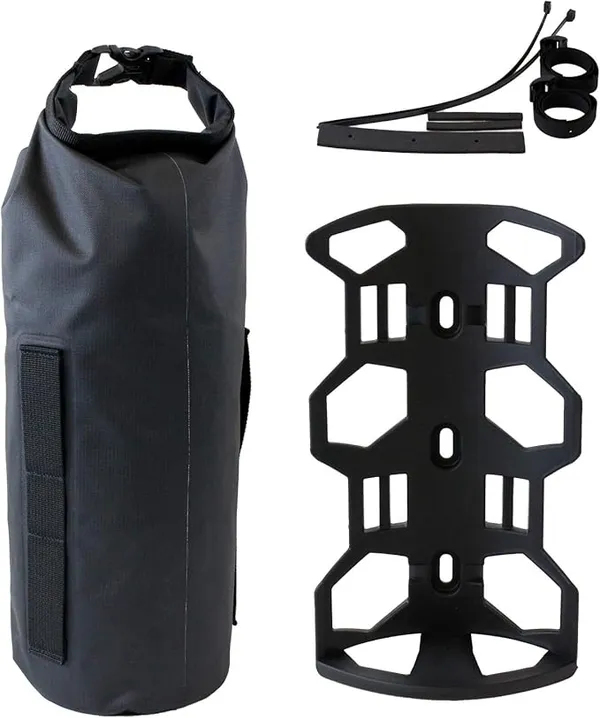
Six ways to use the empty space on your fork legs, from a $33 cage-and-bag set to a clamp mount for forks with no bosses. Load limits and what balance does.

GravelPacker is a research desk, not a test lab. We read the spec sheets, the long-run owner reports and the forum threads where things break, then score what survives that reading against a rubric we publish. We say so plainly because a review you can check is worth more than one you have to trust.