Bags
Seatpack vs Panniers vs Frame Bag: Choosing a Load Layout
Three ways to carry the same kit, compared on capacity, handling, cost of entry and off-road tolerance. A winner on every axis, and a different one each time.
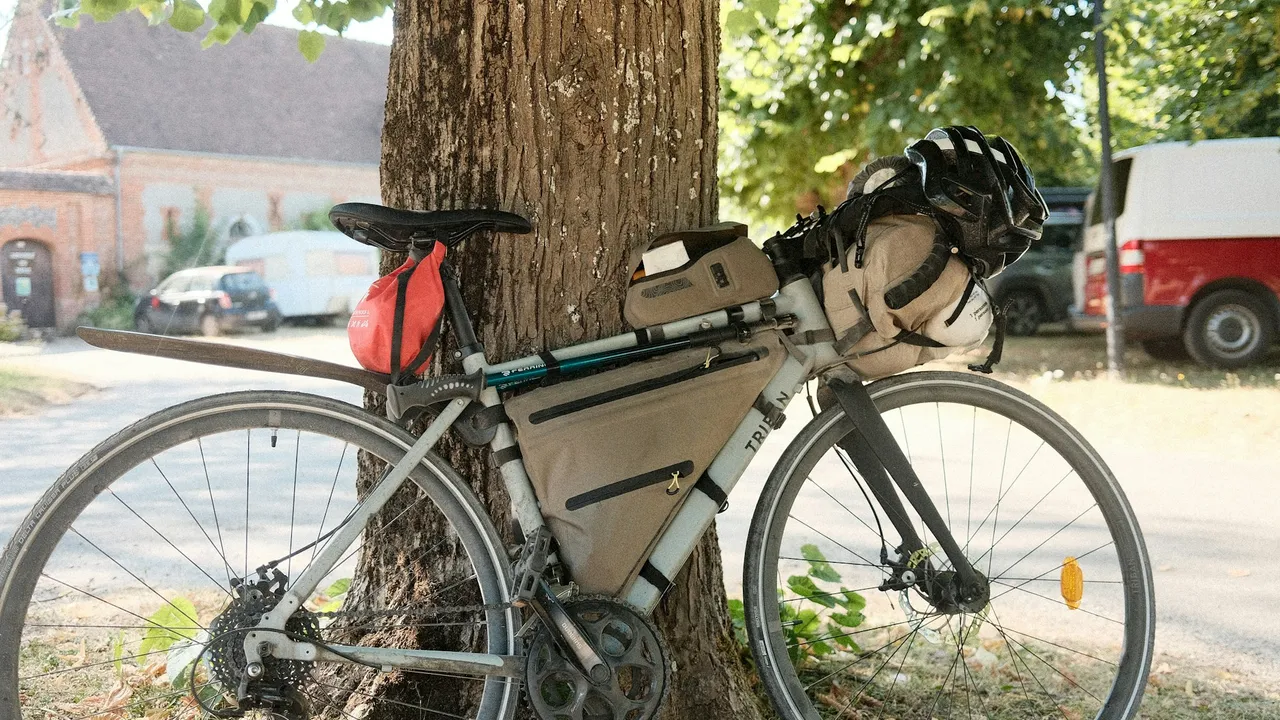
Every bag on a bikepacking setup costs you something in handling. The seat pack sways, the bar roll makes the steering vague, and panniers widen the bike. The frame bag is the exception.
Weight inside the main triangle sits low and between the axles, close to where the bike's mass already is. Load it and the bike feels much the same. Load the same weight into a bar roll and the steering goes slow and heavy, and it does so immediately.
That single fact should drive how the whole setup is packed. Fill the frame bag first, with the heaviest things you own, and let everything else fight over what is left.
Work from density rather than from category.
Tools, spares, a pump and a chain link are the obvious first candidates. They are heavy for their size, you need them rarely, and they cause the most damage rattling loose anywhere else.
Food is the next best fit. It is dense, it gets consumed from the top, and a frame bag keeps it out of the sun and off the ground at camp.
Water goes here too if you use a bladder. A two-litre bladder in the frame bag is two kilos that has almost no effect on how the bike steers, which is not true of any other position on the frame.
A battery pack, spare lights and a first aid kit round it out. All small, all dense, all better here than in a seat pack you have to unpack to reach.
Anything light and bulky is a waste of the space. A sleeping bag, an insulated jacket or a tent inner will fill a frame bag and contribute nothing that could not be carried more usefully elsewhere.
Anything you need every ten minutes is also in the wrong place. A frame bag zip on the drive side is awkward to reach while moving, so snacks, phone and a spare buff belong in a top tube bag instead.
The bag is not a sack, and the order changes how it rides.
Flat items go against the sides. A tool roll, a folded jacket or a map lies flat against the fabric and stops the bag ballooning outward into your knees.
Dense items go low and forward. Down at the bottom bracket end, the weight is doing the least harm and the bag is least likely to sag.
Softer, compressible things fill the remaining gaps so nothing shifts. A frame bag with air in it will settle and go slack, and a slack bag is a bag that moves against the frame.
Close it before it is completely full. A drum-tight bag pushes into your legs at exactly the wrong height and pulls the straps unevenly.
The frame bag touches more of the bike than any other bag, which makes it the most likely to mark it.
Contact is not the problem. Movement is. A bag held firm against the tubes can sit there for years without leaving a mark, while one that shifts a millimetre with grit trapped underneath will cut through the clear coat in a weekend.
Tension the top tube straps hardest, since those carry the load. The down tube and seat tube straps exist to stop side-to-side sway rather than to hold weight, and they are the ones riders habitually leave loose.
Tape the contact points before the first ride, not after the first mark. Then check under the straps after wet rides, because it is the grit rather than the strap that does the cutting.
Best Bikepacking Repair Kit: 7 Tools That Get You Home
The multi-tool, pump and spares that turn a ride-ending mechanical into a twenty-minute roadside stop. Five picks we would carry on a remote gravel route.
Most frame bag disappointment is actually a bottle problem.
A full-frame bag typically blocks the down tube cage and frequently the seat tube one as well. That leaves the fork, the handlebars, or a bladder inside the bag itself.
Decide this before buying either the bag or the cages. A half-frame bag that keeps one cage usable is a genuinely different setup from a full bag plus fork cages, and the choice is easier to make on paper than after both are bought.
The last step is the one people skip. Load the bag as you plan to ride it, then lift the bike a few centimetres and drop it onto both wheels.
Anything you can hear is something that will work loose over a day of washboard. Anything that shifts is something that will be rubbing paint by the evening.
Then ride a kilometre and retension the straps. Webbing beds in during the first few minutes, and the second tension is the one that holds.
10 Best Bikepacking Saddle Bags (Large 10L+ Seatpacks) for 2026
Ten large bikepacking seatpacks compared on the thing that actually fails: the harness. Which 10L+ saddle bags resist tail sway, and which ones we would not put a loaded bag on.
The dense, heavy things: tools, spares, a pump, food, water bladder, battery pack. The frame bag sits low and between the wheels, which is the one place on a bike where weight barely affects handling. Bulky light items belong in the seat pack or bar roll instead.
Only if it moves. Contact alone is harmless; movement plus grit is what cuts through clear coat. Tape the strap contact points, tension the top tube straps hardest, and check for grit under the straps after wet rides.
Usually not both. A full-frame bag normally blocks the down tube cage and often the seat tube one too. Plan for a fork cage, a top tube bottle, or a bladder inside the frame bag before you buy either.
A half bag keeps one bottle cage usable and suits shorter trips. A full bag roughly doubles the capacity and takes both cages, which pushes water onto the fork or into a bladder. Most riders on multi-day routes end up with the full bag.
Pack flat items against the sides and keep the round ones central, then close the bag before it is completely full. A bag packed to a drum shape pushes outward at exactly knee height and pulls unevenly on the straps.
Three ways to carry the same kit, compared on capacity, handling, cost of entry and off-road tolerance. A winner on every axis, and a different one each time.
Three large seatpacks compared on sway, waterproofing, camp packing, tyre clearance, weight and price per litre. A winner named on every one.
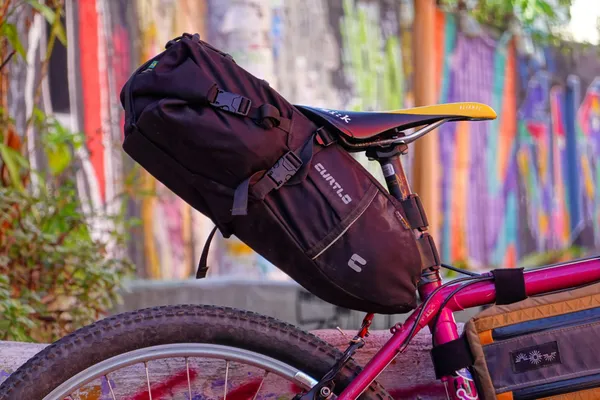
Bag makers quote a minimum clearance and almost nobody checks it. Across eight seat packs the requirement ranges from 5cm to 15cm — and it does not track capacity the way you would expect.

GravelPacker is a research desk, not a test lab. We read the spec sheets, the long-run owner reports and the forum threads where things break, then score what survives that reading against a rubric we publish. We say so plainly because a review you can check is worth more than one you have to trust.