Gear
The 4-Day Gravel Kit: What Earns Its Weight and What Doesn't
A complete 4-day gravel kit, ranked by how often you'd actually reach for each item — and honest about which pieces are luxuries you could leave at home.
| Days | Food weight | Roughly |
|---|---|---|
| Overnighter | 600 to 800 g | Dinner, breakfast, snacks |
| Two nights | 1.4 kg | Fits a frame bag with room |
| Three nights | 2.2 kg | Frame bag full |
| Four nights | 3 kg | Frame bag plus a stuff sack |
| Five and beyond | 3.8 kg+ | You are solving the wrong problem |
Four days is the practical ceiling and it is a volume ceiling rather than a weight one. Three kilos is a manageable load. Three kilos of food is not a manageable shape.
A bike carries dense weight well. Water is the heaviest thing most people carry and it disappears into a frame bag without complaint.
Food is the opposite: light for its bulk, awkwardly shaped, and wrapped in packaging designed for a supermarket shelf rather than a bicycle. A day of food in its original boxes takes maybe twice the space it needs to.
So the first thing that extends your range is not a bigger bag. It is a bin liner and twenty minutes the night before, decanting everything into zip bags and throwing away the cardboard. That alone is often the difference between three days fitting and not.
How Much Should a Bikepacking Setup Weigh?
Real weights for a weekend bikepacking setup, where the kilos actually hide, and the point at which chasing grams stops making you faster.
The mistake is not usually carrying too little. It is carrying enough and not eating it.
Loaded riding burns 400 to 700 calories an hour and appetite lags behind expenditure by about a day. So you feel fine on day one, eat lightly, and arrive at day three flat with food still in the bag. That is a pacing failure rather than a packing one.
The fix is to eat on a schedule rather than on hunger for the first two days. Something every ninety minutes whether you want it or not. It feels excessive on day one and it is the reason day three goes well.
Beyond four days the answer stops being what you carry and becomes where you stop.
Look at your route as a series of gaps between resupply, measured in days at your realistic loaded pace rather than in kilometres. Carry the longest gap plus one day. The plus-one covers the shop that was shut, the road that was closed, and the day you did not feel like riding.
That is a smaller number than most people expect. Even on genuinely remote routes the gaps are usually two to three days, and riders carrying a week of food are almost always carrying five days of anxiety.
How Much Water Should You Carry Bikepacking?
Litres per hour by temperature, how to size a carry to the gap between sources rather than to your bottle count, and the number that has no safety margin.
The Best Bikepacking Stove and Cook Kit (2026)
Stoves, pots, utensils and the one luxury worth its weight. Eight pieces, judged on what a bike actually has room for.
Loaded riding on mixed surfaces burns roughly 400 to 700 calories an hour depending on gradient, weight and pace. A six hour day is therefore 2,500 to 4,000 calories on top of what you need to exist. Most people under-eat on day one, feel fine, and pay for it on day three.
Six hundred to 800 g if you are sensible, and well over a kilo if you carry tins, fresh food or anything in rigid packaging. Freeze-dried meals are the lightest per calorie and the most expensive. Repackaging everything out of its box saves both weight and, more importantly, volume.
Volume, almost always. Three kilos of food is manageable on a bike. Three kilos of food in its original packaging will not fit in a frame bag and a half. This is why experienced riders decant everything into zip bags before leaving and why the same food takes a third less space on the second trip.
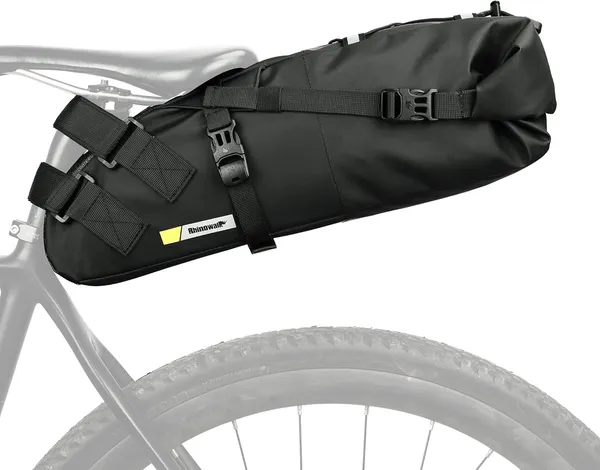
Frame bag, low and central, because it is dense weight and that is the best place for it. Snacks for the day go in a top tube bag where you can reach them without stopping. What you do not do is put three days of food in the seatpack, which is the furthest point from the bike centre of mass.
Work out the longest gap in days, not kilometres, at your realistic loaded pace. Then carry that plus one day. The extra day is for the shop that shut, the closed road that added 40 km, and the day you did not feel like riding. It is the cheapest insurance in bikepacking.
A complete 4-day gravel kit, ranked by how often you'd actually reach for each item — and honest about which pieces are luxuries you could leave at home.
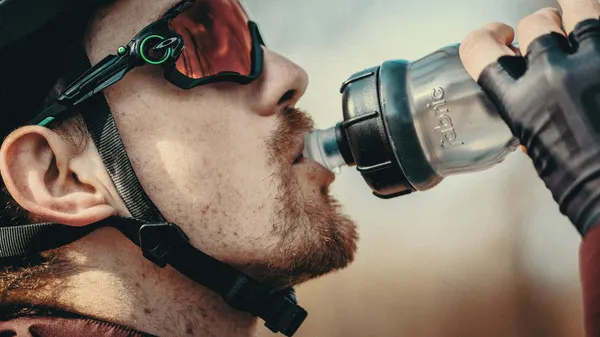
Litres per hour by temperature, how to size a carry to the gap between sources rather than to your bottle count, and the number that has no safety margin.
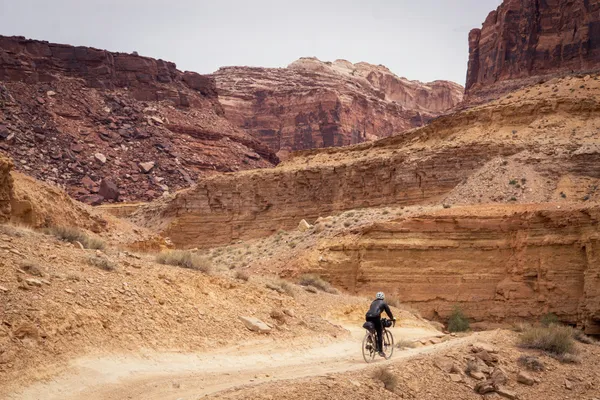
Real weights for a weekend bikepacking setup, where the kilos actually hide, and the point at which chasing grams stops making you faster.

Louis runs GravelPacker and is accountable for what it publishes. He wrote the scoring rubric the product reviews are graded against and decides what ships. The pieces under his byline are the desk-research ones: comparisons and explainers built from spec sheets, owner reports and the rubric, not from a test lab.