
On this page

The Best Bikepacking Stove and Cook Kit (2026)

A camp kitchen is four decisions: what heats the water, what holds it, what you eat with, and whether you carry a luxury. Get those right and the whole thing weighs under 400 grams.

Last Updated August 16, 2026
Edited by Louis Raveton
When you purchase through links on our site, we may earn an affiliate commission. Here's how it works.
MSR PocketRocket 2, our top pick in The Best Bikepacking Stove and Cook Kit (2026)

A bikepacking cook kit is constrained by volume before weight. A frame bag has a triangle to fill, and a pot that nests a canister inside it is worth more than a pot that is 30 g lighter and nests nothing. That single fact explains most of the choices below.

These are ranked on how they pack together rather than individually, on published weights, and on the wear patterns that show up in owner reports a season or two after purchase. Non-stick coatings and thin titanium both feature heavily in those reports.

Nine pieces, from an eight dollar utensil set to a 130 dollar integrated system. Most riders need four of them. Some links are affiliate links, which is how the site pays for itself, and none of them moved a score.

Editor's Choice

  • Legendary reliability
  • Consistent flame control
  • Includes hard carry case
$49.95
At time of review
Buy on Amazon

Quick Comparison

Sort
Best for Minimum Weight
  • Weight 25g (0.9 oz)
  • Output 2700W / 9200 BTU
  • Fuel Isobutane
  • Material Titanium Alloy
Best for Boiling Water
  • Boil_Time_1L 3.5 mins
  • Fuel_Type IsoPro Canister
  • Weight 73 g
  • Ignition Manual (Lighter)
Best for Fast Boiling
  • Weight 371g
  • Boil_Time 100 sec / 0.5L
  • Volume 1 Liter
  • Power 9000 BTU/h
Best for Solo Cooking
  • Weight 103g / 3.6oz
  • Material Titanium
  • Capacity 750ml
  • Dimensions 95 x 110 mm
Best for Solo Cooking
  • Weight 130g
  • Capacity 750ml
  • Material Titanium
  • Lid Included (Vented)
Best for Camp Kitchen
  • Material Anodised Aluminium
  • Weight ~400g (full set)
  • Includes 2 Pots / Pan / Bowls / Utensils
  • Feature Non-stick coating
Best for Trail Kitchen
  • Weight 27g / 0.9oz
  • Material Glass-filled Nylon
  • Pieces 4
  • Length 17.8cm to 26.2cm
Best for Camp Comfort
  • Material Stainless Steel
  • Insulation Double-Wall Vacuum
  • Capacity 380ml
  • Heat_Retention 4-6 hours hot
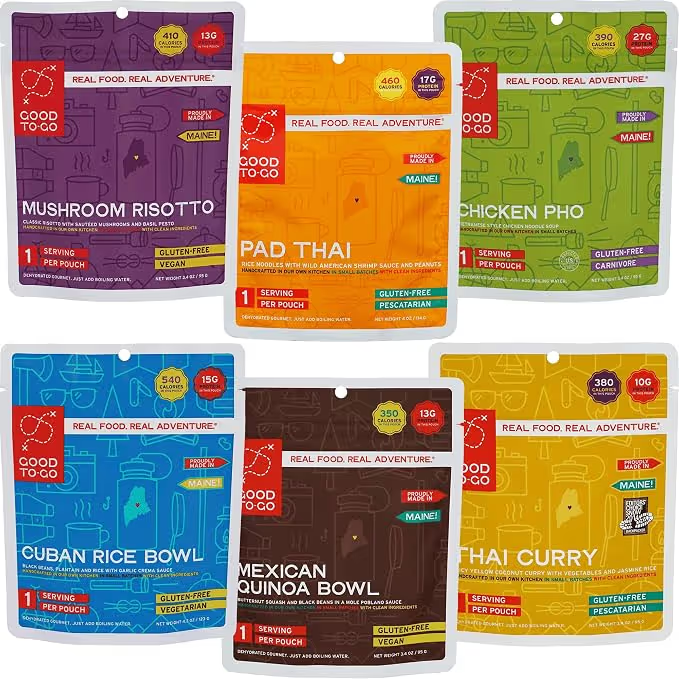
Best for Camp Kitchen
  • Prep_Time 15-20 minutes (boiling water)
  • Calories 400-600 per serving
  • Shelf_Life 4-5 years
  • Feature Resealable pouch / No chemical additives

The Kit Most People Should Buy

Four pieces, around 250 g, about 90 dollars.

A standard canister burner, a 750 ml titanium pot that the canister nests inside, a nylon utensil set, and an insulated mug. That combination boils water fast enough, packs into the frame bag as one unit, survives a season, and leaves you nothing to regret.

The micro burner saves 48 g and costs 30 dollars less, and it is a genuinely good choice if you are careful about wind and pot size. The integrated system is faster and more fuel-efficient and weighs more than the other three pieces combined.

What Nesting Actually Buys You

This is the part that gets missed in every ultralight comparison, because it does not show up on a scale.

A 750 ml titanium pot holds a 100 g gas canister and a micro burner inside it, with the lid on. Packed that way, the entire cooking system occupies exactly the volume of the pot. Nothing else in the frame bag has to move.

A pot that is 30 g lighter but 5 mm too narrow to take a canister means the canister goes somewhere else, and somewhere else is usually the space you wanted for food. On a bike this trade is almost always worth 30 g.

Related Read

The Minimalist Bikepacking Checklist: 9 Essentials for Your First Overnighter

The 9 things worth carrying on a lightweight overnighter, and the gear most first-timers pack that never comes out of the bag.

Where Each Piece Gives Out

The micro burner is unstable with a full pot on soft ground and burns fuel fast in wind. Both are manageable and both are real.

Titanium pots scorch. If you put anything thicker than soup in one, it will stick to a hot spot and you will spend twenty minutes scrubbing it with sand. The aluminium set does not have this problem and costs you 270 g.

The non-stick on the budget cookware set wears through, usually within two seasons of being packed against metal. Treat it as a starter kit that teaches you which pieces you use, then replace the two you actually reach for.

And the insulated mug is 12 dollars of pure indulgence that adds weight to a kit you spent money making light. Carry it anyway.

Related Read

Water That Tastes Like Plastic: Cleaning Bladders and Bottles on Tour

Your water tastes like a shower curtain because something is growing in the hose. Here is the field clean, the deep clean, and how to stop it coming back.

Our Recommendations

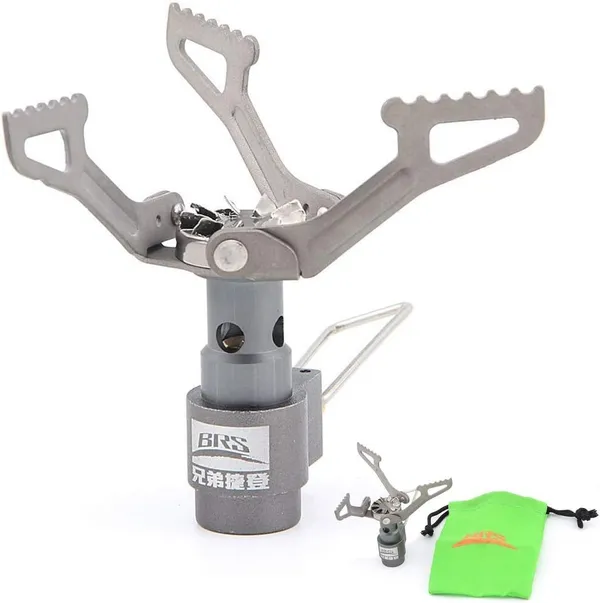
BRS // Best For Minimum Weight

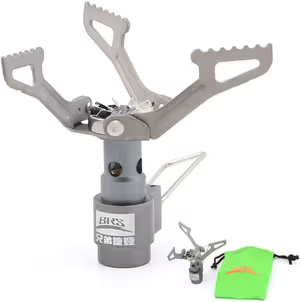
BRS-3000T Ultra-Light Titanium Camping Stove
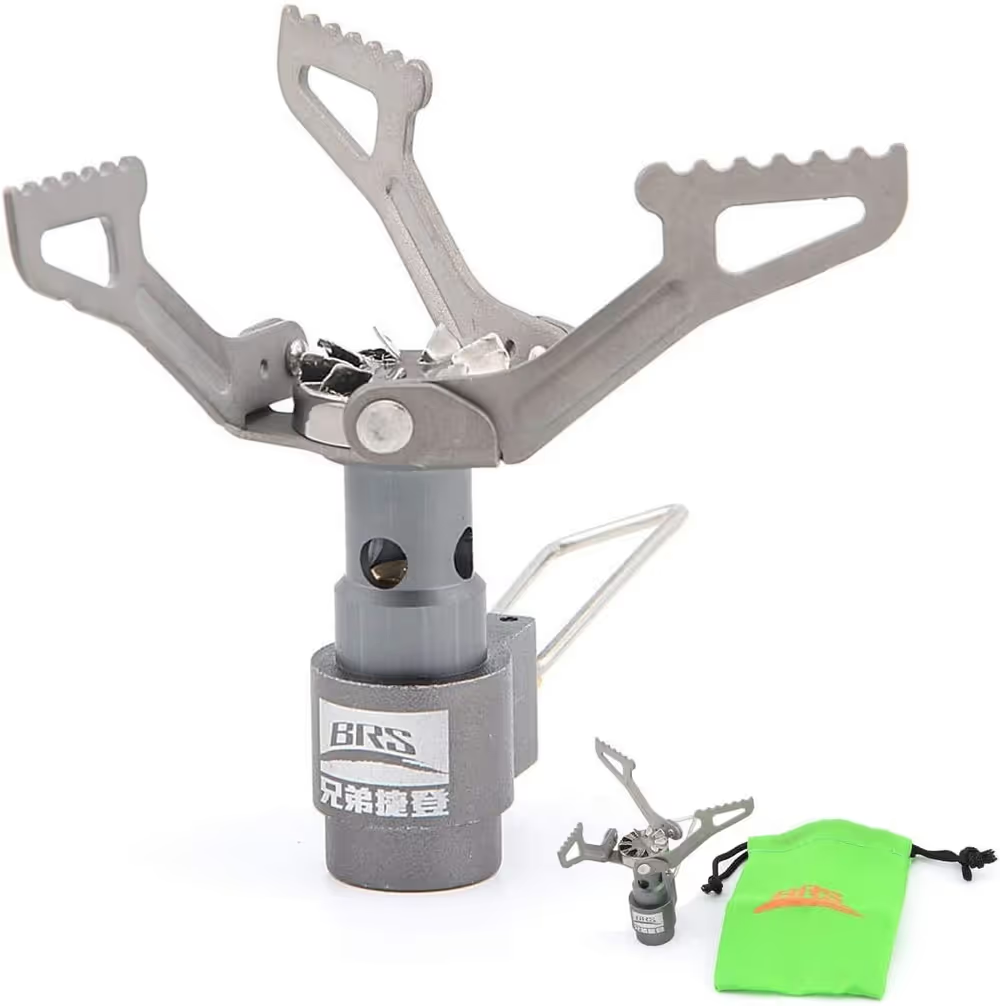
Product shot of BRS-3000T Ultra-Light Titanium Camping Stove by BRS
Best For Minimum Weight

Tech Specs

Weight
25g (0.9 oz)
Output
2700W / 9200 BTU
Fuel
Isobutane
Material
Titanium Alloy
25 grams. Fits in your pocket. Boils water in under 3 minutes.

If you are looking to shave every possible gram from your setup, the BRS-3000T is non-negotiable. Weighing just 25 grams, it is the lightest canister stove on the planet. For a minimalist overnighter, it pairs perfectly with a 750ml titanium pot, nesting inside it with room to spare for a folding spork and a small lighter. Despite its tiny size, it delivers a surprisingly powerful flame that can boil 500ml of water in under 3 minutes.

Read the full review

However, minimalism comes with compromises. The pot support arms are small, meaning you need to be careful with stability on uneven ground. It's also not the most fuel-efficient stove in high winds, so a makeshift windshield is a good idea. But for the price of a couple of burritos and the weight of a AAA battery, it's a marvel of engineering that has earned its place in almost every minimalist kit list published.

The number that matters is 25g. The Jetboil Flash on our beginners list weighs 371g — fifteen times as much — and costs $129.95 against $16.90. For a rider whose cooking amounts to boiling water for a dehydrated meal and a coffee, that is a very large amount of weight and money to spend on convenience.

What the Jetboil buys is the integrated heat exchanger and pot, which cuts boil time and, more importantly, cuts fuel consumption and wind sensitivity. The BRS has neither: it is a bare burner, it is poor in wind without a shield, and the pot supports are small enough that a wide pot wants watching. Paired with the 750ml Toaks on this same list you have a complete cook system at 128g total. Add a foil windscreen — the omission that makes most people think the stove is the problem.

Full review, score breakdown & specs

The Verdict

The lightest stove ever made. If you prioritize weight above all else, this is it.

GravelPacker score How we score
3.9/5
Durability
3.5
Performance
3.5
Usability
3.5
Value
5
  • Incredibly light (25g)
  • Extremely affordable
  • Tiny pack size
$16.90
At time of review
Buy on Amazon

The Good

  • + Incredibly light (25g)
  • + Extremely affordable
  • + Tiny pack size

The Bad

  • Small pot supports
  • Wind sensitive
  • Not for large pots
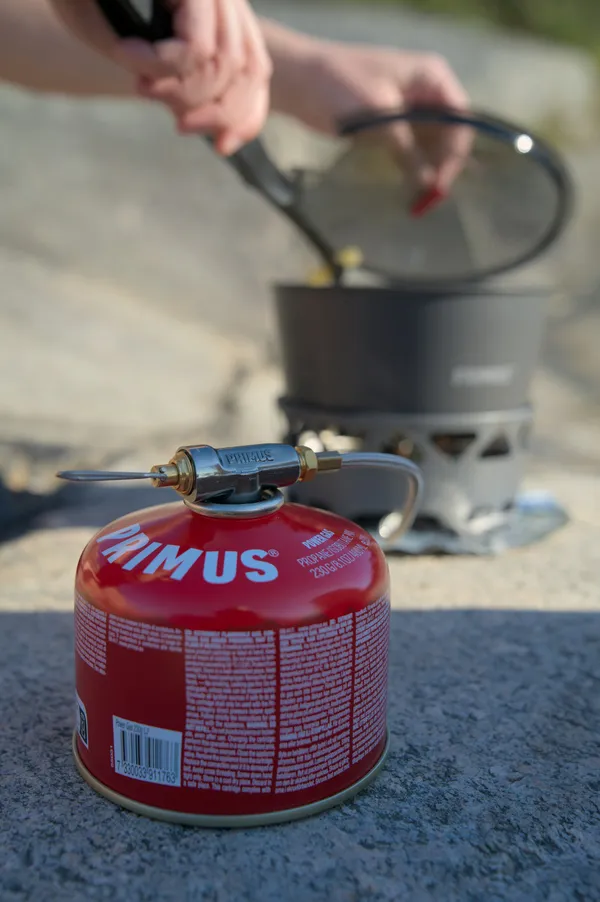
MSR // Best For Boiling Water //
4.8 (4,221 ratings at the retailer)

MSR PocketRocket 2

Product shot of MSR PocketRocket 2 by MSR
Best For Boiling Water

Tech Specs

Boil Time 1L
3.5 mins
Fuel Type
IsoPro Canister
Weight
73 g
Ignition
Manual (Lighter)
The gold standard for minimalist bikepackers who need pro-level speed and reliability in a package that fits in the palm of your hand.

The MSR PocketRocket 2 is a masterclass in functional minimalism and longstanding reliability. Weighing a scant 73g, its folding pot supports are surprisingly robust, holding a liter of water with a stability that belies its size. It features WindClip® wind protection, which helps maintain a strong flame in breezy conditions, though a dedicated windscreen is still recommended for true storms. It boils water with a ferocity that rivals larger systems, ensuring your morning coffee is ready before you have even packed your sleeping bag.

Read the full review

Its primary strength is undoubtedly packability. It vanishes into your cook kit, leaving precious room for extra snacks or layers. While it lacks an integrated piezo igniter, meaning you always need to pack a lighter or flint, this simplicity removes a common failure point found in other stoves. Ideally suited for the "boil-in-a-bag" bikepacker, it delivers hot meals fast with zero fuss. This isn't a stove for gourmet cooking. It's a tool for fuel-efficient survival and comfort on the trail.

The Verdict

The reliable workhorse of the stove world. It's fast, compact, and will likely outlast your bike. Essential kit for most riders.

GravelPacker score How we score
4.4/5
Durability
5
Performance
4.5
Usability
3.5
Value
4.5
  • Legendary reliability
  • Consistent flame control
  • Includes hard carry case
$49.95
At time of review
Buy on Amazon

The Good

  • + Legendary reliability
  • + Consistent flame control
  • + Includes hard carry case

The Bad

  • No built-in piezo igniter
  • Small pot supports can be unstable
  • Loud like a jet engine at full blast
Jetboil // Best For Fast Boiling

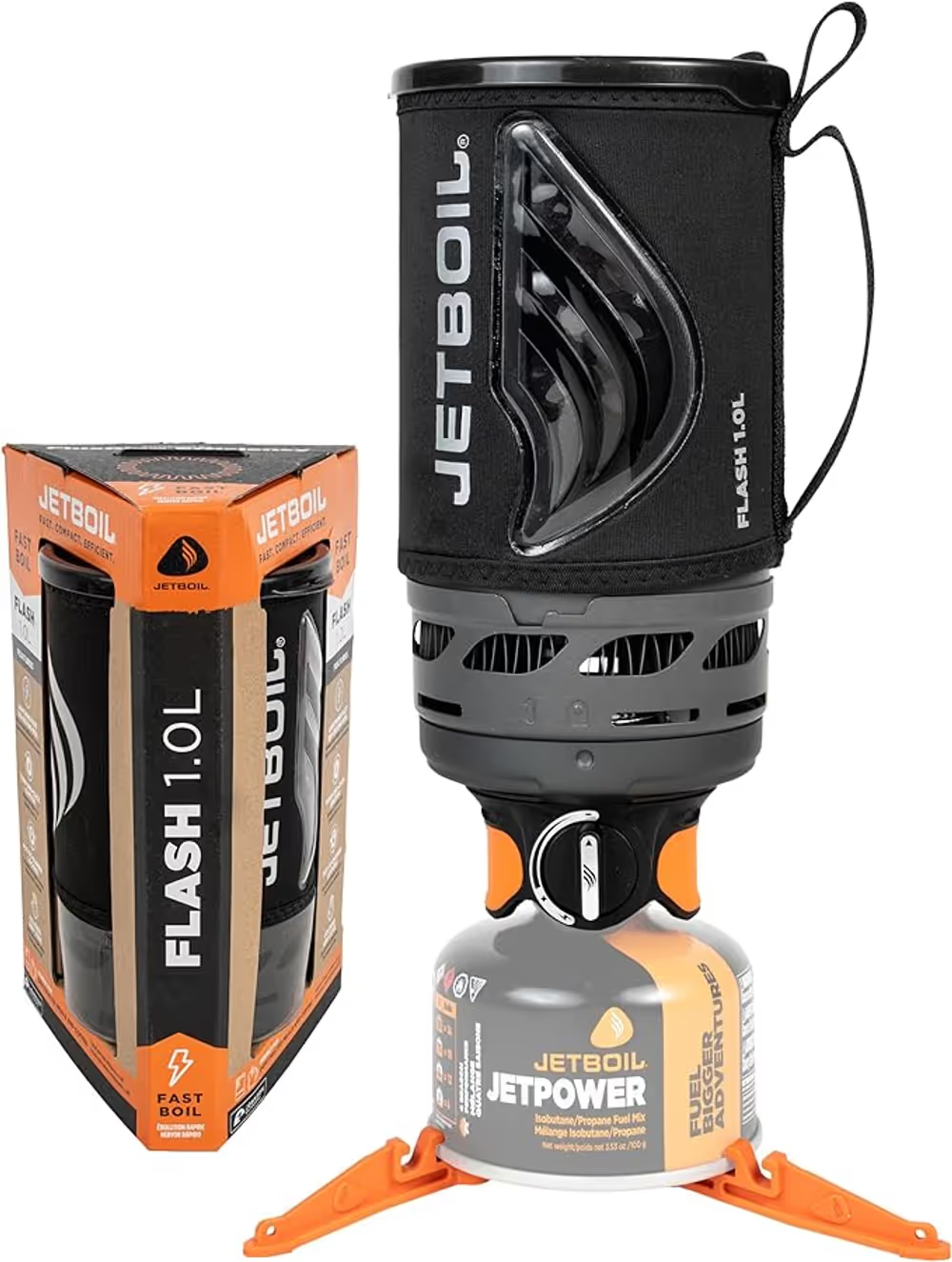
Jetboil Flash Camping Stove

Product shot of Jetboil Flash Camping Stove by Jetboil
Best For Fast Boiling

Tech Specs

Weight
371g
Boil Time
100 sec / 0.5L
Volume
1 Liter
Power
9000 BTU/h
Boils half a litre in about 100 seconds. That is all it is for.

The FluxRing heat exchanger on the base of the 1L cup is what separates this from a burner-and-pot setup: it captures heat that would otherwise spill around the sides, hitting a rolling boil in roughly 100 seconds and using noticeably less gas per litre than an open pot. The colour-change heat indicator on the neoprene cosy tells you when it is done without lifting the lid, which matters more than it sounds when you are boiling in a vestibule. The whole 371g system nests the burner and a 100g canister inside the cup, so it packs as one cylinder into a frame bag or handlebar roll.

Read the full review

The limits are real. There is no simmer control worth the name — the valve goes from off to loud, so anything requiring actual temperature management will scorch. The narrow, tall cup is unstable on soft ground without the plastic tripod, and at 371g plus fuel it is heavier than a titanium pot on a BRS-style burner. If your camp cooking is dehydrated meals, coffee and instant noodles, none of that matters. If you want to cook rather than rehydrate, buy a flat pot and a separate burner.

Full review, score breakdown & specs

The Verdict

The fastest, most fuel-efficient way to turn cold water into hot water on a bike tour. It cannot simmer and it is not the lightest option, but for dehydrated-meal cooking it is close to unbeatable.

GravelPacker score How we score
4.1/5
Durability
4.5
Performance
4.5
Usability
4
Value
3.5
  • Rolling boil in ~100 seconds with excellent fuel economy
  • Heat indicator shows readiness without opening the lid
  • Burner and canister nest inside the 1L cup
$129.95
At time of review
Buy on Amazon

The Good

  • + Rolling boil in ~100 seconds with excellent fuel economy
  • + Heat indicator shows readiness without opening the lid
  • + Burner and canister nest inside the 1L cup

The Bad

  • No usable simmer control — effectively boil-only
  • Tall narrow cup needs the tripod on soft ground
  • 371g is heavy against a titanium pot and micro burner

Also rated

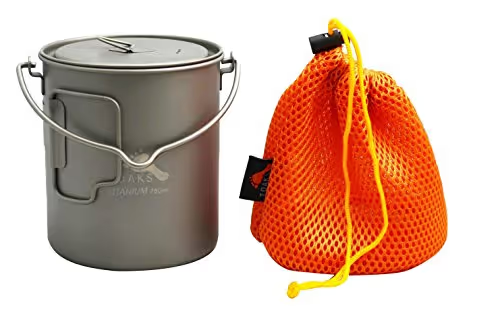
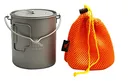
4. TOAKS

TOAKS Titanium 750ml Pot

4.4 /5

The TOAKS 750ml is the 'goldilocks' size for minimalist bikepackers: big enough for a full meal, but small enough to disappear into your frame bag.

Weight
103g / 3.6oz
Material
Titanium
Capacity
750ml
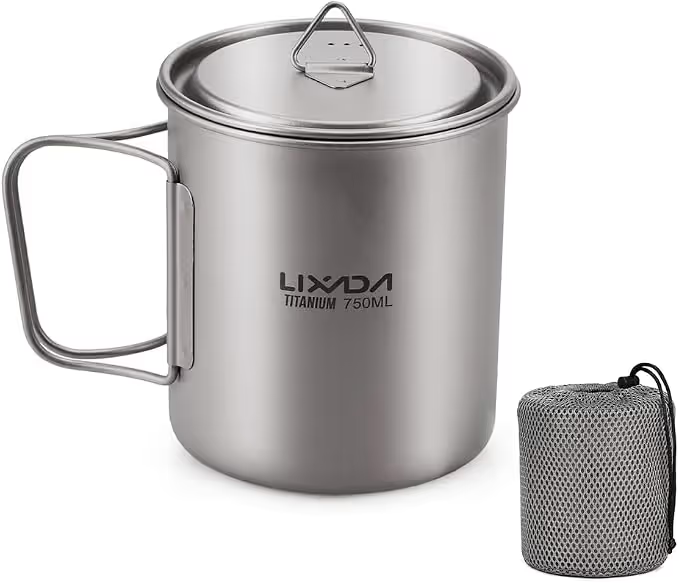
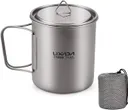
5. Lixada

750ml Titanium Pot

4.0 /5

Titanium is just a metal. Lixada proves that branding is the most expensive part of your cook kit.

Weight
130g
Capacity
750ml
Material
Titanium
$26.99 Solo Cooking
Read the review

This pot weighs nothing. Literally. At around 100g, you won't feel it in your pack. It is sized perfectly to nest a 110g gas canister and the BRS-3000T stove inside, creating a complete kitchen that fits in your palm. The handles are flimsy but functional, and the lid fits well enough to boil water efficiently. The titanium construction means it cools down incredibly fast, so you can pack it away minutes after cooking without melting your other gear.

There is zero reason to buy a more expensive titanium mug for boiling water. Unless you need specific heat retention properties for gourmet cooking (which you shouldn't do in thin titanium anyway), this pot does exactly what it needs to do: hold water over fire. The visible measurements stamped into the side are a nice touch for rehydrating meals accurately. While the included mesh sack is garbage, the pot itself is a legitimate piece of ultralight gear that commands respect.

What works

  • · Insanely light
  • · Perfect nesting size
  • · Cheap

What doesn't

  • · Lid fit is not always perfect
  • · Handles can get very hot
  • · Thin titanium can warp if overheated empty
6. Overmont

Overmont Ultralight Camping Cookware Set

3.8 /5

The Overmont cookware set is the 'everything in one box' solution for beginners who don't want to research individual pots and stoves.

Material
Anodised Aluminium
Weight
~400g (full set)
Includes
2 Pots / Pan / Bowls / Utensils
$19.99 Camp Kitchen
Read the review

This set includes two anodised aluminium pots, a frying pan, bowls, and folding utensils that all nest together. It's a complete kitchen solution for beginners who don't want to research individual pieces. The aluminium is thin but conducts heat well, boiling 500ml of water in about 4 minutes on a standard canister stove. The folding handles lock securely, and the included mesh carry bag prevents rattling inside your frame bag.

The main compromise is weight. At 400g, this kit is significantly heavier than a minimalist titanium pot. However, for the price of a couple of pizzas, you get a durable starting point for camp cooking. The non-stick coating is decent but will flake off if you use metal utensils or abrasive scrubbers. It's a great "learning kit" to help you decide what you actually need to carry on the trail.

What works

  • · Complete set in one package
  • · Nests compactly
  • · Non-stick coating

What doesn't

  • · Heavy compared to titanium
  • · Non-stick wears over time
  • · Aluminium dents easily
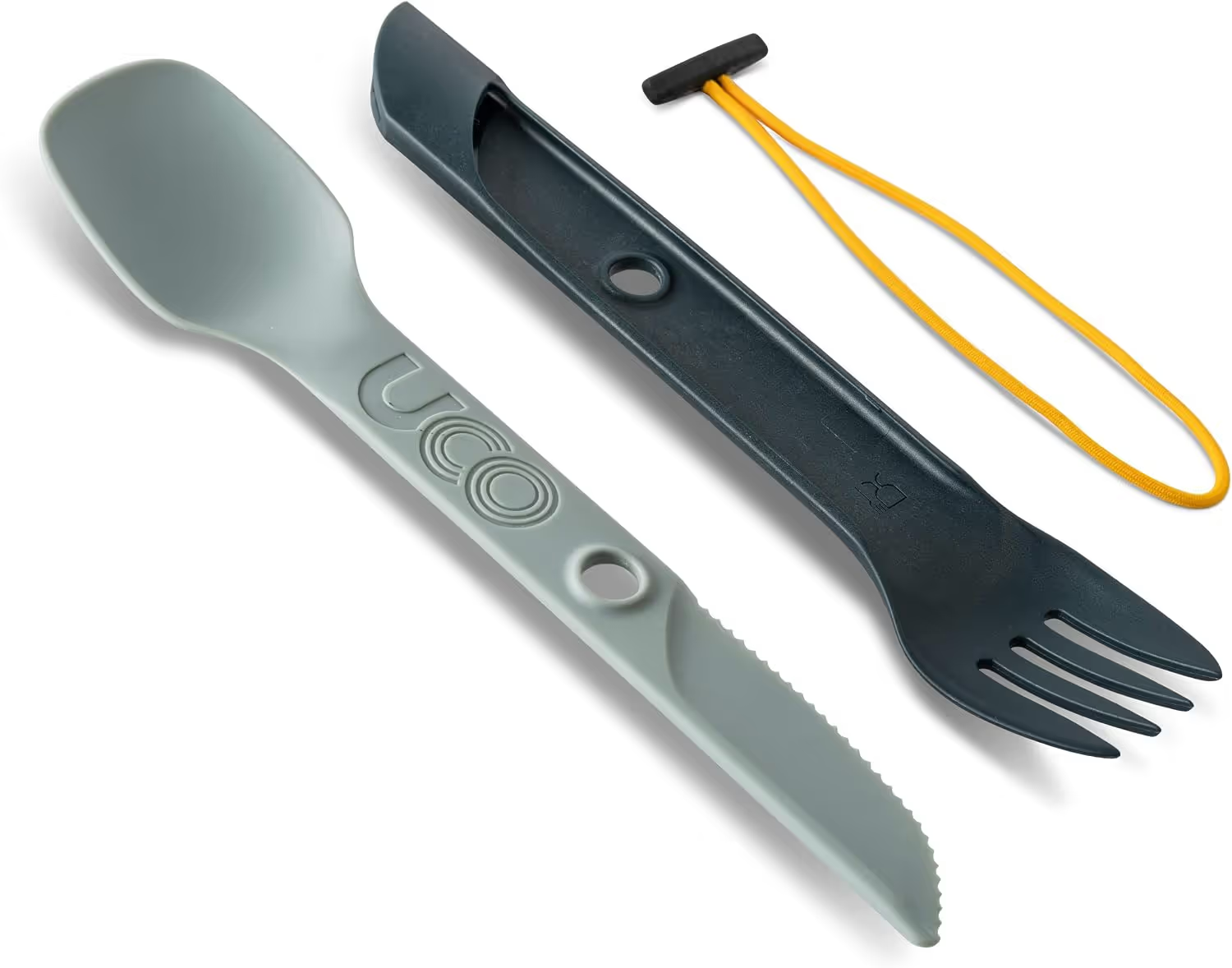
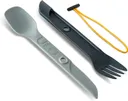
7. UCO

UCO 4-Piece Switch Utensil Set

4.3 /5

UCO fixed the problem of the 'spork' that doesn't quite work. These are full-sized tools that nest into one.

Weight
27g / 0.9oz
Material
Glass-filled Nylon
Pieces
4
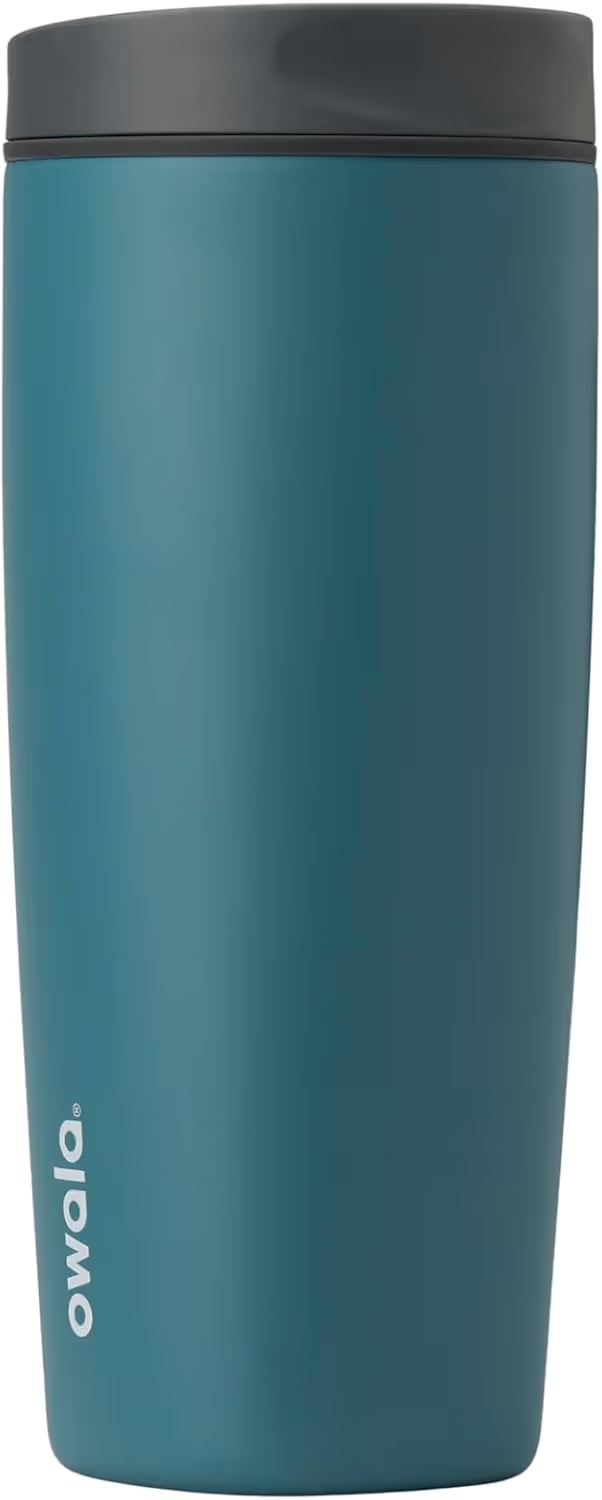
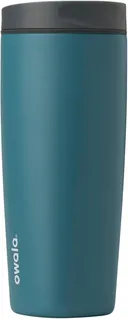
8. Style

Style Vacuum Insulated Travel Mug

4.3 /5

A proper thermal mug is a luxury item that earns its spot in your kit. Hot coffee at sunrise is the difference between a good trip and a great one.

Material
Stainless Steel
Insulation
Double-Wall Vacuum
Capacity
380ml
$12.99 Camp Comfort
Read the review

This double-wall vacuum insulated mug keeps coffee hot for 4-6 hours and cold drinks cold for 8+. The stainless steel construction is virtually indestructible, which matters when it's getting bounced around inside a frame bag. The screw-on lid with a silicone seal is leak-proof, preventing catastrophic coffee spills over your electronics. This high-quality gear is designed specifically for the rigors of multi-day bikepacking adventures across varying terrain. It represents a solid investment for anyone looking to build a reliable and ultralight setup without compromising on essential features or durability.

For bikepacking, the slim profile fits neatly into a bottle cage or the side pocket of a frame bag. It's a luxury item, not a necessity, but it's the kind of small comfort that makes camp life significantly more enjoyable. Fill it with hot coffee before you break camp, and you have a warm drink ready for the first break. At under £10, it's a small investment in camp morale.

What works

  • · Excellent heat retention
  • · Leak-proof lid
  • · Durable stainless steel

What doesn't

  • · Adds weight to a minimal kit
  • · Can dent if dropped hard
  • · Hand wash only
9. Good To-Go

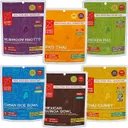
GOOD TO-GO Food Kit Assortment

4.1 /5

Real food. After 90km on gravel, the difference between a Mountain House meal and a Good To-Go meal is the difference between tolerating your dinner and actually looking forward to it.

Prep_Time
15-20 minutes (boiling water)
Calories
400-600 per serving
Shelf_Life
4-5 years
Buying Advice

What to look for

Four decisions, in the order they matter.

1. Burner: micro, standard or integrated

A micro burner like the BRS-3000T is 25 g and costs 17 dollars, and it trades wind resistance and pot stability for that. A standard burner like the PocketRocket 2 is 73 g with real pot supports and wind clipping. An integrated system like the Jetboil is 371 g and boils half a litre in 100 seconds with excellent fuel economy, and it cannot simmer. If you only boil water, the integrated system wins on fuel. If you cook, it is the wrong tool.

2. Pot: nest the canister or do not bother

The number that matters is whether a 100 g gas canister fits inside. A 750 ml titanium pot does, which means the pot costs you no extra volume at all. A pot that does not nest a canister is competing with your food for space in the frame bag.

Related Read

How Much Should a Bikepacking Setup Weigh?

Real weights for a weekend bikepacking setup, where the kilos actually hide, and the point at which chasing grams stops making you faster.

3. Titanium or aluminium

Titanium is lighter and stronger for the weight, heats unevenly, and warps if you run it dry. Anodised aluminium is heavier, spreads heat better for anything that is not boiling water, and dents. For a boil-only kit, titanium. For anyone actually frying, aluminium.

4. The one luxury

Almost every experienced rider carries one thing that is indefensible on a spreadsheet. An insulated mug is 12 dollars and keeps coffee hot for hours at a campsite where everything else is cold. That is the correct luxury, and it is the last thing to cut.

What to skip

Wood burners are appealing and slow, and they leave you dependent on dry fuel and local fire rules. Cutlery sets with a knife you will never use are weight for the sake of a matching case.

Related Read

Stove Won't Simmer: Fixing Canister Performance in the Cold

Why a gas canister loses power below 5°C, what actually restores it in the field, and which of the popular tricks is a good way to start a fire.

Methodology

How we chose

A desk selection from published specifications and owner reports. GravelPacker does not run a test lab, so quoted boil figures below are the manufacturer's own and are treated as best-case.

1. Boil times are read as a ceiling, not a result

Manufacturer boil figures are measured in still air with a full canister, which is not a camp. Where owner reports consistently describe a burner struggling in wind, that pattern outweighs the quoted number, and it is where a 25 g micro burner and a 73 g standard burner separate.

2. Nesting, from published dimensions

The deciding measurement is whether a 100 g canister fits inside the pot, which published internal dimensions answer directly. Anything that does not nest is marked down regardless of its weight, because volume is what runs out first on a bike.

3. Cold-weather behaviour, from owner reports

Canister output falls below 5°C and the complaints cluster differently by burner. Those reports are the evidence here rather than a controlled cold run, and they are consistent enough to separate the burners that cope from the ones that stall.

4. Wear, from the one- and two-star reviews

Non-stick wears through, titanium discolours and warps, nylon utensils lose their connections. Those failures appear in reviews written a season or more after purchase, which is the part of the record that says what actually kills camp cookware.

Q&A

Frequently Asked Questions

Do I need a stove for bikepacking at all?

For a single overnighter with a resupply, no. Cold food and a shop-bought sandwich work fine and save 400 g of kit. A stove earns its place from the second night onwards, and it earns it on morale more than on nutrition. Hot coffee at 6 am in a wet forest is worth carrying weight for.

Canister, alcohol or wood burner?

Canister for almost everyone. It is the smallest and least fussy, it works in the wet, and fuel is easy to find. Alcohol is simpler but slower, and wood burners tie you to dry fuel and local fire restrictions.

Is the BRS-3000T actually safe to use?

Yes, and it is a legitimate ultralight choice at 25 g. The trade is stability and wind performance: the pot supports are small, so a full 750 ml pot on uneven ground needs care, and it burns noticeably more fuel in a breeze. Use it with a small pot and a windscreen and it is excellent value.

How much fuel do I need per day?

Roughly 15 to 20 g of gas per person per day for boil-only cooking, so a 230 g canister covers a solo rider for about a week. Cold weather and wind push that up sharply. Carry a fresh canister for cold trips, because the propane in a blend burns off first and a half-used canister performs worse.

Titanium or aluminium pot for bikepacking?

Titanium if you only boil water, which is what most bikepacking cooking actually is. Aluminium if you fry or simmer, because titanium develops hot spots and scorches anything that is not liquid. The weight difference on a 750 ml pot is about 40 g, which is less than most people expect.

What size pot for one rider?

750ml. It boils enough for a freeze-dried meal or a large mug, and it is the size that lets a small canister and burner nest inside so the whole kit travels as one object.

Is an integrated system like the Jetboil worth it?

If you boil water and nothing else, yes, because the fuel economy is genuinely better and everything nests into the cup. If you want to cook, no, because it has no usable simmer control. At 371 g it is also the heaviest option here by a wide margin.

How do I stop a canister stove failing in the cold?

Keep the canister in your sleeping bag overnight and use a wind shield. Most cold-weather stove complaints are a cold canister losing pressure rather than a fault in the burner itself.

Can I cook in a fire ban?

Often not, and this catches people out. Many summer fire restrictions ban all open flames including canister stoves, not just campfires. Check the current restrictions for the specific forest or district before you leave, and have a cold-soak plan if a ban is likely.

Keep Riding

More Cooking →
Reviewer

The GravelPacker Desk

GravelPacker is a research desk, not a test lab. We read the spec sheets, the long-run owner reports and the forum threads where things break, then score what survives that reading against a rubric we publish. We say so plainly because a review you can check is worth more than one you have to trust.