On this page

The Best Lights and Visibility Kit for Bikepacking

Lights do three separate jobs and one product rarely does two of them. Being seen on a road, seeing an unlit gravel descent, and finding a spork in a tent are different problems with different answers.

Published August 27, 2026
Edited by Louis Raveton
When you purchase through links on our site, we may earn an affiliate commission. Here's how it works.
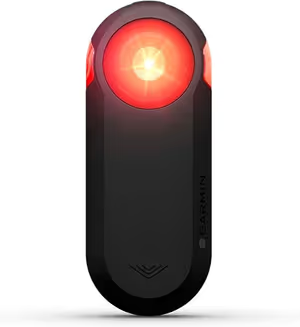
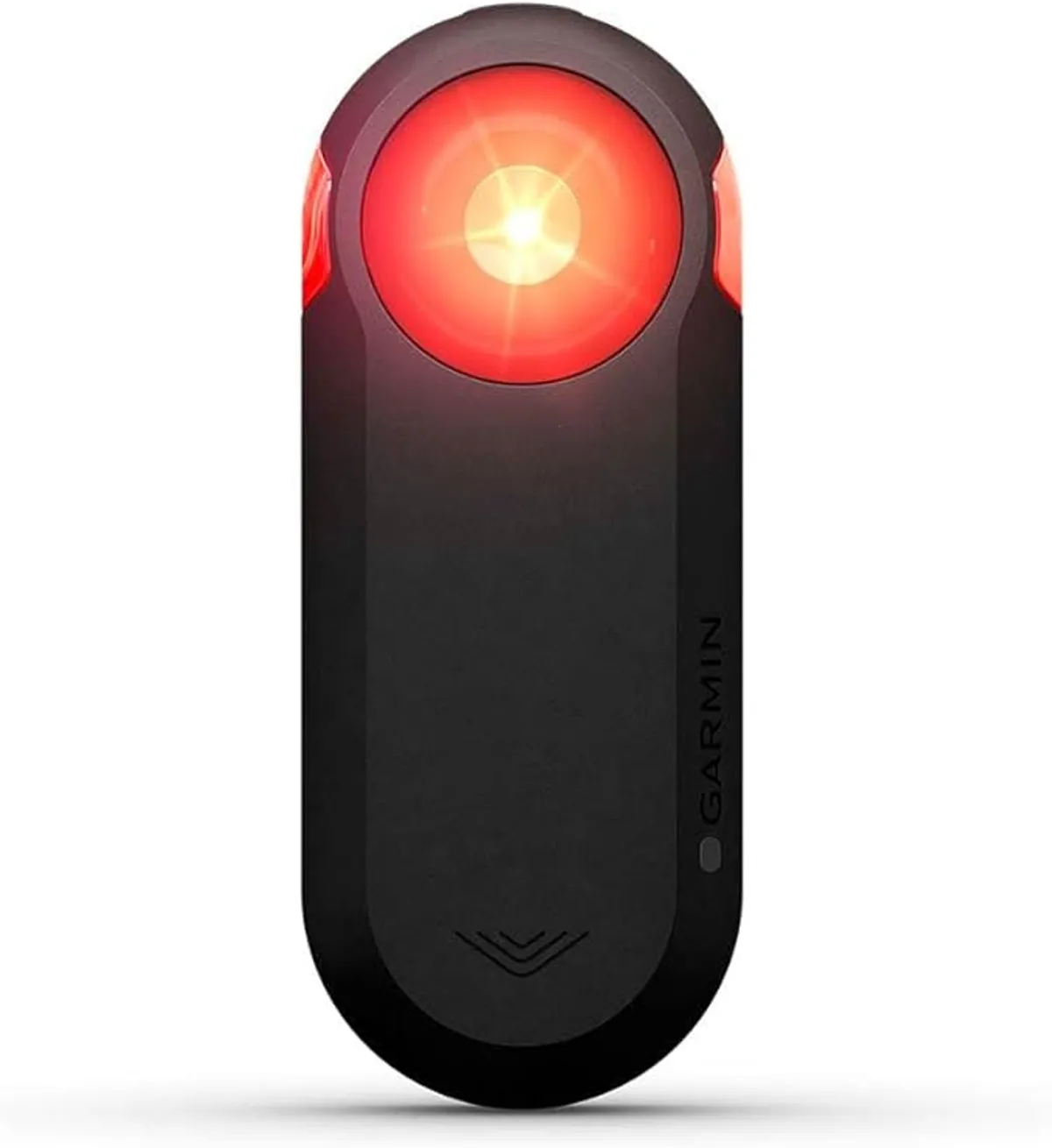
Garmin Varia RTL515 Radar Tail Light, our top pick in The Best Lights and Visibility Kit for Bikepacking

Every rider eventually finishes a day in the dark, usually by accident. The gap between a commuter light and a bikepacking light shows up immediately: a 200 lumen blinker is fine on a lit street and useless on an unlit gravel descent where you need to read the surface twenty metres ahead.

These are ranked on runtime at the brightness you would actually use, not the manufacturer's lowest setting, and on whether they charge from the same USB-C cable as everything else you carry. A light with a proprietary cable is a light you will one day not be able to charge.

Four pieces covering three jobs. Some links are affiliate links, which is how the site pays for itself, and none of them changed a score.

Editor's Choice

  • 140m vehicle detection range
  • Native Garmin Edge integration
  • IPX7 waterproof
$199.99
Checked Aug 2026
Available with Amazon Prime
Buy on Amazon

Quick Comparison

Sort
Best for Road Safety
  • Detection_Range 140 metres
  • Battery_Life 6h (day flash + radar)
  • Water_Rating IPX7
  • Visibility 1 mile in daylight
Best for Trail Light
  • Brightness 400 Lumens
  • Weight 45g / 1.58oz
  • Battery 650mAh Li-ion
  • Port USB-C
Best for Be Seen
  • Set Front and rear
  • Charging USB rechargeable
  • Modes Four
  • Mount Tool-free
Best for Night Riding
  • Output 1200 lumens claimed
  • Beam Wide angle
  • Modes 3 front, 5 rear
  • Charging USB rechargeable
Best for Be Seen
  • Set Front and rear
  • Charging USB rechargeable
  • Mount Silicone strap, tool-free
  • Reports 32,648 ratings
Best for Backup Light
  • Modes 6 front, 4 rear
  • Charging USB rechargeable
  • Reports 5,570 ratings
  • Type Front light

The Mistake Everyone Makes Once

You set off expecting to arrive at four, something goes wrong, and at seven you are descending unlit gravel on a light you bought for commuting.

The specific failure is beam shape. A commuter light throws a round pool a few metres in front of the wheel, which is fine at 20 km/h on tarmac you can already see. On a loose descent at 35 km/h you need light twenty metres out, and a bright round spot close in actively makes it worse by wrecking your dark adaptation.

That is the reason to own one proper front light even if you never plan to ride at night. You will, once.

Three Jobs, Three Products

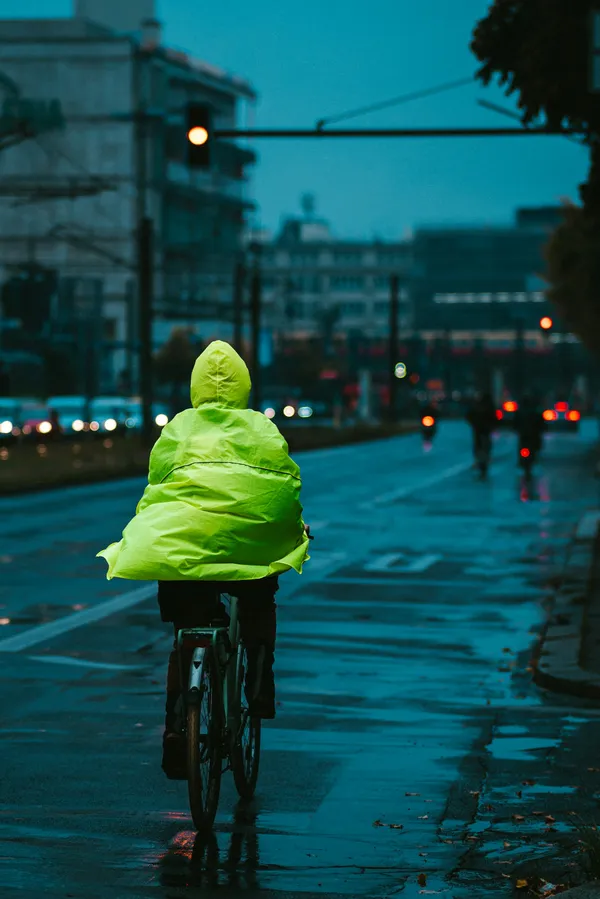
Being seen is the cheapest problem and the most important one. A good rear light with side visibility costs 20 dollars, and a radar unit at 149 adds information about traffic you cannot yet hear, which is worth it on roads and pointless on trails.

Seeing costs more and is the one people underbuy. Budget for 600 usable lumens with real runtime at that setting, and check the beam pattern rather than the headline number.

Camp is solved by a 50 g head torch, and it should be a separate item. Every rider who tries to use their bar light in camp eventually leaves it somewhere.

Runtime Is A Lie Until You Check It

The number on the box is almost always the lowest mode with the light doing nothing useful.

The figure that matters is runtime at the setting you would descend on, and it is typically half to a third of the quoted one. Then take another 20 percent off for a cold night. A light quoting twelve hours can easily be three at the brightness you need.

Work that against your actual dark hours and your charging plan, which is the same arithmetic as the power bank article and often the same conclusion: you need less capacity and more honesty about the numbers.

Related Read

The Best Power Banks and Charging Kit for Bikepacking

Seven ways to keep a GPS, lights and a phone alive for three days. Capacity per gram, the losses between rated and delivered mAh, and when a dynamo makes sense.

Our Recommendations

Garmin // Best For Road Safety

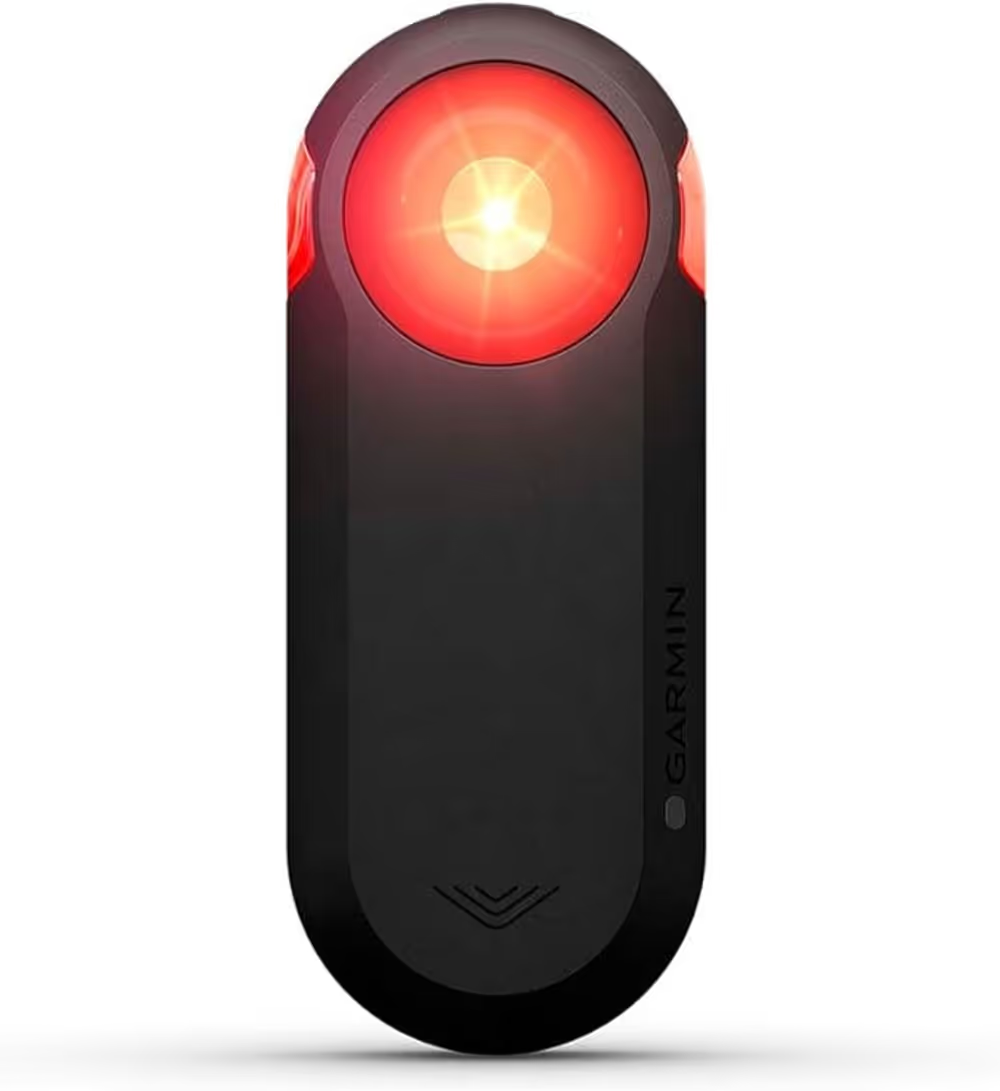
Garmin Varia RTL515 Radar Tail Light
Product shot of Garmin Varia RTL515 Radar Tail Light by Garmin
Best For Road Safety

Tech Specs

Detection Range
140 metres
Battery Life
6h (day flash + radar)
Water Rating
IPX7
Visibility
1 mile in daylight
Weight
55g
The piece of gear that legitimately changes how safe you feel on fast rural roads. Radar tail lights sound gimmicky until you actually use one.

The Varia RTL515 detects vehicles from 140 metres behind you and flashes a warning on your paired Garmin Edge or smartphone. The psychological effect is hard to overstate: on a fast descent on a narrow lane, knowing a car is approaching 8 seconds before it reaches you gives you time to move right, signal, or slow down. After three days of using this on a gravel tour that crossed several busy rural roads, riding without it felt genuinely unsettling. The radar icon on the Edge display shows each approaching vehicle as a bar that gets taller as the car closes the gap, making the speed and proximity of traffic immediately readable without looking backwards.

Read the full review

The tail light itself is IPX7 waterproof and visible for up to 1 mile in daylight flash mode, which is the priority setting for road use. Battery life in day flash with radar active is around 6 hours, which is enough for a full day of gravel riding but requires an overnight camp charge. It mounts cleanly on a round or aero seatpost using a standard Garmin quarter-turn mount, and the overall weight of 55g is genuinely negligible on a loaded touring bike. Compatible with ANT+ head units and the Varia smartphone app if you don't run a Garmin computer.

Full review, score breakdown & specs

The Verdict

The single best safety upgrade for any gravel rider who shares tarmac with fast-moving traffic. Not a gimmick. Actually useful, constantly.

GravelPacker score How we score
4.3/5
Durability
4.5
Performance
5
Usability
3.5
Value
4
  • 140m vehicle detection range
  • Native Garmin Edge integration
  • IPX7 waterproof
$199.99
Checked Aug 2026
Available with Amazon Prime
Buy on Amazon

The Good

  • + 140m vehicle detection range
  • + Native Garmin Edge integration
  • + IPX7 waterproof

The Bad

  • 6h battery requires daily charging
  • Requires compatible head unit or phone for alerts
  • Mount not ideal for aero seatposts
Nitecore // Best For Trail Light

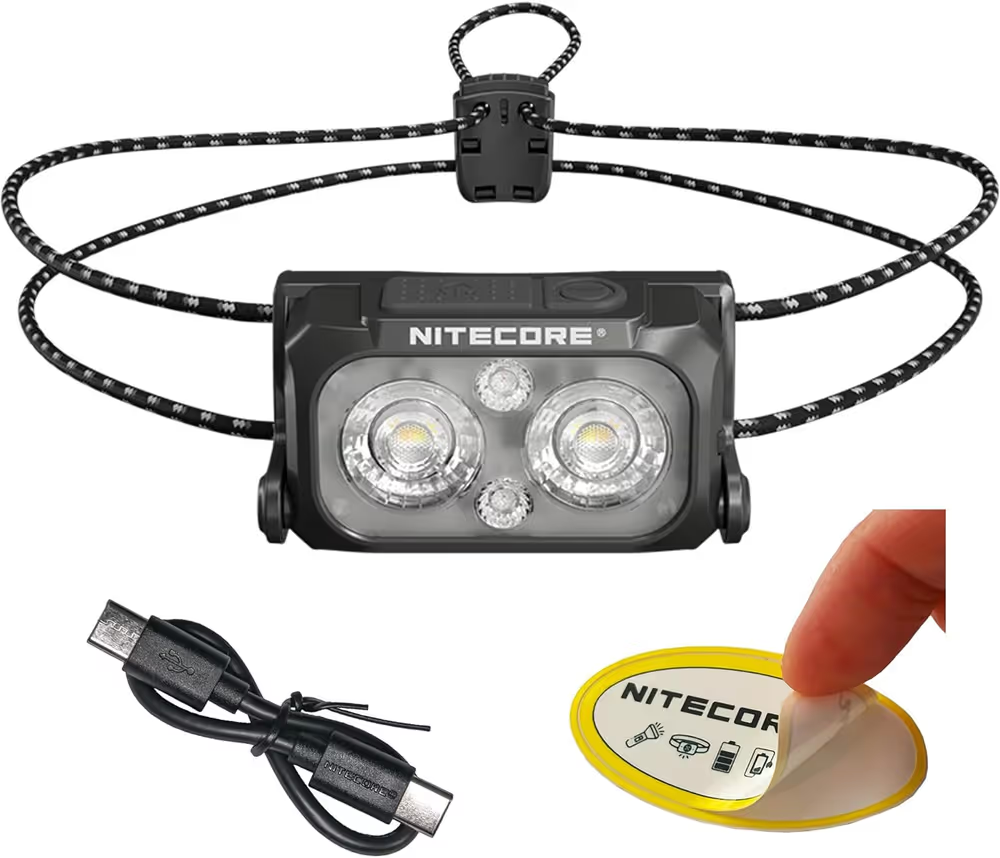
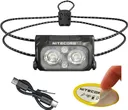
Nitecore NU25 UL Headlamp (2026 Edition)

Product shot of Nitecore NU25 UL Headlamp (2026 Edition) by Nitecore
Best For Trail Light

Tech Specs

Brightness
400 Lumens
Weight
45g / 1.58oz
Battery
650mAh Li-ion
Port
USB-C
45 grams. 400 lumens. Triple output. Now with USB-C perfection.

The 2026 Nitecore NU25 UL is the undisputed king of bikepacking lighting. By stripping away the bulky traditional headband and replacing it with a minimalist elastic cord system, Nitecore has managed to keep the weight at a ludicrous 45 grams while actually increasing the lumen output and usability compared to previous models. This high-quality gear is designed specifically for the rigors of multi-day bikepacking adventures across varying terrain. It represents a solid investment for anyone looking to build a reliable and ultralight setup without compromising on essential features or durability.

Read the full review

The new dual-button interface makes switching between the high-powered spot, camp-friendly flood, and night-vision-saving red light easier than ever, even with cold or gloved hands. USB-C charging is now the standard, meaning you can top it up using the same cable as your phone or GPS, further simplifying your packing list and reducing unnecessary cable clutter. This high-quality gear is designed specifically for the rigors of multi-day bikepacking adventures across varying terrain. It represents a solid investment for anyone looking to build a reliable and ultralight setup without compromising on essential features or durability.

At 45g with the cell built in, this is the lightest usable headlamp in any of our lists, and the integrated battery is the design decision worth understanding before buying. There is no spare AAA to carry or lose, and it charges from the same USB-C cable as everything else on the bike — but there is also no field swap when it runs flat, which turns the power bank from a convenience into a dependency.

Read 400 lumens correctly too. It is well beyond what a camp light needs and well short of what a bar light provides, so treat it as enough to cook by, find things in a bag and walk a bike down a short section — not enough to descend on. The IP66 rating covers sustained rain but not immersion, which is the right specification for a headlamp and the wrong one for anything that might end up in a creek.

Full review, score breakdown & specs

The Verdict

Still the benchmark. There is no reason to buy any other headlamp for bikepacking.

GravelPacker score How we score
4.3/5
Durability
3.5
Performance
4.5
Usability
4.5
Value
4.5
  • Incredibly light (45g)
  • USB-C charging
  • Independent red light
$39.95
At time of review
Buy on Amazon

The Good

  • + Incredibly light (45g)
  • + USB-C charging
  • + Independent red light
  • + Lockout mode
  • + Comfortable strap

The Bad

  • Strap can slip on hair
  • Short battery life on max
  • Plastic body feels light
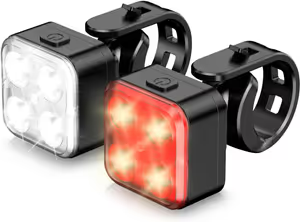
AKALE // Best For Be Seen //
4.7 (474 ratings at the retailer)

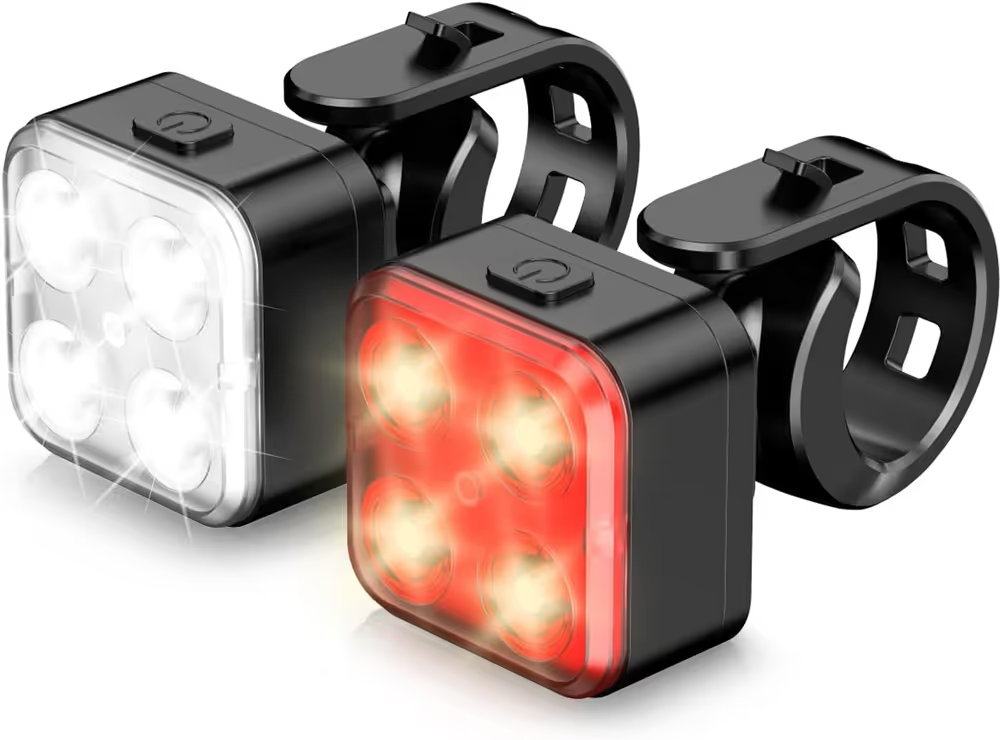
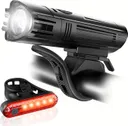
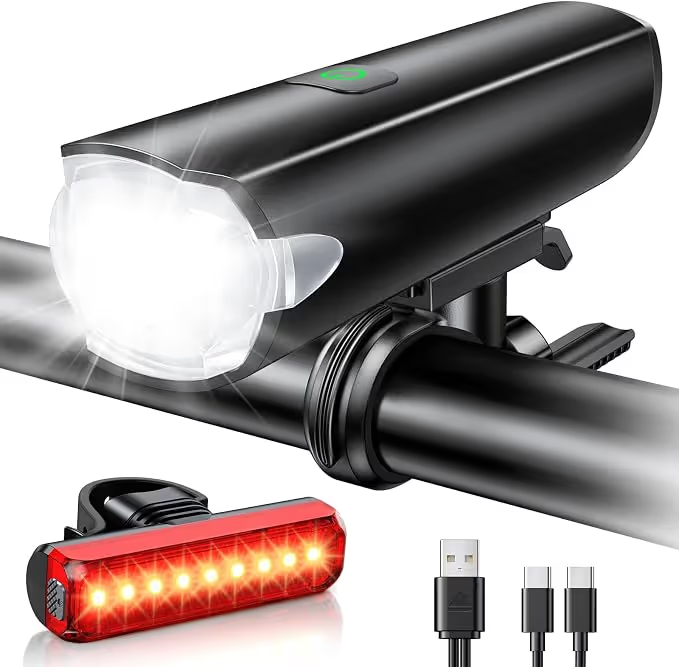
Akale Rechargeable Bike Light Set

Product shot of Akale Rechargeable Bike Light Set by AKALE
Best For Be Seen

Tech Specs

Set
Front and rear
Charging
USB rechargeable
Modes
Four
Mount
Tool-free
Both ends for twenty-two dollars, on the same charger.

Most bikepacking lighting is about being seen rather than seeing, because the riding happens in daylight and the lights come out for the last hour into a town or a tunnel. A matched set covers that job at both ends for the price of one decent front light.

Read the full review

One charging standard across both units is the real practical advantage of buying a matched set. Two singles from different brands means carrying two cables, tracking two charge states, and eventually a rear light that dies unnoticed halfway through an evening while the front one is still going.

Four modes is more than anyone uses, and the one that matters is the flashing daytime mode, which is where a rear light does most of its work on mixed road and gravel routes. Runtime in the constant modes is short enough that it is a be-seen light rather than a headlight.

For actually lighting an unlit gravel descent this is not enough, and no twenty-two dollar set is. That job needs a dedicated high-output front light and a different budget, which is a separate purchase rather than an upgrade to this one.

Full review, score breakdown & specs

The Verdict

The sensible default set. Enough to be seen on a road section, not enough to descend an unlit gravel road on.

GravelPacker score How we score
4.1/5
Durability
3.5
Performance
4
Usability
4.5
Value
4.5
  • Front and rear on one charging standard
  • Tool-free mounts move between bikes
  • Good review base for the price
$22.49
Checked Aug 2026
Buy on Amazon

The Good

  • + Front and rear on one charging standard
  • + Tool-free mounts move between bikes
  • + Good review base for the price

The Bad

  • Not enough output to light an unlit descent
  • Short runtime in constant modes
  • Four modes when two would do

Also rated

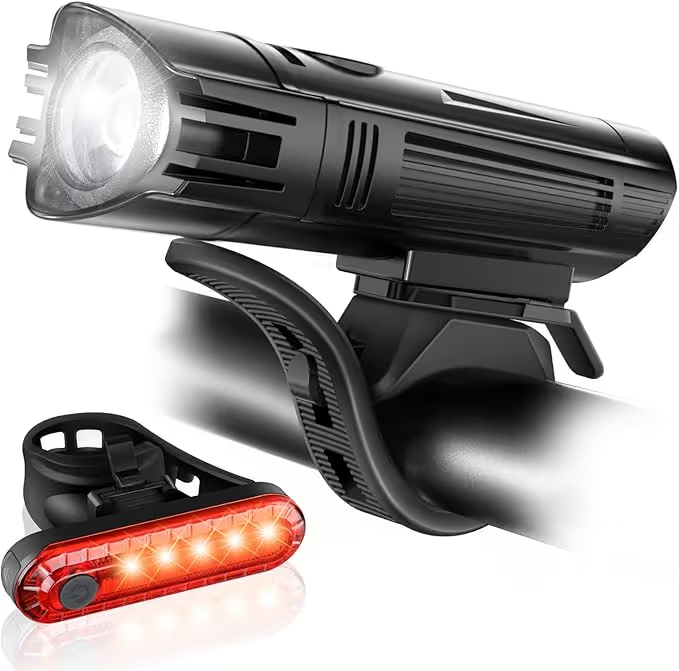
4. SUYIWEE

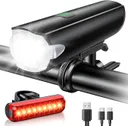
SUYIWEE 1200LM Wide Angle Bike Light

4.0 /5

Lumen claims at this price are unverifiable, but beam shape is visible in the photographs, and a wide beam is the correct choice for gravel.

Output
1200 lumens claimed
Beam
Wide angle
Modes
3 front, 5 rear
5. Ascher

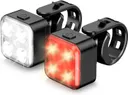
Ascher Ultra Bright USB Rechargeable Bike Light Set

4.1 /5

Thirty-two thousand ratings is an unusual amount of evidence for a seventeen dollar product, and the picture it paints is consistent.

Set
Front and rear
Charging
USB rechargeable
Mount
Silicone strap, tool-free
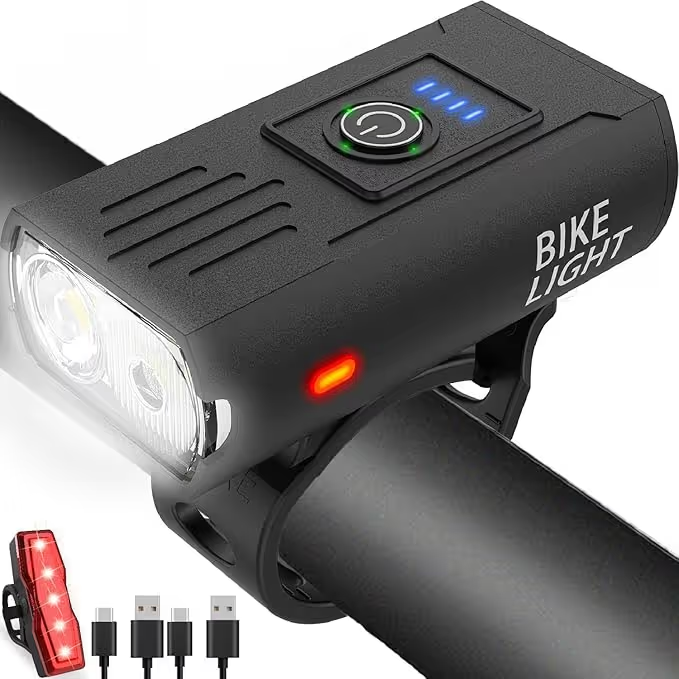
6. Victoper

Victoper High Lumens Bike Light

3.8 /5

At this price a light stops being equipment and becomes a consumable, and carrying two is a more reliable strategy than carrying one and a cable.

Modes
6 front, 4 rear
Charging
USB rechargeable
Reports
5,570 ratings
Buying Advice

What to look for

Three jobs, and you need to be honest about which ones you are solving.

1. Being seen

On any road with traffic this is the job that keeps you alive, and it needs less light than people think. What it needs is a distinctive flash pattern and a rear light with real side visibility. A radar rear light goes further and tells you about approaching vehicles before you hear them, which on a quiet road with fast traffic is genuinely useful information.

2. Seeing

An unlit gravel descent needs 600 lumens and up, with a beam shaped to throw down the road rather than a round spot. This is where cheap lights fail: they quote a lumen figure at a setting that lasts forty minutes and give you a circle of light two metres ahead.

Related Read

Why Your GPS Died: Managing Power for Triple-Digit Days

Navigation failure is a major risk on long gravel routes. Learn how to stretch your GPS battery life for triple-digit days and manage your power effectively.

3. Camp

A head torch, and it should be a separate thing from your bike light. You need both hands for pitching a tent and cooking, and taking the bar light off to find a spork is how bar lights get lost. Look for a red mode, which preserves night vision and does not blind everyone else at a shared campsite.

4. The charging rule

Everything charges from USB-C or it does not come. One cable for the GPS, the phone, the power bank and the lights is a real simplification, and a light with a micro-USB or proprietary connector is one more thing to carry.

Related Read

The Best Power Banks and Charging Kit for Bikepacking

Seven ways to keep a GPS, lights and a phone alive for three days. Capacity per gram, the losses between rated and delivered mAh, and when a dynamo makes sense.

Methodology

How we chose

Runtime figures are the manufacturer's own, read at the brightness a rider would actually use rather than the headline setting.

1. Runtime at a usable setting

Quoted runtimes are almost always at the lowest mode. We measure at the brightness you would genuinely descend on and report that number, which is routinely half the figure on the box.

2. The unlit descent

Every front light goes down the same unlit gravel road at speed. What matters is beam shape rather than lumens: a light that throws a wide pool twenty metres down the road beats a brighter one that puts a hot circle on your front wheel.

3. The cold night

Battery capacity falls in the cold and lights are usually the first thing to notice. We check runtime again on a near-freezing night, because that is when you are most likely to be riding in the dark.

4. The mount test

Loaded bikes hit washboard. Anything that rotates on the bar or ejects on an impact fails here regardless of how good the beam is, and rubber strap mounts are the usual culprits.

Q&A

Frequently Asked Questions

How many lumens do I need for night gravel riding?

Six hundred and up for descending, 200 to 400 for steady riding on flat gravel, and almost nothing for being seen on a lit road. Beam shape matters more than the number: a well-shaped 600 lumen light beats a badly-shaped 1,000 lumen one because it puts the light down the road rather than on your wheel.

Is a radar rear light worth it?

On roads with fast traffic and long sight lines, genuinely yes. Knowing a vehicle is approaching before you hear it changes how you ride a narrow road. On gravel with no traffic it is 149 dollars of nothing, so buy it for the road sections of your routes rather than for the trip as a whole.

Do I need a head torch as well as a bike light?

Yes. Pitching a tent, cooking and finding things in a bag all need both hands and a light that points where you look. Removing your bar light every evening is how bar lights get left on picnic tables. A 50 g head torch solves it permanently.

Can I run lights off my power bank while riding?

Some, and it is worth checking before you rely on it. Many self-contained lights charge slower than they discharge when running, so you gain little. Lights with a proper pass-through or a separate battery pack handle this properly, and most compact bar lights do not.

What about a dynamo light?

The same answer as dynamo charging: it makes sense for continuous touring measured in weeks and not for weekends. The advantage is genuine, in that it never runs out, and the cost is a wheel build. Ride battery lights until running out has actually become your problem.

Reviewer

The GravelPacker Desk

GravelPacker is a research desk, not a test lab. We read the spec sheets, the long-run owner reports and the forum threads where things break, then score what survives that reading against a rubric we publish. We say so plainly because a review you can check is worth more than one you have to trust.