On this page

The Best Power Banks and Charging Kit for Bikepacking

A power bank is not a gadget, it is a fuel tank. Work out what your electronics actually draw over three days and the right size becomes obvious, which is usually smaller than the one you were about to buy.

Published August 21, 2026
Edited by Louis Raveton
When you purchase through links on our site, we may earn an affiliate commission. Here's how it works.
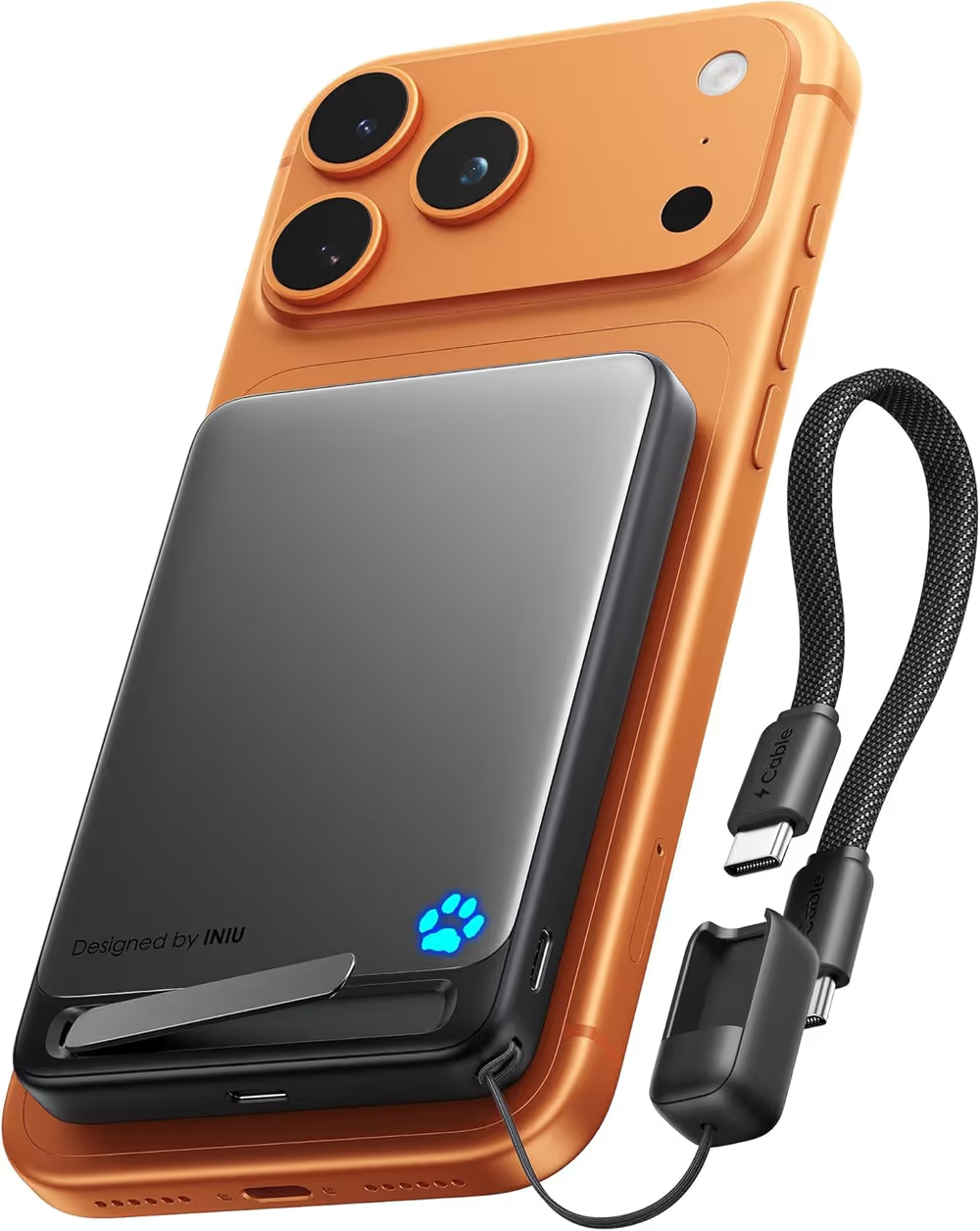
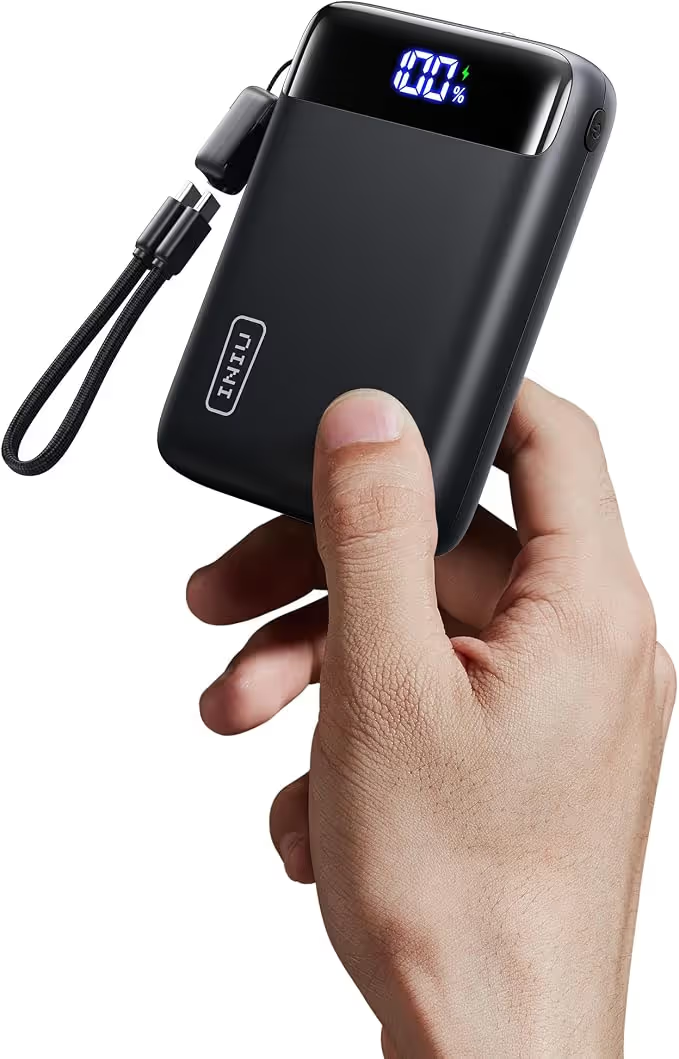
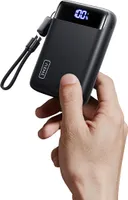
INIU 20,000mAh Slim Power Bank (22.5W), our top pick in The Best Power Banks and Charging Kit for Bikepacking

Charging is the part of a bikepacking setup people get wrong in both directions. Some riders carry a 20,000 mAh brick for an overnighter and some head out for four days with a 5,000 mAh emergency pack and a GPS that dies on day two.

The arithmetic is not complicated. A phone is roughly 3,000 to 4,000 mAh, a GPS computer 1,000 to 2,000, a head torch a few hundred. Add what you will actually drain over the trip, add 30 percent for cable and conversion losses, and buy the smallest bank above that number.

Seven options here, from a 100 g emergency pack to a dynamo hub that never needs charging at all. Some links are affiliate links, which is how the site pays for itself, and none of them changed a score.

Editor's Choice

  • Twenty-nine thousand owner ratings at 4.6
  • A third the price of the Anker equivalent
  • Slim profile sits flat in a top tube bag
$26.99
Checked Aug 2026
Buy on Amazon

Quick Comparison

Sort
Best for Weekend Power
  • Weight 180g
  • Capacity 10,000 mAh
  • Dimensions 3.6 x 2.3 x 0.9 in
  • Output 5V / 2.4A
Best for Power Supply
  • Capacity 10,000mAh
  • Outputs USB-C + USB-A
  • Feature Magnetic Wireless Charging
  • Weight ~185g
Best for Minimum Bulk
  • Capacity 5000mAh
  • Output 22.5W Max
  • Feature Foldable USB-C Connector
  • Weight 100g (3.5 oz)
Best for Expedition Power
  • Output 6V / 3W
  • Axle 12x100m Thru-Axle
  • Brake Center-Lock Disc
  • Holes 24H Straight Pull
Best for Extended Trips
  • Capacity 20,000mAh
  • Cable Built-in USB-C
  • Delivered Roughly 14,000mAh after losses
  • Use Week-long, no mains
Best for Extended Trips
  • Capacity 20,000mAh
  • Output 22.5W fast charge
  • Form Slim profile
  • Reports 28,947 ratings
Best for Power Supply
  • Output 30W
  • Technology GaN II
  • Port USB-C
  • Compatibility Phones, Tablets, Laptops
$22.99

Start With Arithmetic, Not With A Product

The right power bank falls out of one calculation, and almost nobody does it.

List what you will charge and how many times over the trip. Phone twice at 4,000 mAh, GPS twice at 1,500, head torch once at 500. That is 11,500 mAh of demand. Divide by 0.7 for real-world losses and you need about 16,000 mAh of rated capacity, which means either a 20,000 bank or a 10,000 bank plus one mains stop.

Do that once and you will stop guessing. It also usually reveals that the answer is a smaller bank plus a plan to plug in at a cafe, rather than the brick you were about to buy.

Related Read

Why Your GPS Died: Managing Power for Triple-Digit Days

Navigation failure is a major risk on long gravel routes. Learn how to stretch your GPS battery life for triple-digit days and manage your power effectively.

The Charger Is The Underrated Purchase

Everyone budgets for the bank and nobody budgets for the charger.

A 30 W USB-C charger refills a 10,000 mAh bank in roughly two hours. A 5 W phone charger takes six. On a trip with one cafe stop a day, that difference decides whether your charging strategy works at all, and the charger weighs 60 g.

If you are buying one thing to improve your charging setup and you already own a bank, buy the charger.

Where The Dynamo Fits

Two hundred and thirty seven dollars and a wheel rebuild, in exchange for never charging anything again.

That trade is clearly right for continuous touring measured in weeks, and clearly wrong for weekends. The crossover is somewhere around ten to fourteen days of riding with no reliable mains, which is a trip most people on this site are not doing yet.

The honest advice is to ride power banks until charging is genuinely the thing limiting your trips, then buy the hub. Nobody has ever regretted that order.

Our Recommendations

Anker // Best For Weekend Power

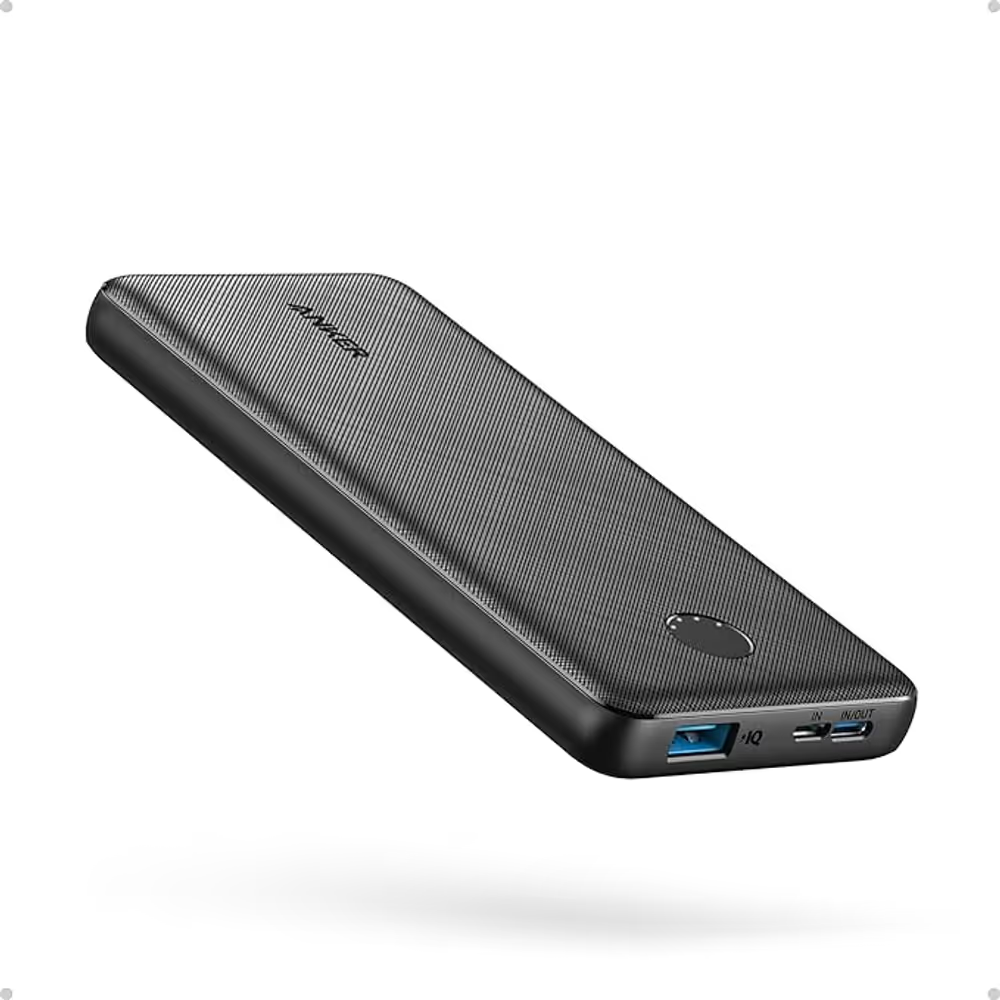
Anker Portable Charger 10000mAh

Product shot of Anker Portable Charger 10000mAh by Anker
Best For Weekend Power

Tech Specs

Weight
180g
Capacity
10,000 mAh
Dimensions
3.6 x 2.3 x 0.9 in
Output
5V / 2.4A
10,000mAh at 180g — the correct size for a weekend.

Ten thousand milliamp-hours is roughly two full phone charges after conversion losses, or one phone plus a GPS computer and a rechargeable headlamp — which is precisely the load of a two-night trip. That capacity is the reason to choose this over a 20,000mAh brick: doubling the capacity roughly doubles the weight and volume for range you will not use before your next mains outlet. At 3.6 x 2.3 x 0.9 inches it lies flat against the bottom of a frame bag rather than wedging in a corner, and Anker's charging circuitry is the reason these units have a reputation for still holding capacity after a couple of seasons.

Read the full review

The 5V/2.4A output is the honest limitation. That is standard-speed charging, not USB-C Power Delivery, so a modern phone will take considerably longer to fill than it would from a PD charger — an overnight-at-camp charge rather than a coffee-stop top-up. Recharging the bank itself is likewise slow. If your routine is to plug in at a cafe for 40 minutes and leave with a full phone, you want a PD unit instead. If you charge overnight while you sleep, the speed is irrelevant and the weight saving is not.

Full review, score breakdown & specs

The Verdict

The right capacity for the trips most people actually ride, at a weight that does not argue. Slow charging is the price; if you plug in overnight you will never notice it.

GravelPacker score How we score
4.1/5
Durability
4.5
Performance
3.5
Usability
4
Value
4.5
  • 10,000mAh is correctly sized for two-to-three-day trips
  • Flat 180g profile lies neatly in a frame bag
  • Anker cell management holds capacity across seasons
$21.99
At time of review
Buy on Amazon

The Good

  • + 10,000mAh is correctly sized for two-to-three-day trips
  • + Flat 180g profile lies neatly in a frame bag
  • + Anker cell management holds capacity across seasons

The Bad

  • 5V/2.4A output only — no USB-C Power Delivery speed
  • Slow to recharge itself at a cafe stop
  • Too small for expeditions beyond three or four days
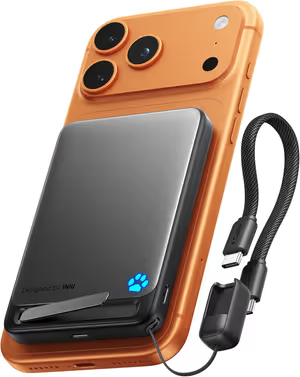
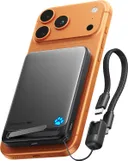
Product shot of Ultra-Thin Magnetic Wireless Power Bank 10,000mAh by INIU
Best For Power Supply

Tech Specs

Capacity
10,000mAh
Outputs
USB-C + USB-A
Feature
Magnetic Wireless Charging
Weight
~185g
The power supply chosen for a multi-day gravel tour. 10,000mAh at an ultra-slim profile that takes up minimal space in a frame bag.

The 10,000mAh capacity is the sweet spot for a 2-4 day bikepacking trip. It provides roughly 2-3 full charges for a modern iPhone or Android phone, which covers navigation, camera, and emergency calls without needing to ration aggressively. The slim form factor fits flat against the frame bag interior without creating pressure points against your tubes or tools. The USB-C and USB-A dual outputs allow you to charge a GPS computer and a phone simultaneously overnight at camp.

Read the full review

The wireless charging feature is genuinely useful at camp: you can drop your phone on top of the bank while eating dinner without fumbling for a cable in low light. Transfer speeds are predictably slower than wired, but for an overnight camp charge it makes no practical difference. The main limitation is that 10,000mAh won't cover a 5-7 day expedition without very aggressive power management. For those trips, a 20,000mAh bank or a dynamo hub charging setup is more appropriate. For a 3-4 day tour, this hits the right balance of capacity and packability.

The comparison to make is against a plain 10,000mAh bank, which costs roughly half this and weighs about the same. What the extra money buys is magnetic wireless charging, and it is worth being clear-eyed about that on a bike tour: wireless charging is materially less efficient than cable, so the same 10,000mAh delivers noticeably fewer full phone charges when used that way.

Where it does earn its place is the magnet itself — the pack sits stuck to the back of the phone in a frame bag with no cable to work loose over rough ground, which is the failure that leaves you at camp with an empty phone and a bank that never discharged. The USB-C and USB-A ports mean you can use it as a conventional bank when efficiency matters and the magnet when convenience does. At ~185g for 10,000mAh it is a reasonable three-to-four day supply for a phone and a head unit.

Full review, score breakdown & specs

The Verdict

Right-sized for most bikepacking trips. Slim, dual-output, and wireless charging makes camp power management effortless.

GravelPacker score How we score
4.0/5
Durability
4
Performance
4
Usability
4
Value
4
  • Slim profile fits flat in frame bag
  • Dual output charges GPS + phone simultaneously
  • Wireless charging removes cable fumbling at camp
$39.99
At time of review
Available with Amazon Prime
Buy on Amazon

The Good

  • + Slim profile fits flat in frame bag
  • + Dual output charges GPS + phone simultaneously
  • + Wireless charging removes cable fumbling at camp

The Bad

  • Too low for 7+ day expeditions
  • Wireless charging is slower than wired
  • MagSafe alignment can slip off-axis
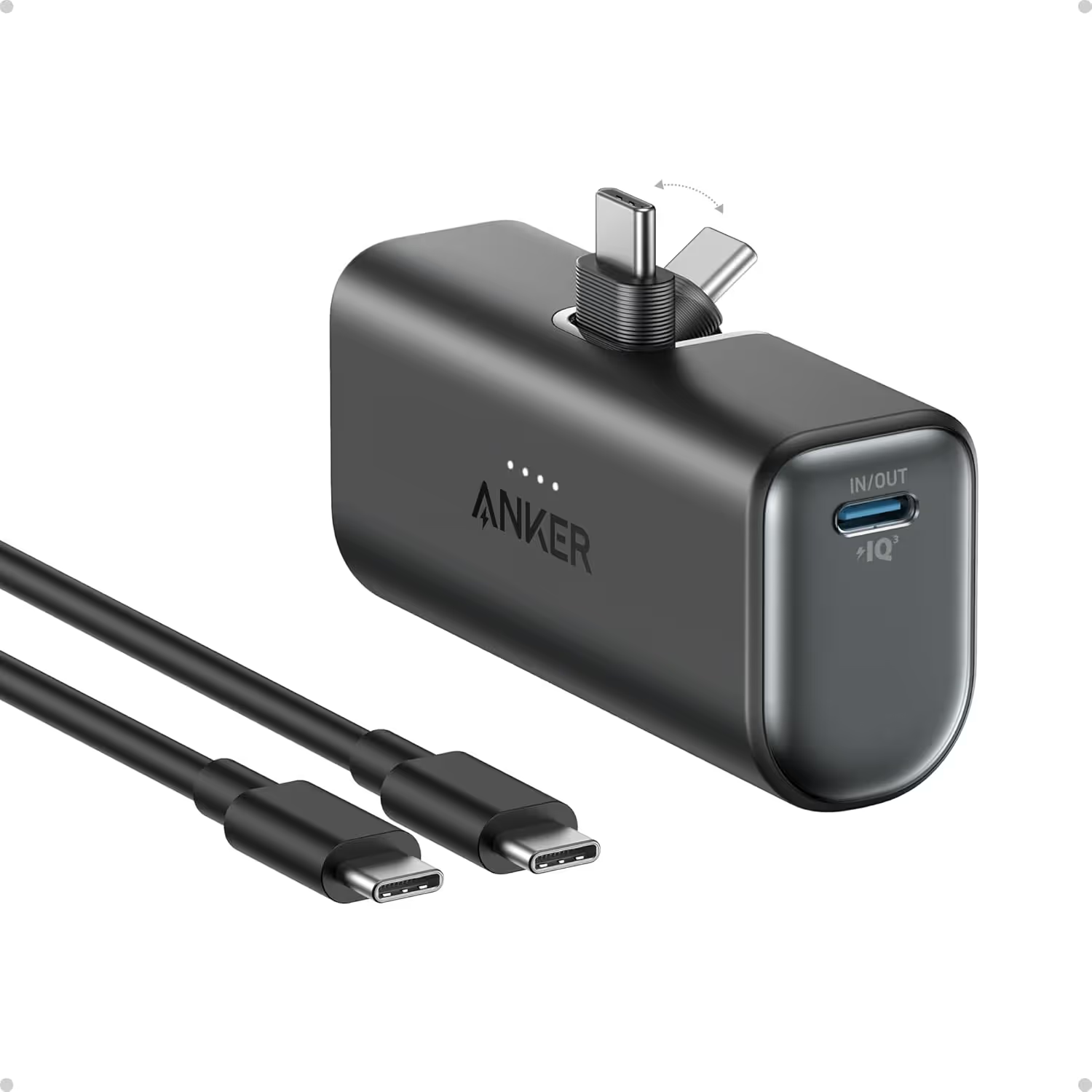
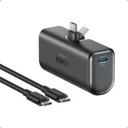
Product shot of Anker Nano Power Bank (5,000mAh, Built-In USB-C) by Anker
Best For Minimum Bulk

Tech Specs

Capacity
5000mAh
Output
22.5W Max
Feature
Foldable USB-C Connector
Weight
100g (3.5 oz)
No cables required. Foldable USB-C. Fits in your watch pocket.

For a minimalist overnighter, a bulky 20,000mAh brick is overkill. The Anker Nano is a compact solution with a built-in, foldable USB-C connector. This design allows you to ditch charging cables entirely, reducing clutter and weight in your cockpit bag. It’s roughly the size of a pack of gum and weighs next to nothing in your jersey pocket.

Read the full review

The 5,000mAh capacity provides roughly one full charge for a modern smartphone, which is perfect for a 24-48 hour trip where you only need to keep your GPS and phone alive. The build quality is standard Anker, solid, reliable, and equipped with ActiveShield safety tech to prevent overheating.

One major advantage is that it clips directly into your device, making it possible to charge while you're actually riding without cables flapping in the wind. It is the cleanest power setup available for short, fast-paced trips where bulk is the constraint.

There is an awkward comparison to make here. The Anker 10,000mAh on our beginners list holds twice the charge for $21.99 — four dollars less than this — and weighs 180g against 100g. Per gram the two are within ten percent of each other; per dollar the bigger one wins outright.

So the case for the Nano is not capacity or value, it is the fold-out USB-C connector. No cable, nothing to lose, nothing to fray at the port — and on a minimalist overnighter where the entire electronics kit is a phone and a headlamp, that is a real simplification. 5,000mAh is roughly one full phone charge plus a headlamp top-up, which is the right size for one night out and clearly not enough for three. Buy it for the form factor or don't buy it.

Full review, score breakdown & specs

The Verdict

The cleanest, smallest way to stay powered up. A minimalist's dream.

GravelPacker score How we score
3.8/5
Durability
3.5
Performance
3.5
Usability
4.5
Value
3.5
  • Built-in foldable connector
  • Ultra-compact design
  • Stable charging
$25.99
At time of review
Buy on Amazon

The Good

  • + Built-in foldable connector
  • + Ultra-compact design
  • + Stable charging

The Bad

  • Only 5,000mAh
  • Connector can be fragile
  • Pricey for its capacity

Also rated

4. DT Swiss

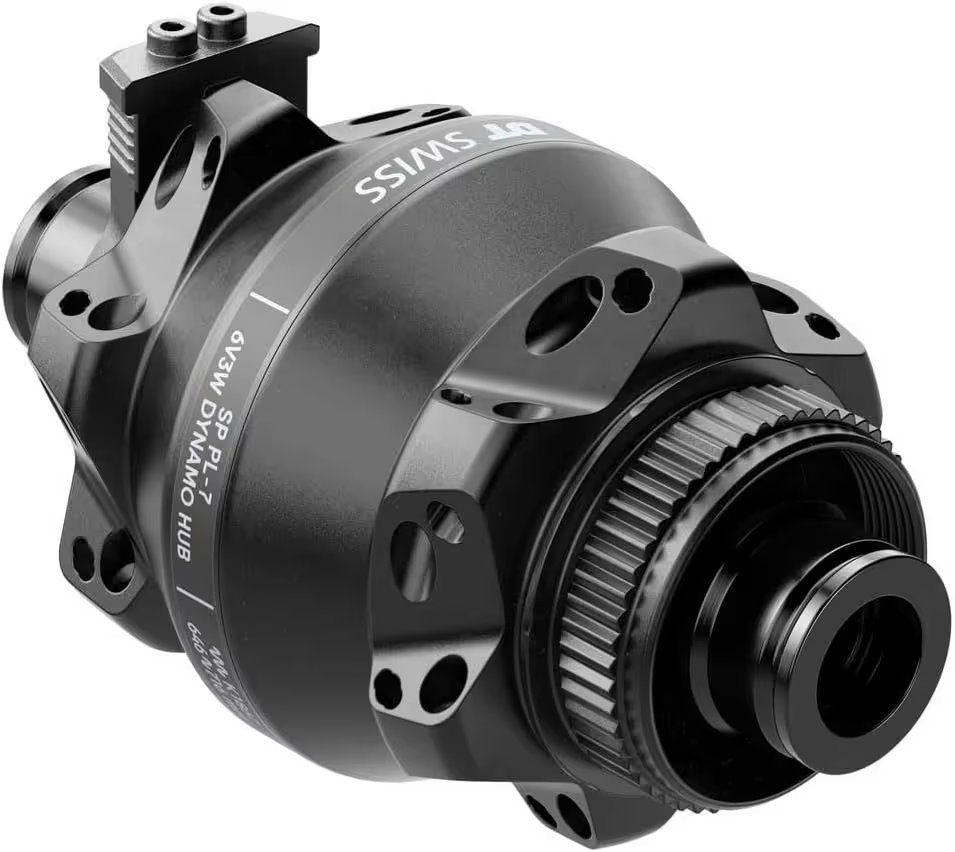
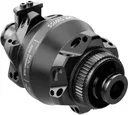
DT Swiss 350 Dynamo Front Hub (Shutter Precision SP)

4.0 /5

The infrastructure upgrade that makes anxious battery management a thing of the past. Pair it with a USB charging converter and you never worry about a dead GPS again.

Output
6V / 3W
Axle
12x100m Thru-Axle
Brake
Center-Lock Disc
5. Anker

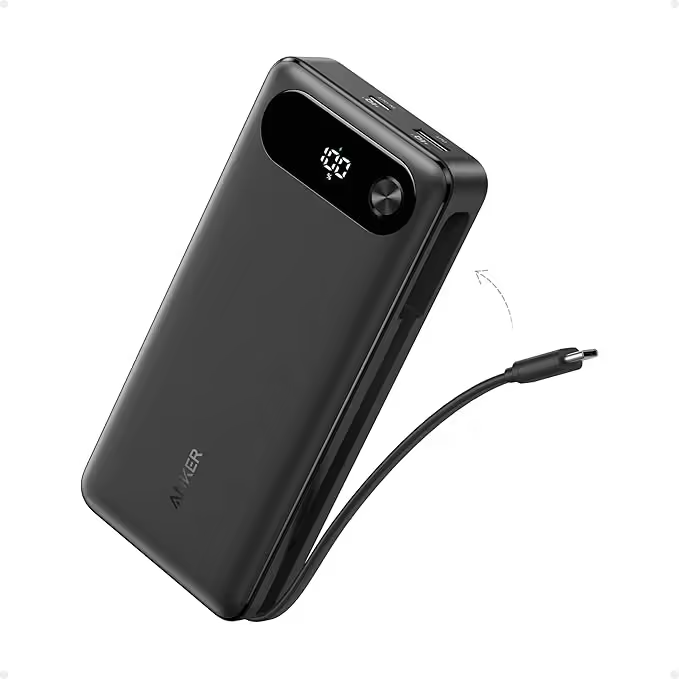
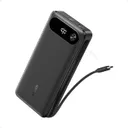
Anker 20,000mAh Power Bank with Built-in USB-C

4.3 /5

Twenty thousand is more than most trips need, and the built-in USB-C cable removes the item most likely to be forgotten or broken.

Capacity
20,000mAh
Cable
Built-in USB-C
Delivered
Roughly 14,000mAh after losses
6. INIU

INIU 20,000mAh Slim Power Bank (22.5W)

4.4 /5

INIU has become the default budget answer in this category, and at this review volume the evidence is strong enough to take seriously.

Capacity
20,000mAh
Output
22.5W fast charge
Form
Slim profile
$26.99 Extended Trips
Read the review

Twenty-nine thousand ratings at 4.6 is a stronger evidence base than almost anything else in this category, including the premium brands, and that matters more than a spec sheet for a product whose failure mode is gradual capacity loss rather than sudden death.

The slim profile is genuinely useful on a bike. A power bank that sits flat in a top tube bag alongside a cable does not force the rest of the bag to work around it, and shape is a specification that gets ignored until you are repacking in the dark.

22.5W output charges a phone quickly and will refill most devices at a useful rate, though it falls short of the 45W units if you are also charging a laptop or a large tablet, which is not a bikepacking use case.

What you give up against Anker is the integrated cable and the warranty process. INIU's support exists but is less established, and for a bank that will spend two seasons being vibrated in a frame bag that is a fair thing to weigh.

What works

  • · Twenty-nine thousand owner ratings at 4.6
  • · A third the price of the Anker equivalent
  • · Slim profile sits flat in a top tube bag

What doesn't

  • · No integrated cable
  • · Less established support than Anker
  • · 22.5W is modest if you charge larger devices
7. Anker

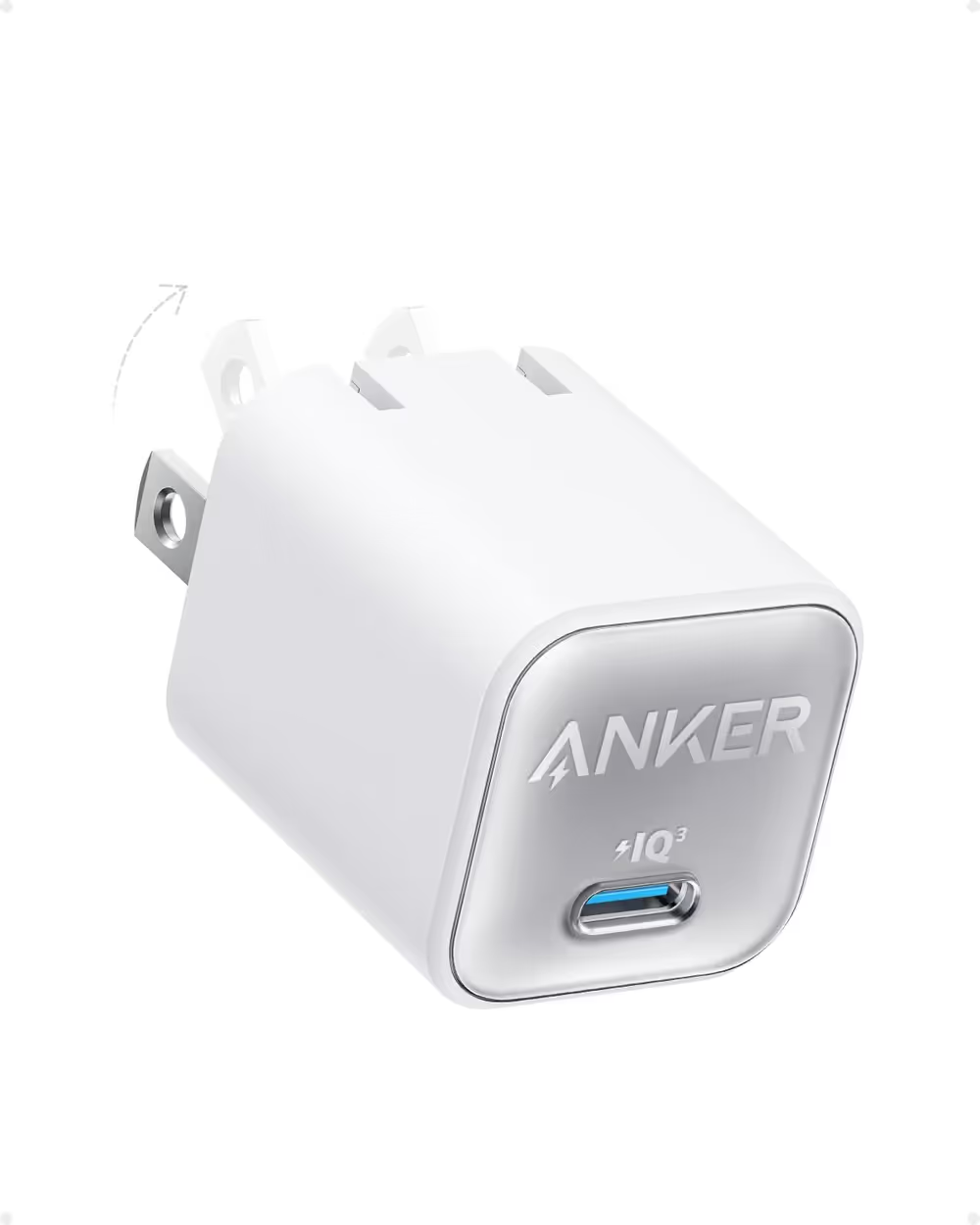
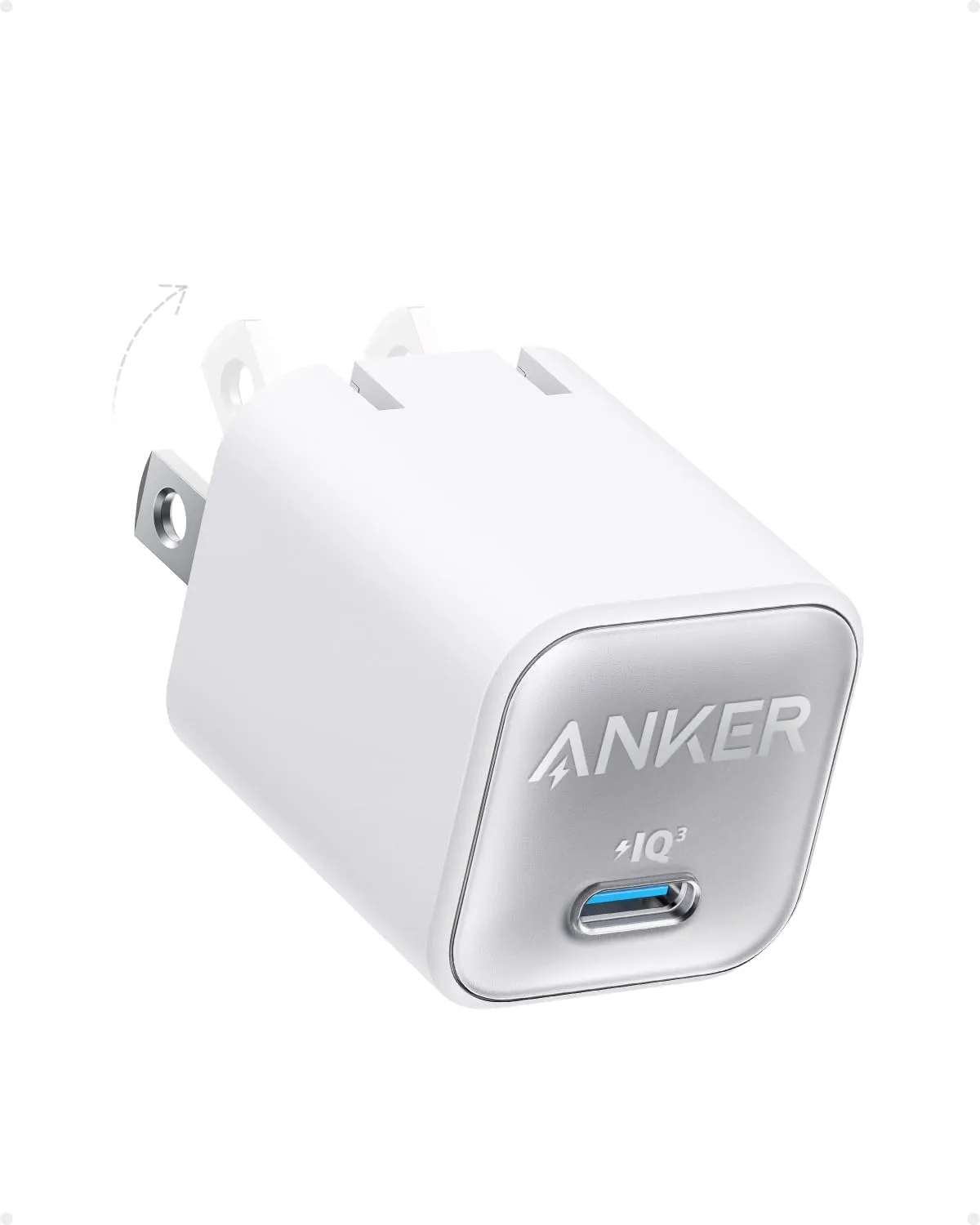
Anker Nano 30W USB-C Wall Charger

4.4 /5

The Anker Nano is the secret weapon for 'credit card' bikepackers who need to charge everything in a 20-minute coffee stop.

Output
30W
Technology
GaN II
Port
USB-C
Power Supply
Read the review

When you're bikepacking, your time at a cafe or campsite power outlet is precious, which is why a high-speed charger like the Anker Nano 30W is non-negotiable. Traditional chargers are bulky and slow, but this Gallium Nitride (GaN) powered unit is about the size of a standard 5W plug while providing enough power to fast-charge an iPhone, iPad, or even a MacBook Air in emergencies. This high-quality gear is designed specifically for the rigors of multi-day bikepacking adventures across varying terrain. It represents a solid investment for anyone looking to build a reliable and ultralight setup without compromising on essential features or durability.

The build quality is exactly what you'd expect from Anker, solid, sleek, and built to withstand the vibrating world inside a top tube bag or frame bag. When paired with a single high-quality USB-C cable, it becomes the only charging brick you need to carry, drastically simplifying your electronics kit and ensuring you never leave the cafe without a full battery. This high-quality gear is designed specifically for the rigors of multi-day bikepacking adventures across varying terrain. It represents a solid investment for anyone looking to build a reliable and ultralight setup without compromising on essential features or durability.

What works

  • · Extremely compact
  • · High 30W output
  • · Foldable plug
  • · GaN technology
  • · Doesn't heat up

What doesn't

  • · Single port only
  • · Easy to lose
  • · Prongs don't fold (some models)
Buying Advice

What to look for

Four things decide this, and capacity is only the first.

1. Work out your real draw

Phone 3,000 to 4,000 mAh per full charge, GPS 1,000 to 2,000, head torch 300 to 800. A three-day trip where you charge the phone twice and the GPS twice is roughly 10,000 mAh of demand before losses. Losses are real: assume you get about 70 percent of a bank's rated capacity out of it.

2. Capacity per gram is the number that matters

A 10,000 mAh bank at 180 to 210 g is the sweet spot for multi-day trips and the reason it is the default recommendation. A 5,000 mAh at 100 g is better value per gram on paper and only covers one full phone charge, which is insurance rather than a plan.

Related Read

Why Your GPS Died: Managing Power for Triple-Digit Days

Navigation failure is a major risk on long gravel routes. Learn how to stretch your GPS battery life for triple-digit days and manage your power effectively.

3. The charger matters as much as the bank

A 30 W USB-C charger refills a 10,000 mAh bank in about two hours instead of six, which is the difference between topping up over a cafe lunch and needing a full night at a mains socket. On a trip with any indoor stops, the charger is the higher-leverage purchase.

4. Dynamo is a different decision entirely

A dynamo hub is 237 dollars and a wheel rebuild, and it never needs charging. It only makes sense above roughly two weeks of continuous riding or on routes with no mains power at all. For weekend and week-long trips a power bank wins on cost, weight and simplicity.

Related Read

Best Budget Bikepacking Gear 2026: 10 Affordable Essentials

A full bikepacking setup without the flagship prices. Ten budget picks under $120 each, with the three that are false economy named.

Methodology

How we chose

A desk selection from published specifications and owner reports. GravelPacker does not run a test lab, so every capacity figure below is either the manufacturer's rating or an owner's account of what they got out of it.

1. Rated capacity is not delivered capacity

Conversion and cable losses put delivered capacity roughly 25 to 35 percent below the printed mAh, and owner reports are consistent enough on that gap to plan around. Every recommendation here is sized on the delivered figure, not the number on the box.

2. Cold-weather falloff, from owner reports

Lithium capacity drops in the cold, so a bank good for two phone charges in July delivers less at 2°C. The cold-weather figures come from owner accounts rather than from the packaging, which never mentions it.

3. Recharge time, from the published input rating

A bank's input wattage decides whether a cafe stop is useful, and it is the specification most often buried. A 30 W input refills a 10,000 mAh bank in roughly two hours where a 5 W input takes six.

4. Shape and weight, from published dimensions

Anything that will not sit flat in a frame bag or top tube bag alongside a cable is marked down. Capacity per gram is the headline number, but a bank you have to repack around is a bank you stop carrying.

Q&A

Frequently Asked Questions

What size power bank do I need for bikepacking?

For a weekend with a phone and a GPS, 5,000 mAh is enough. For three days or more, 10,000 mAh is the right default. Above that you are carrying weight for a scenario that a single mains stop would solve, unless the route genuinely has no power for a week.

How many phone charges does a 10,000 mAh bank give?

Two, realistically, not the three the arithmetic suggests. Conversion and cable losses take roughly 30 percent, and cold takes more. Plan on two full phone charges or one phone plus a GPS and a head torch.

Is a dynamo hub worth it?

For continuous touring measured in weeks, yes. For weekends and one-week trips, no. It costs 237 dollars plus a wheel build, adds drag, and solves a problem a 22 dollar power bank already solves for the trip lengths most people ride. Buy it when charging has actually become your limiting factor, not before.

Should I charge devices while riding?

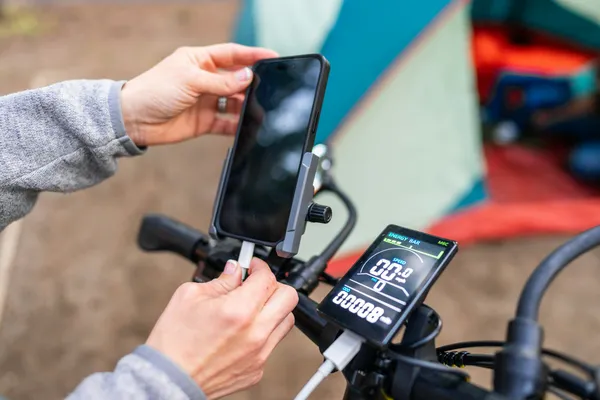
Only if the device tolerates it. Some GPS units draw more current than they take in while navigating with the screen on, so they charge slowly or not at all. Charging in a bag at camp is more efficient and does not leave a cable flapping in the road spray.

What cables should I carry?

One short USB-C to USB-C, one USB-C to whatever legacy device you own, and nothing else. Long cables are heavier, tangle and fail at the connector. Short cables live in the same pocket as the bank, so the whole charging system is one thing you pick up rather than four.

Reviewer

The GravelPacker Desk

GravelPacker is a research desk, not a test lab. We read the spec sheets, the long-run owner reports and the forum threads where things break, then score what survives that reading against a rubric we publish. We say so plainly because a review you can check is worth more than one you have to trust.