Gear
How Much Should a Bikepacking Setup Weigh?
Real weights for a weekend bikepacking setup, where the kilos actually hide, and the point at which chasing grams stops making you faster.
Most gear lists tell you what to bring and leave you to guess what it all weighs. These are two full overnight setups built from products we have scored, with every published weight and price added up.
Both cover the same job: one person, one night out, three-season conditions, self-supported.
| Item | Weight | Price |
|---|---|---|
| Naturehike Cloud-Up 1 tent (210T) | 1,660g | $79.99 |
| EcooPro sleeping bag | 770g | $23.46 |
| Trekology UL80 pad | 750g | $39.99 |
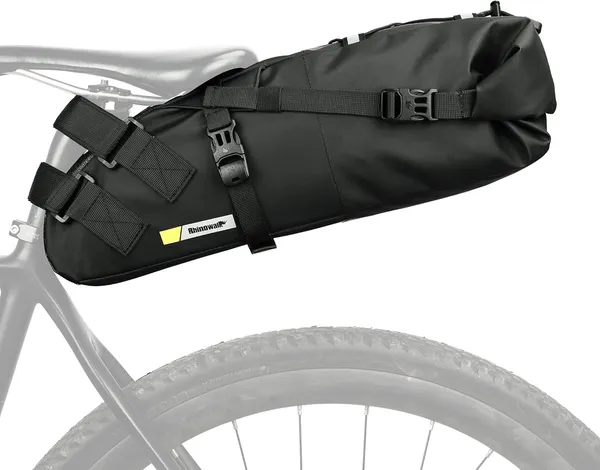
| Rhinowalk 10L seat pack | about 500g (no weight listed) | $25.59 |
| Rhinowalk harness and 12L bar roll | 500g | $19.19 |
| ROCKBROS 2.5L frame bag | 181g | $37.99 |
| Anker 10,000mAh power bank | 240g | $18.99 |
| Crankbrothers M19 multi-tool | 175g | $34.99 |
| Adventure Medical Kit .5 | 102g | $25.56 |
| Toaks 750ml titanium pot | 110g | $30.00 |
| Sawyer Mini filter | 57g | $20.68 |
| Nitecore NU25 MCT UL headlamp | 47g | $29.56 |
| UCO Switch utensil set | 30g | $9.99 |
| BRS-3000T stove | 25g | $16.89 |
Same tent, same bags, same cook kit, same tools. What changes is the sleep system: an Aegismax Wind Hard down quilt instead of the synthetic EcooPro, and a Klymit Static V instead of the Trekology.
| Swap | Weight | Price |
|---|---|---|
| Aegismax Wind Hard quilt for the EcooPro | 509g (saves 261g) | $183.46 (adds $160.00) |
| Klymit Static V for the Trekology UL80 | 530g (saves 220g) | $47.71 (adds $7.72) |
$167.72 more, 481g lighter. That is 35 cents a gram, and it is worth holding that number in your head for the rest of this article.
Sort the budget build by weight and the shape of the problem is obvious.
The tent is 1,660g, 32% of the entire kit. It weighs more than the sleeping bag and the pad put together. In the lighter build, where the sleep system has come down, it is 36%.
And it is the same tent in both builds, because there is nothing meaningfully lighter in this price class. That is the honest core of the weight question: the biggest single item is the one that costs the most to improve. A one-person tent at half that weight exists, and it costs more than both of these entire builds.
Meanwhile the four lightest items (stove, utensils, headlamp, filter) total 159g between them. You could delete all four and save less than a tenth of what the tent weighs. This is where most people spend their optimising energy, and it is almost entirely wasted.
If you are buying incrementally, the sequence that actually pays:
Both totals above exclude water and food, and that omission is where gram-counting quietly falls apart.
Two litres of water is 2kg, almost 40% of the budget build's entire base weight, in one item, carried every day. A day's food is another 700g to 1kg.
So a rider who plans resupply properly and carries one litre instead of three is saving 2kg for nothing, while a rider who spent $168 on lighter kit saved 481g. Route planning beats equipment on this axis by roughly four to one, and it is free.
Bikepacking Food: How to Plan Resupply Without Carrying a Pantry
Most riders carry too much food and too little of the right kind. Here is how to plan resupply around the route, what actually earns its weight, and when a stove is worth carrying at all.
That is not an argument against good gear. It is an argument for knowing which lever you are pulling before you spend money on it.
How Many Litres Do You Actually Need? Bikepacking Bag Sizing
10L, 14L, 17L — bag capacity numbers mean less than they appear to. Here is how much volume a real setup needs, where it should sit, and why the biggest seat pack is rarely the right one.
For a summer overnighter, 4-5kg of gear excluding water and food is unremarkable. Under 4kg means either real money spent on the sleep system or a tarp instead of a tent. Above 6kg usually means a heavy tent, a synthetic sleeping bag, or both.
Conventions differ, which makes published numbers hard to compare. The totals here include the bags, because a 1.2kg set of luggage is real weight you carry and excluding it flatters the number by roughly 25 percent.
The shelter, by a wide margin. A 1.7kg one-person tent is nearly a third of a complete 5.1kg kit, more than the sleeping bag and pad combined. It is also the item people upgrade last, because tent weight is expensive to buy down.
Work out the cost per gram before deciding. Moving from the budget build here to the lighter one costs $167.72 for 481g, about 35 cents a gram. Against that, packing less food and one fewer litre of water is free and saves more.
More than most of the gear decisions. Two litres of water is 2kg, which is almost 40 percent of a 5.1kg base weight, and a day of food is another 700g to 1kg. Consumables are where the real weight is, which is why resupply planning beats gram-counting.
Real weights for a weekend bikepacking setup, where the kilos actually hide, and the point at which chasing grams stops making you faster.
A complete 4-day gravel kit, ranked by how often you'd actually reach for each item — and honest about which pieces are luxuries you could leave at home.
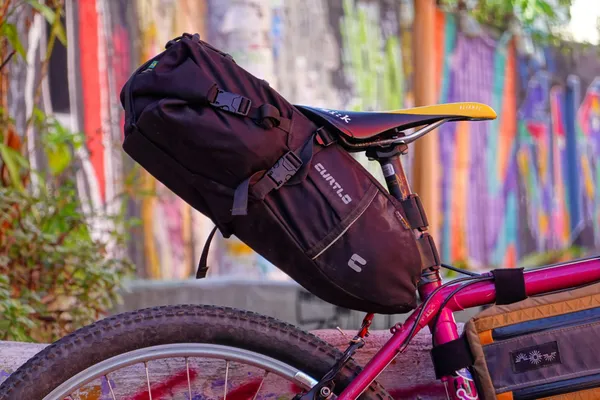
Bag makers quote a minimum clearance and almost nobody checks it. Across eight seat packs the requirement ranges from 5cm to 15cm — and it does not track capacity the way you would expect.

GravelPacker is a research desk, not a test lab. We read the spec sheets, the long-run owner reports and the forum threads where things break, then score what survives that reading against a rubric we publish. We say so plainly because a review you can check is worth more than one you have to trust.