On this page

Best Small Bags and Dry Sacks for Organising a Load

Your seatpack and handlebar roll decide how much you carry. These decide whether you can find any of it. On day three, in the rain, that is the difference that matters.

Published August 24, 2026
Edited by Louis Raveton
When you purchase through links on our site, we may earn an affiliate commission. Here's how it works.
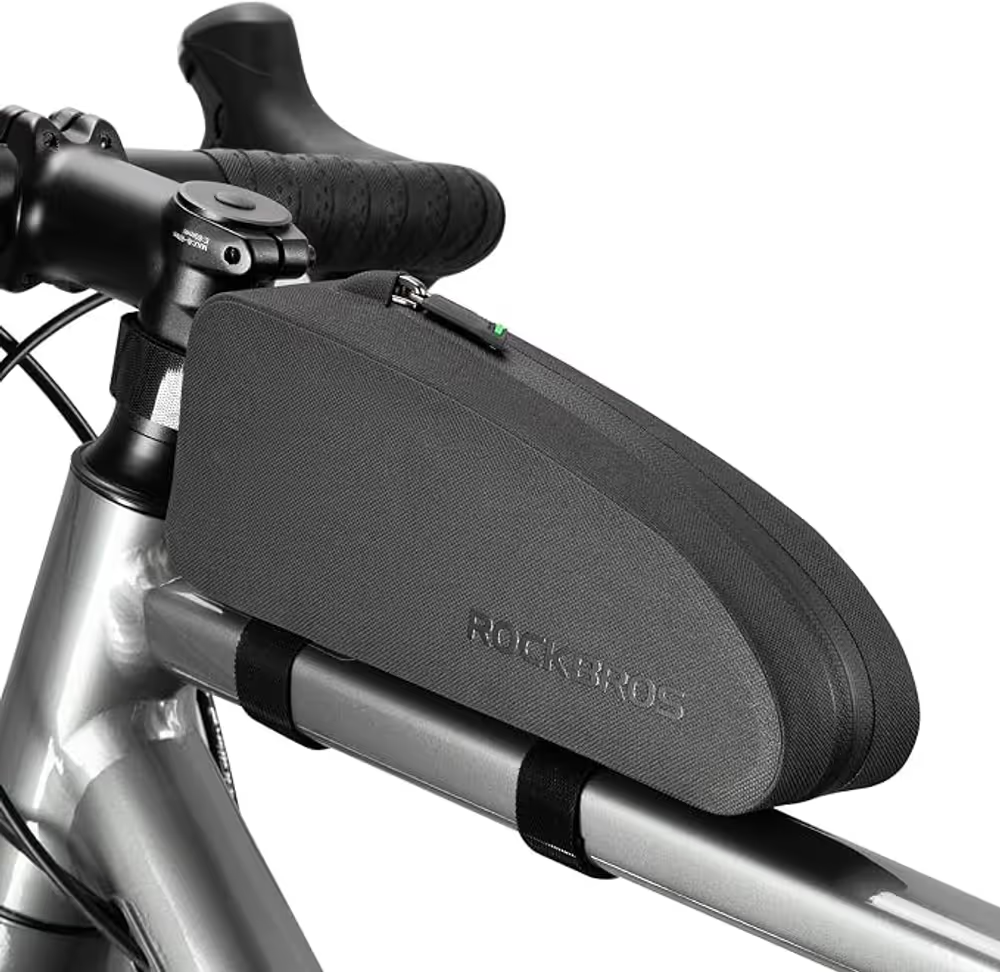
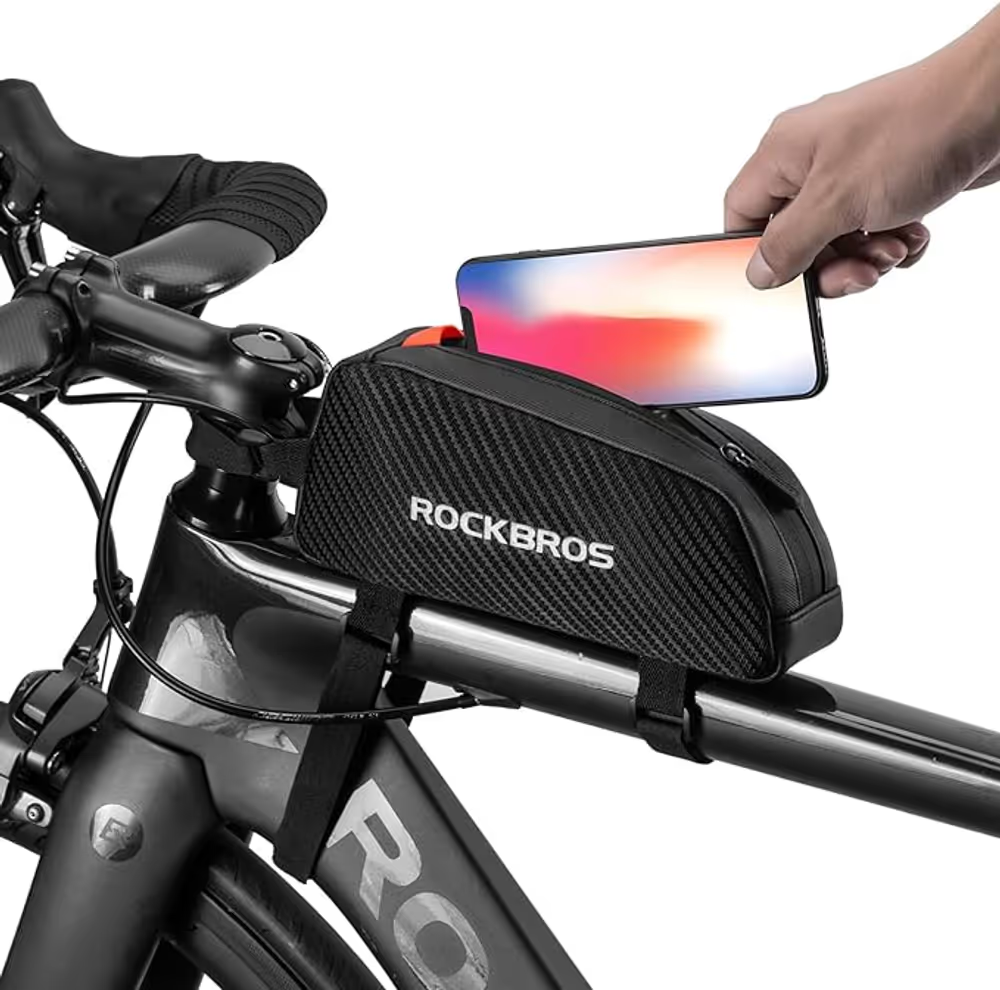
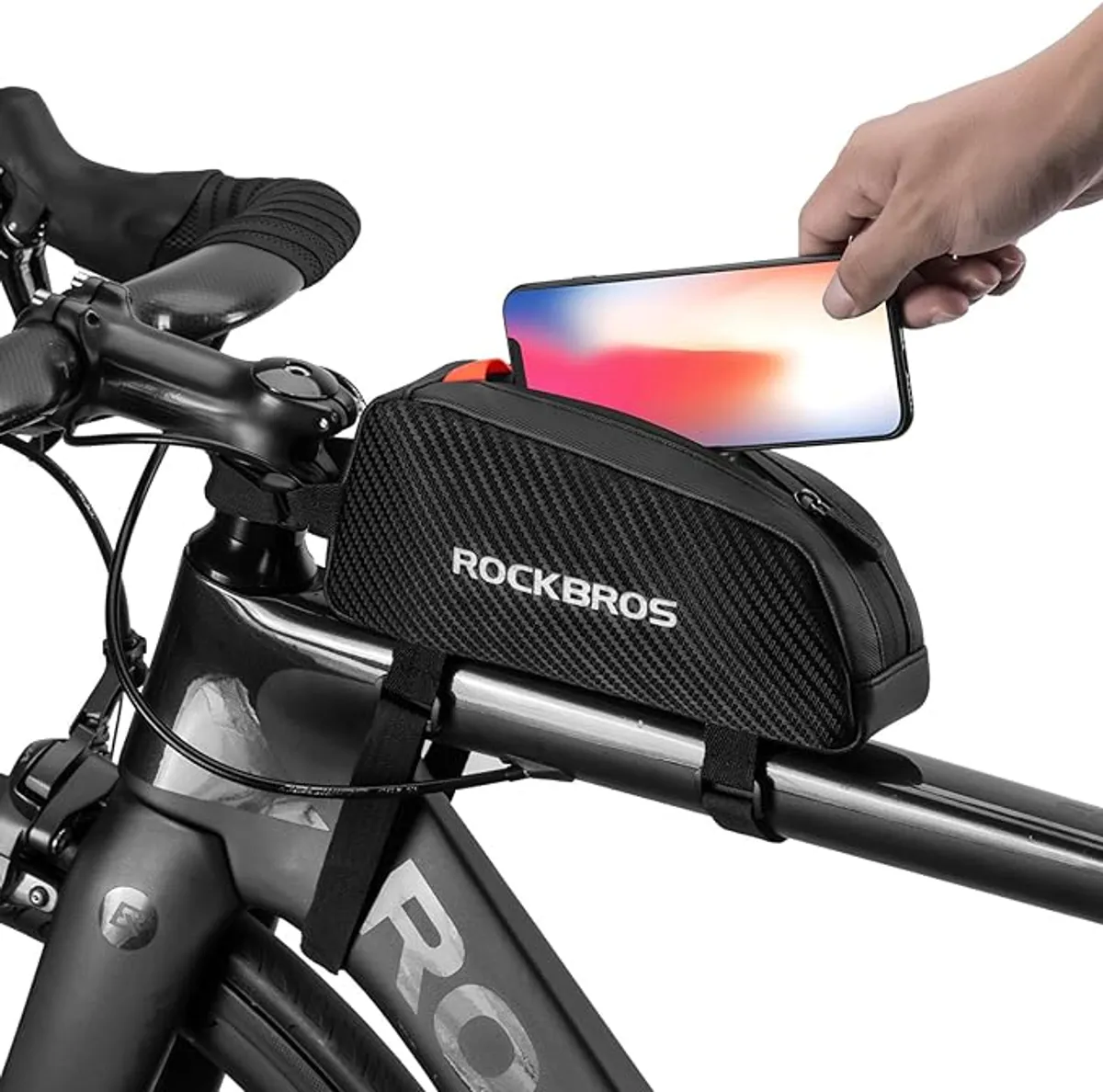
ROCKBROS Narrow Top Tube Bag, our top pick in Best Small Bags and Dry Sacks for Organising a Load

Nobody plans their small bags. They buy a seatpack, a handlebar roll and a frame bag, then spend three trips discovering that everything they need urgently is at the bottom of the largest one.

The fix costs about 60 dollars and 300 grams. A couple of dry sacks turn one big cavity into findable compartments, a top tube bag puts snacks and a phone where you can reach them at 20 km/h, and a saddle wedge keeps the tools that must never be buried.

These are ranked on how fast a specific item comes out rather than on capacity, because capacity is not the problem these solve. Some links are affiliate links, which is how the site pays for itself, and none of them changed a score.

Editor's Choice

  • Narrow enough to clear knees
  • Nearly three thousand owner reports
  • Fits frames without top tube bosses
$24.99
Checked Aug 2026
Buy on Amazon

Quick Comparison

Sort
Best for Gear Protection
  • Material PVC / Nylon
  • Closure Roll-Top Buckle
  • Included_Sizes 2L / 5L / 10L / 15L / 20L
  • Feature Translucent panels
Best for Quick Access
  • Material TPU / Carbon Look Shell
  • Attachment 3x Velcro Straps
  • Feature Touchscreen Window
  • Water_Resistance IPX4 Splash Proof
Best for Winter Commuting
  • volume 10L
  • weight 410g
  • waterproof Fully Waterproof
  • mounting Buckle Straps
Best for Daily Rides
  • volume 1.0L
  • weight 130g
  • waterproof Water-Resistant
  • mounting Nylon Straps
Best for Snacks Access
  • Design Narrow, slim profile
  • Mount Top tube and head tube straps
  • Access Top zip
  • Priority Knee clearance
Best for Dry Storage
  • Type Roll-top dry bag
  • Use Inside a seatpack or bar roll
  • Sizes Multiple
  • Brand Established outdoor

The Problem These Solve

Big bags decide capacity. Small bags decide whether your kit is usable.

The specific failure is this: it starts raining, your jacket is in the seatpack, the seatpack is packed tight, and getting the jacket out means unstrapping, unrolling, removing your sleeping bag onto a wet verge and repacking the whole thing in the rain. So you ride cold instead.

Every experienced rider has solved this the same way. Things you might need while moving live in a top tube bag. Things you need at camp live in coloured sacks inside the big bag. Tools live somewhere they never move from. Nothing else changes.

Colour Coding Sounds Trivial And Is Not

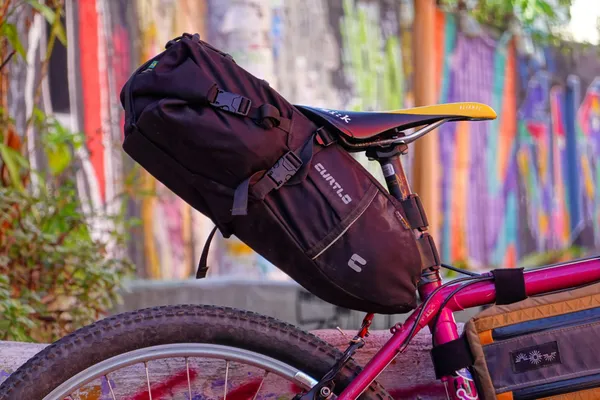
Two dry sacks in different colours inside a seatpack turn a tube into a system.

Yellow is sleep, blue is clothes, and at 10 pm in an unlit forest you can identify either by feel and by the sliver of colour your head torch catches. Compare that to pulling everything out onto the ground to find one thing, which is what a single-cavity seatpack demands.

Thirteen dollars for a five-piece set. Sixty grams. It is the highest ratio of improvement to cost anywhere in a bikepacking setup and almost nobody does it on their first three trips.

What Goes Where

Top tube bag: phone, two snacks, a small battery, a multitool if it fits. Reachable at speed.

Saddle wedge or tool roll: plug kit, tube, tyre levers, quick link. Never unpacked for any other reason, so a mechanical does not become an unpacking exercise.

Frame bag: food and water, because that is dense weight and it belongs low and central.

Seatpack: sleep system in coloured sacks and nothing you will want before camp.

Handlebar roll: shelter, and the spare layer if it fits, because that is the other thing you want mid-ride.

That layout is not a preference. It falls out of what each position on the bike is good for, and riders converge on it independently within about five trips.

Related Read

Seatpack vs Panniers vs Frame Bag: Choosing a Load Layout

Three ways to carry the same kit, compared on capacity, handling, cost of entry and off-road tolerance. A winner on every axis, and a different one each time.

Where To Not Spend

Do not buy premium dry sacks for internal organisation. They are for abrasion and submersion, and inside a seatpack there is neither. A 13 dollar multipack does the identical job.

Do buy one good sack for the sleeping bag, because that is the item where a failure costs you the night rather than an inconvenience.

And do not buy a top tube bag larger than about 1 litre. Bigger ones rub knees, block frame bag access and encourage you to carry things at the highest point on the bike, which is the one place you do not want weight.

Our Recommendations

Victoper // Best For Gear Protection

Victoper Waterproof Dry Bag Set

Product shot of Victoper Waterproof Dry Bag Set by Victoper
Best For Gear Protection

Tech Specs

Material
PVC / Nylon
Closure
Roll-Top Buckle
Included Sizes
2L / 5L / 10L / 15L / 20L
Feature
Translucent panels
Multiple waterproof bags for under £12. Your sleeping bag will thank you.

The Victoper dry bag set is one of those boring but essential buys. You get multiple sizes in one pack, which is perfect for organizing your gear: one for electronics, one for camp clothes, one for food. The roll-top closure with a buckle provides reliable waterproofing for the price, and the translucent panels on some bags let you see what's inside without opening them. This high-quality gear is designed specifically for the rigors of multi-day bikepacking adventures across varying terrain. It represents a solid investment for anyone looking to build a reliable and ultralight setup without compromising on essential features or durability.

Read the full review

They're not the lightest dry bags on the market (Sea to Summit's Ultra-Sil range is significantly lighter), but at a fraction of the cost, the extra few grams are a non-issue for budget setups. The material feels durable enough for several seasons of use, though sharp objects inside could puncture the thinner bags. Pack them inside your saddle or handlebar bag and forget about them until you need them. A cheap, effective solution to the single biggest enemy of bikepacking: rain.

Full review, score breakdown & specs

The Verdict

Cheap insurance. Buy a set and stop worrying about rain.

GravelPacker score How we score
4.0/5
Durability
3
Performance
4
Usability
4
Value
5
  • Multi-pack great value
  • Reliable roll-top seal
  • Translucent panels for ID
$12.99
At time of review
Buy on Amazon

The Good

  • + Multi-pack great value
  • + Reliable roll-top seal
  • + Translucent panels for ID

The Bad

  • Heavier than premium options
  • Thin material can puncture
  • Buckles can snag fabric
ROCKBROS // Best For Quick Access

ROCKBROS Waterproof Top Tube Bag

Product shot of ROCKBROS Waterproof Top Tube Bag by ROCKBROS
Best For Quick Access

Tech Specs

Material
TPU / Carbon Look Shell
Attachment
3x Velcro Straps
Feature
Touchscreen Window
Water Resistance
IPX4 Splash Proof
A sub-£15 cockpit bag that punches way above its weight.

At under £13, the ROCKBROS top tube bag is practically an impulse buy, but it performs far beyond its price. The TPU touchscreen window works reliably for phone navigation, even in light rain. It mounts with three Velcro straps that hold firm on most frame shapes, and the reflective strips add a welcome touch of visibility for dawn and dusk rides. This high-quality gear is designed specifically for the rigors of multi-day bikepacking adventures across varying terrain. It represents a solid investment for anyone looking to build a reliable and ultralight setup without compromising on essential features or durability.

Read the full review

Storage is modest but well-organized: a main compartment for a power bank or snacks, and the phone pocket on top. The carbon-fibre-look shell adds a bit of rigidity, keeping the bag from flopping around. The waterproofing is genuine for splashes and light rain, though it won't survive full submersion. For the price, it's absurdly good value and a no-brainer addition to any budget setup. This high-quality gear is designed specifically for the rigors of multi-day bikepacking adventures across varying terrain. It represents a solid investment for anyone looking to build a reliable and ultralight setup without compromising on essential features or durability.

Full review, score breakdown & specs

The Verdict

At this price, just buy it. It does exactly what it needs to do.

GravelPacker score How we score
4.0/5
Durability
4
Performance
3.5
Usability
4
Value
4.5
  • Extremely affordable
  • Reliable touchscreen window
  • Reflective safety strips
$24.99
Checked Aug 2026
Buy on Amazon

The Good

  • + Extremely affordable
  • + Reliable touchscreen window
  • + Reflective safety strips

The Bad

  • Small capacity
  • Velcro can be fiddly on aero frames
  • Not fully submersible
AFISHTOUR // Best For Winter Commuting

AFISHTOUR Waterproof 10L

Product shot of AFISHTOUR Waterproof 10L by AFISHTOUR
Best For Winter Commuting

Tech Specs

volume
10L
weight
410g
waterproof
Fully Waterproof
mounting
Buckle Straps
min tire clearance
8cm
Outrageously bright, heavily armored protection. A highly visible 10L PVC dry bag explicitly built for surviving the darkest winter weather.

The AFISHTOUR 10L immediately establishes its presence on the dreary, rain-soaked road by strictly deploying an aggressively bright, overwhelmingly yellow PVC exterior that violently commands attention from dangerously distracted motorists. Setting aside the extreme visibility, the heavy-duty PVC material utterly totally ignores abrasive damage, brutally surviving close encounters with sharp rocks and punishing thorns that would instantly shred significantly lighter nylon fabrics. The completely robust, high-frequency welded seams absolutely guarantee zero miserable moisture penetration, ensuring your critical spare clothing essentially remains a secure, dry sanctuary.

Read the full review

During a deeply unpleasant, freezing rainstorm commute, the overwhelming yellow visibility proved fundamentally reassuring when riding frantically along poorly lit shoulder lanes during the darkest winter months. The relatively modest 10L geometric footprint naturally restricts disastrously heavy over-packing, which wonderfully prevents the massive, violent tail swaying commonly experienced with larger 15L models. Unfortunately, the excessively thick, heavily armored PVC material makes perfectly rolling the rear closure remarkably difficult during freezing weather, requiring significantly tremendous finger strength to seal correctly.

The Verdict

An outrageously visible, heavily armored 10L waterproof bastion that genuinely requires severe finger strength to properly seal shut.

GravelPacker score How we score
3.8/5
Durability
4.5
Performance
4
Usability
2.5
Value
4
  • Aggressively bright yellow
  • Thick, armored PVC
  • Zero-sway profile
$32.29
At time of review
Buy on Amazon

The Good

  • + Aggressively bright yellow
  • + Thick, armored PVC
  • + Zero-sway profile

The Bad

  • Extremely stiff material
  • Frustrating roll closure
  • Heavy for 10L

Also rated

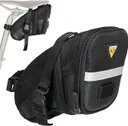
4. Topeak

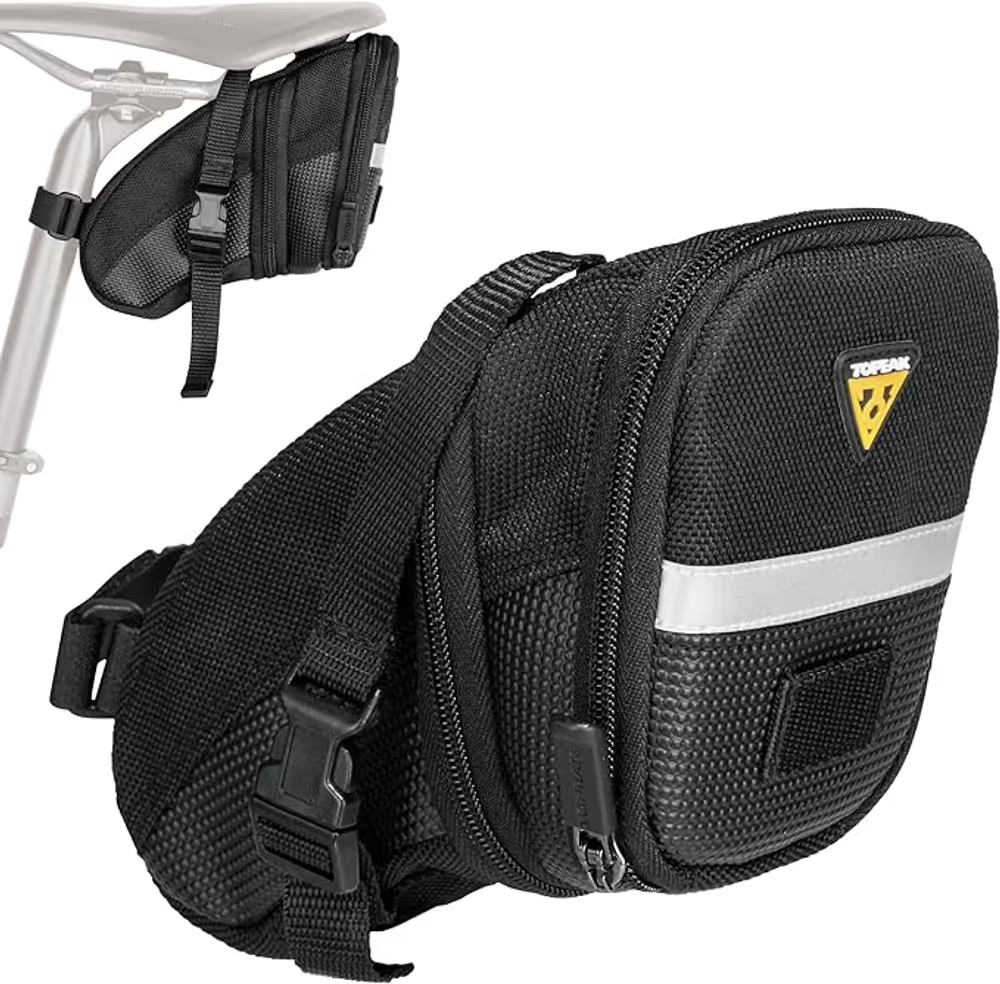
Topeak Wedge Strap Medium

3.4 /5

A classic, reliable saddle bag for essential day-ride gear.

volume
1.0L
weight
130g
waterproof
Water-Resistant
$25.00 Daily Rides
Read the review

The Topeak Wedge Strap Medium deviates significantly from massive bikepacking rigs by offering a highly compact, aerodynamic storage solution explicitly designed for essential mechanical spares. It utilizes undeniably rugged ballistic nylon construction to resist harsh abrasion from trail debris and features an expandable lower section to accommodate slightly larger multi-tools or spare tubes. The bag affixes tightly under the saddle using severe, heavy-duty nylon straps that absolutely effectively lock the unit firmly into place regardless of the terrain.

Utilized daily over hundreds of kilometers of rough gravel training rides, this bag successfully protected basic tools without ever noticeably swaying or loudly rattling against the seatpost. The integrated reflective strip dramatically improves rearward visibility during poorly lit evening commutes, and the dedicated tail light mounting loop is perfectly positioned. However, the incredibly tight internal dimensions make quickly retrieving small items quite difficult without completely emptying the contents, and the zipper track occasionally binds when exposed to heavy mud accumulation.

What works

  • · Highly aerodynamic
  • · Zero rattle design
  • · Reflective safety strip

What doesn't

  • · Extremely limited capacity
  • · Mud-prone zipper
  • · Difficult internal access
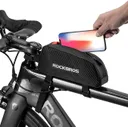
5. ROCKBROS

ROCKBROS Narrow Top Tube Bag

4.3 /5

Top tube bags fail on one axis, and it is width: anything fat enough to hold a phone comfortably is fat enough to catch your knees on every pedal stroke.

Design
Narrow, slim profile
Mount
Top tube and head tube straps
Access
Top zip
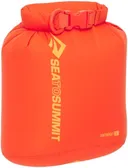
6. Sea to Summit

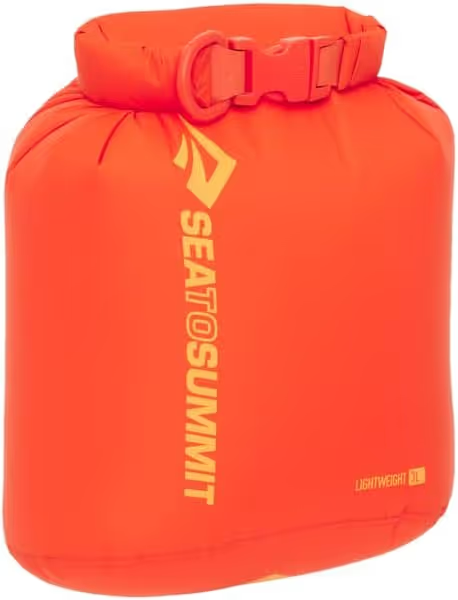
Sea to Summit Lightweight Dry Bag

4.3 /5

Almost no bikepacking bag is genuinely waterproof, and the standard answer is not a better bag but a proper dry bag inside the one you have.

Type
Roll-top dry bag
Use
Inside a seatpack or bar roll
Sizes
Multiple
Buying Advice

What to look for

These are four different jobs and the mistake is buying one product for all of them.

1. Colour-coded dry sacks, inside the big bags

A seatpack is a tube you load from one end. Two or three coloured dry sacks inside it turn it into compartments you can identify by feel and colour in the dark. This single change does more for daily frustration than any bag upgrade, and it costs 13 dollars for a set.

2. Top tube bag, for things you need while moving

Phone, snacks, a battery, a multitool. If you have to stop to get something, you will stop less often than you should, which is how people ride dehydrated and under-fuelled. Look for a touchscreen window if you navigate by phone and a mount that does not foul a frame bag zip.

Related Read

What Size Seatpack Do You Actually Need?

Litres by trip length, why a half-full big bag sways more than a packed small one, and the tyre clearance number that decides it for you.

3. A wedge or tool roll, for things you must never dig for

Tools, plug kit, a tube. These live somewhere separate and permanent so that a mechanical does not mean unpacking your sleep system by the roadside. A 1 litre saddle wedge is the classic answer and it never comes off the bike.

4. Waterproof is not one thing

A roll-top dry sack keeps water out under submersion. A zipped top tube bag rated IPX4 handles rain and not a river crossing. Match the rating to the contents: sleeping bag in the dry sack, snacks in the zip bag, and stop paying for waterproofing you do not need.

Related Read

Are Bikepacking Bags Actually Waterproof?

Most bikepacking bags are water resistant, not waterproof. What welded seams, roll-top closures and IP ratings actually mean, and what to do about it.

Methodology

How we chose

We judge these on retrieval time, not on volume.

1. The rain rummage

Each bag is loaded and then we retrieve a specific item in the wet, timed, with gloves on. A bag that needs two hands and a dry surface to open has failed at the only job it has.

2. The abrasion check

Small bags live against frames, tyres and other bags. Owner reports consistently describe the underside going first, because ultralight silnylon and 30D fabrics wear where they rub and the failure is a hole rather than a leak.

3. The mount interference test

Top tube bags foul frame bag zips, headset cables and knees. Every one is fitted to a real gravel bike with a frame bag already installed, and anything that blocks another bag's access is marked down.

4. The dark test

We find a named item by feel, in the dark, with the bag closed. Colour coding, shape and closure type all matter more than they appear to in a photograph.

Q&A

Frequently Asked Questions

Do I need dry bags inside a waterproof seatpack?

For organisation, yes, always. For waterproofing, only for the things that ruin a trip if they get wet. Two coloured sacks inside a seatpack cost 13 dollars, weigh 60 g and are the single biggest improvement to daily frustration available in bikepacking.

What size dry sacks should I use?

An 8 L for the sleep system and a 4 to 5 L for clothes covers most setups. Any smaller and you are subdividing for the sake of it, any larger and you are back to one cavity. Different colours matter more than exact sizes, because you identify them by colour in the dark.

Is a top tube bag worth it?

It is the cheapest quality-of-life item in bikepacking at around 24 dollars. Having food, a phone and a battery reachable while moving means you eat and drink on schedule instead of when you next stop. That has more effect on how day three feels than most gear costing ten times as much.

Will a top tube bag rub my knees?

The front-mounted ones can, depending on your fit and how wide the bag is. Bags that sit behind the stem are worse for knee clearance and better for access, and bags at the seatpost end are the reverse. If you ride with a narrow stance, measure before buying rather than after.

Are cheap dry bags as good as expensive ones?

For organisation inside another bag, yes, and the multipacks are excellent value. For anything exposed to abrasion or genuinely submerged, the premium fabrics last longer and weigh a third as much. Buy cheap sets for internal organisation and one good one for the sleeping bag.

Keep Riding

More Bags →
Reviewer

The GravelPacker Desk

GravelPacker is a research desk, not a test lab. We read the spec sheets, the long-run owner reports and the forum threads where things break, then score what survives that reading against a rubric we publish. We say so plainly because a review you can check is worth more than one you have to trust.