Bags
Rhinowalk 10L vs ROCKBROS vs KEMIMOTO: The Cheap Seatpacks
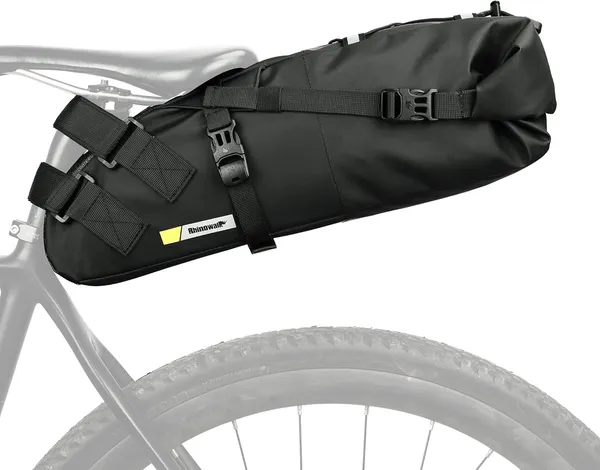
A 10 L Rhinowalk, a 3 L ROCKBROS and an 11 to 13 L KEMIMOTO compared on waterproofing claims, sway, clearance and owner reports. Only two carry overnight kit.
If you shop for bikepacking luggage on Amazon you will meet these two brands within about thirty seconds of each other, at similar prices, in similar photographs, made of similar-sounding fabrics. The obvious question is whether it makes any difference which you pick.
We have scored 16 bags across both, 7 Rhinowalk and 9 Rockbros. Here is what the data says.
| Rhinowalk | Rockbros | |
|---|---|---|
| Products scored | 7 | 9 |
| Mean score | 3.90 | 3.82 |
A gap of 0.08 across 16 products is not a difference. Anyone telling you one of these brands is categorically better than the other is telling you about their own sample of two or three bags.
So the useful question is not which brand, it is which brand for what.
Sort both ranges by what the product actually is and the split is stark.
Rockbros lives at the small end. A 1.5L saddle bag at 109g, a 2.5L frame bag at 181g, a 2L cockpit bag, top tube bags. Its centre of gravity as a brand is the stuff bolted around the cockpit and under the saddle, and it makes those light.
Rhinowalk lives at the large end. A 25L roll-top pannier, a bike transport bag and a 12L bar roll with its own harness. We have scored no Rockbros pannier or rack bag, so if you are building a rack-based setup this is not a comparison, because only one of these brands is in the room.
That is the honest headline: for cockpit and frame, look at Rockbros, and for racks and panniers, look at Rhinowalk. In neither case are you compromising, because neither brand is competing with the other there.
Handlebar bags are where both brands sell comparable products, at two sizes. At both, the cheaper bag is level or ahead.
| Rhinowalk 12L harness and dry bag | Rockbros 12L-20L two dry packs | |
|---|---|---|
| Capacity | 12 L roll-top | 14–15 L roll plus 5–6 L pouch |
| Weight | 0.5 kg | 538 g plus 180 g |
| Mount | Harness with PE board, dry bag lifts out | Straps straight to the bars, no harness |
| Fabric | Polyester rated 4,000 mm, taped seams | 600D nylon and TPU |
| Price (7 Oct) | $19.19 | $74.99 |
| Our score | 4.0 | 3.6 |
The Rhinowalk is the one with a harness, so the dry bag comes off at camp while the cradle stays on the bars, and it costs about a quarter as much. The Rockbros carries more and adds a second pouch, but it straps directly to the bars and asks for 40 cm between the drops.
The Rhinowalk's weak point is its mount. Owners report the straps working loose on long rides and the dry bag fabric as thin, so budget for a pair of better straps and a liner bag.
Rhinowalk's 2.8 L zip barrel is $36.99 at 338 g and scores 3.9. Rockbros' 2 L multipurpose bag is $19.99 at 310 g and scores 3.8, so the two are level on our rubric and the Rockbros costs about half as much.
Worth stating plainly, because it runs against instinct: within these two ranges, paying more does not reliably get you a better bag.
Price in this segment does not reliably track capacity, let alone execution. A 3 litre bag can cost more than a 10 litre one, and the harness, which decides whether you enjoy the ride, is rarely what the price reflects.
How to Stop Seatpack Sway: The Right Way to Pack Your Tail Bag
A swaying bikepacking saddle bag destroys your cornering and wastes energy. Learn how to pack your tail bag properly to completely kill the pendulum effect.
Neither of these brands loses badly on materials. Coated fabrics with sealed or welded seams keep water out at $25 as they do at $200, although welding outlasts the sealed stitching on Rhinowalk's cheaper seat pack. What separates the brackets is hardware and track record.
Three things you are not buying:
How Much Tyre Clearance Does a Seatpack Actually Need?
Bag makers quote a minimum clearance and almost nobody checks it. Across eight seat packs the requirement ranges from 5cm to 15cm — and it does not track capacity the way you would expect.
And in every case: read the closure and the mounting, not the fabric. The fabric on these bags is not going to be the thing that lets you down.
How Many Litres Do You Actually Need? Bikepacking Bag Sizing
10L, 14L, 17L — bag capacity numbers mean less than they appear to. Here is how much volume a real setup needs, where it should sit, and why the biggest seat pack is rarely the right one.
Across the 16 bags we have scored, the averages are 3.90 for Rhinowalk and 3.82 for Rockbros, too close to call a brand difference. The useful difference is what each makes well: Rockbros for small cockpit bags, Rhinowalk for panniers and larger luggage.
No. They are separate Chinese manufacturers with separate product lines, though both sell primarily through Amazon and both use the same broad materials palette: coated polyester, PVC tarpaulin and TPU laminate. The similarity people notice is a category convention, not a shared factory.
Not in this data. The lowest-scoring bag across both brands is a $46.99 Rockbros saddle bag that holds about 3 litres, while a $25.59 Rhinowalk seat pack outscores Rockbros' $79.99 14L one. Price predicts almost nothing within these two ranges.
The materials are genuinely durable, and 500D to 1680D coated fabrics do not tear easily. What fails is hardware and closures: velcro clogged with grit, buckles that creep under load, zips on water-resistant bags. Choose on the closure and the mounting, not the fabric.
For fabric and waterproofing, these compete directly with bags costing four times as much. What you are not buying is a rigid mounting interface, a repair service, or spare parts in five years. On a bike you ride at weekends that is often the right trade.
A 10 L Rhinowalk, a 3 L ROCKBROS and an 11 to 13 L KEMIMOTO compared on waterproofing claims, sway, clearance and owner reports. Only two carry overnight kit.
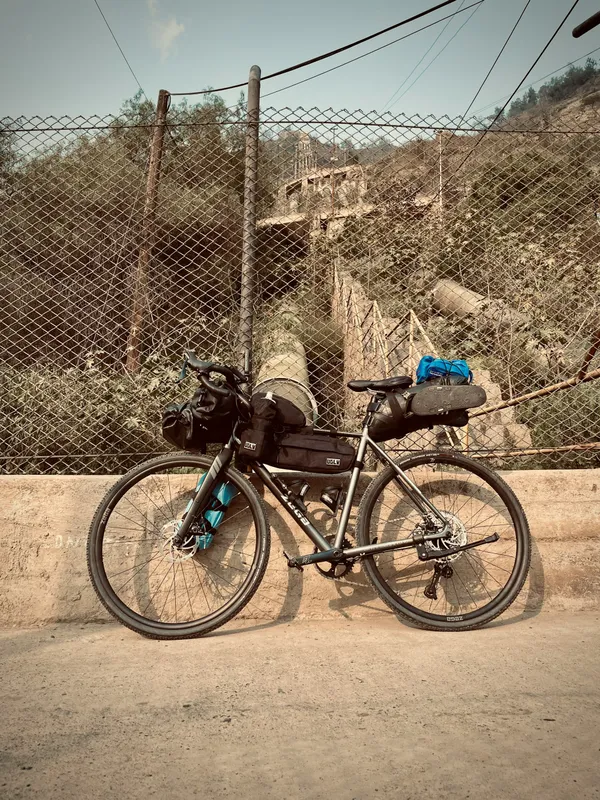
What a $30 bag gets right, what it gets wrong, and the three failure points that separate it from a $170 one. Fabric is not one of them.
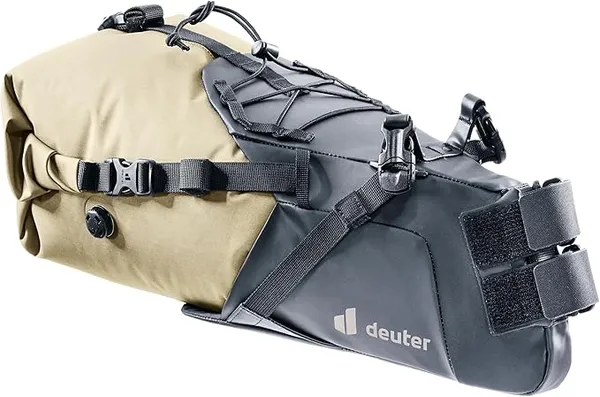
Three seatpacks between $80 and $140, the range where budget bags stop and premium starts. Two separate into a harness and a bag, one does not, and it shows.

GravelPacker is a research desk, not a test lab. We read the spec sheets, the long-run owner reports and the forum threads where things break, then score what survives that reading against a rubric we publish. We say so plainly because a review you can check is worth more than one you have to trust.