Sleep Systems
The Wet Quilt Save: Drying Down on the Road
What a wet down quilt actually costs you overnight, how to dry one on the bike with no sun, and the point at which you should have brought synthetic.
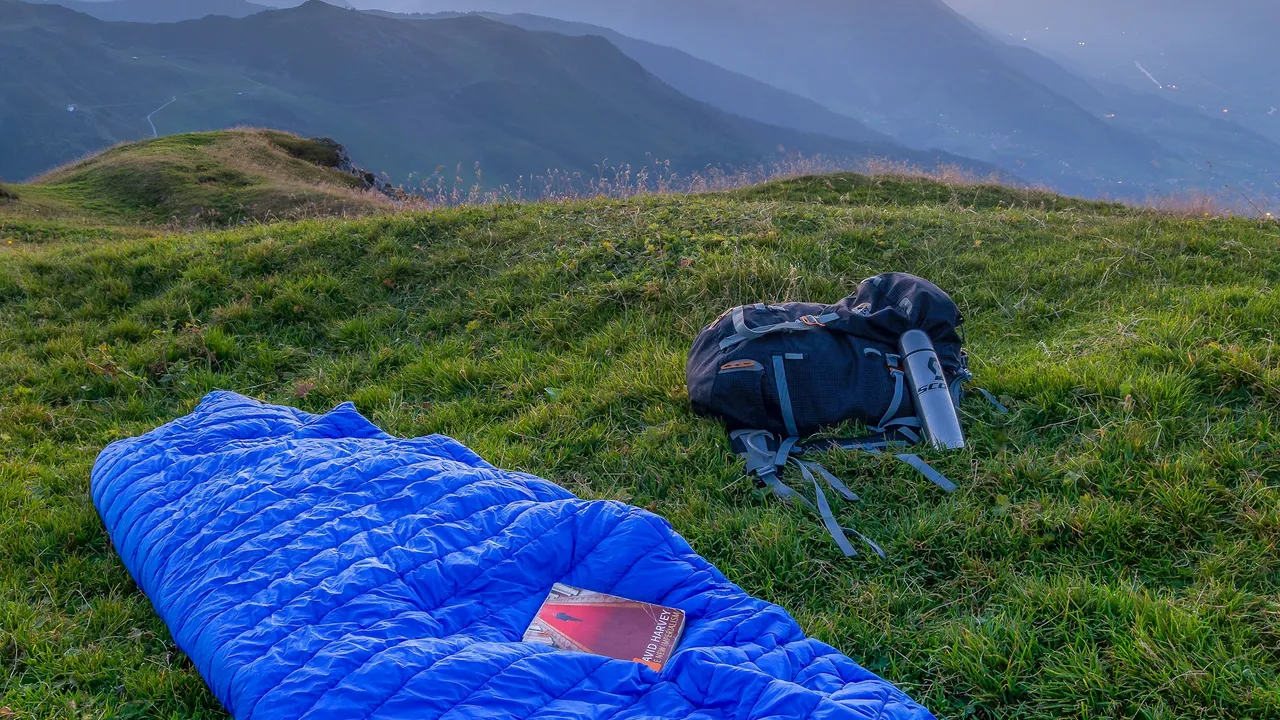
Two bags, both rated to a -5°C limit, priced a dollar apart:
| Decathlon Forclaz MT900 | Aegismax Wind Hard | |
|---|---|---|
| Fill | Duck down, 640 CUIN | Goose down, 800 FP |
| Temperature | 0°C comfort / -5°C limit | -5°C limit |
| Weight | 950g | 530g |
| Price | $160 | $159 |
420 grams apart. One dollar apart. Same rating.
That is the entire fill power argument in one comparison, and it is unusually clean because the price happens to match. Normally the higher fill power costs more; here you are simply choosing whether to carry an extra 420g for no reason.
Fill power is a volume measurement: how many cubic inches one ounce of down expands to fill. 800 fill power means an ounce lofts to 800 cubic inches.
Warmth in a down bag comes from trapped air, and loft is what traps it. So higher fill power means you need fewer grams of down to achieve the same loft — which is why fill power buys weight and pack size rather than warmth directly.
A 640 fill-power bag can be exactly as warm as an 800. It just needs more down inside it to get there, and that down weighs something.
Our catalogue spans the useful range:
| Fill power | Example | Weight | Rating | Price |
|---|---|---|---|---|
| 640 CUIN | Forclaz MT900 | 950g | -5°C limit | $160 |
| 750 FP | Naturehike CW400 | 790g | 5°C comfort | $100 |
| 800 FP | Aegismax Wind Hard | 530g | -5°C limit | $159 |
| 800 FP | Aegismax G Series | 722g | -2°C limit | $169.57 |
| 850 FP | EE Enigma quilt | 580g | -6°C limit | $325 |
Read the two ends against each other. Going from 640 to 800 saves 420g at the same rating for the same money — an obvious yes. Going from 800 to 850 costs roughly double ($159 → $325) and the Enigma is heavier than the Wind Hard while being one degree warmer.
That is not an argument against the Enigma, which is a quilt with a pad attachment system and a different job. It is an argument that fill power stops being the story above 800, and that above that number you are paying for cut, construction and features.
The sweet spot is 800. Below it you carry weight for nothing; above it you pay money for very little.
The only synthetic bag in our catalogue is the EcooPro: 770g, rated 55 to 60°F (13 to 16°C), $23.46 in October.
Against the Aegismax Wind Hard quilt at 509g and 0°C comfort, that is 261g heavier for about fifteen degrees less warmth. Synthetic fill simply cannot compete on warmth-to-weight, and it packs considerably bigger, which on a bike costs you volume you do not have.
The classic counter-argument is moisture: wet down collapses and stops insulating, wet synthetic keeps working badly. That is true and it matters for canoeing or multi-week trips in persistent rain.
On a bike it matters less, because your sleeping bag is already living inside a dry bag. If you have read our guide on why dry bags leak and you roll the closure three times, the failure mode the synthetic protects against mostly does not happen.
So: buy the EcooPro because it is $23 and you are trying bikepacking for the first time, not because synthetic is the safer choice. It isn't, in this application.
Across 36 bags we have scored, 'waterproof' is written 17 different ways and only some of them are testable. Where the water actually gets in, and the two-second habit that fixes most of it.
Most of these bags quote a limit temperature. That is a survival figure — the point at which a standard sleeper can last the night curled up, not the point at which they sleep comfortably.
The Forclaz is the honest one here: it publishes both, at 0°C comfort and -5°C limit. That five-degree gap is typical, and it is the gap that catches people out when a bag rated to -5°C leaves them awake at 2°C.
Two practical corrections:
Your Sleeping Bag Rating Is Lying — Check the Pad Instead
The budget pads in our catalogue sit at about R-2 or below. Several of the bags are rated to -6°C. Those two facts cannot both be true on the same night, and the pad is the one that decides it.
The volume one ounce of down expands to fill, in cubic inches. 800 fill power means an ounce lofts to 800 cubic inches. Higher-lofting down traps more air per gram, so you need less of it for the same warmth — fill power buys weight savings, not warmth on its own.
In our catalogue it is worth 420g at the same temperature rating and effectively the same price, which is the clearest case you will find. Above 800 the returns shrink fast — 850 costs roughly double 800 for another 50g.
Down, unless you cannot keep it dry. Down is dramatically lighter and packs smaller for the same warmth; wet down stops insulating entirely while wet synthetic keeps working badly. On a bike, where everything lives in a dry bag anyway, that risk is manageable.
At the same fill power, effectively yes — the difference is that goose reaches higher fill powers more readily. A 640 fill-power duck bag and a 640 fill-power goose bag perform about the same; the bird matters less than the number.
One step colder than the forecast low. Ratings usually quote a 'limit' figure, which is survival rather than comfort, and body temperature bottoms out around 4am when the night is coldest. A bag rated to the forecast will be a bag you are cold in.
What a wet down quilt actually costs you overnight, how to dry one on the bike with no sun, and the point at which you should have brought synthetic.
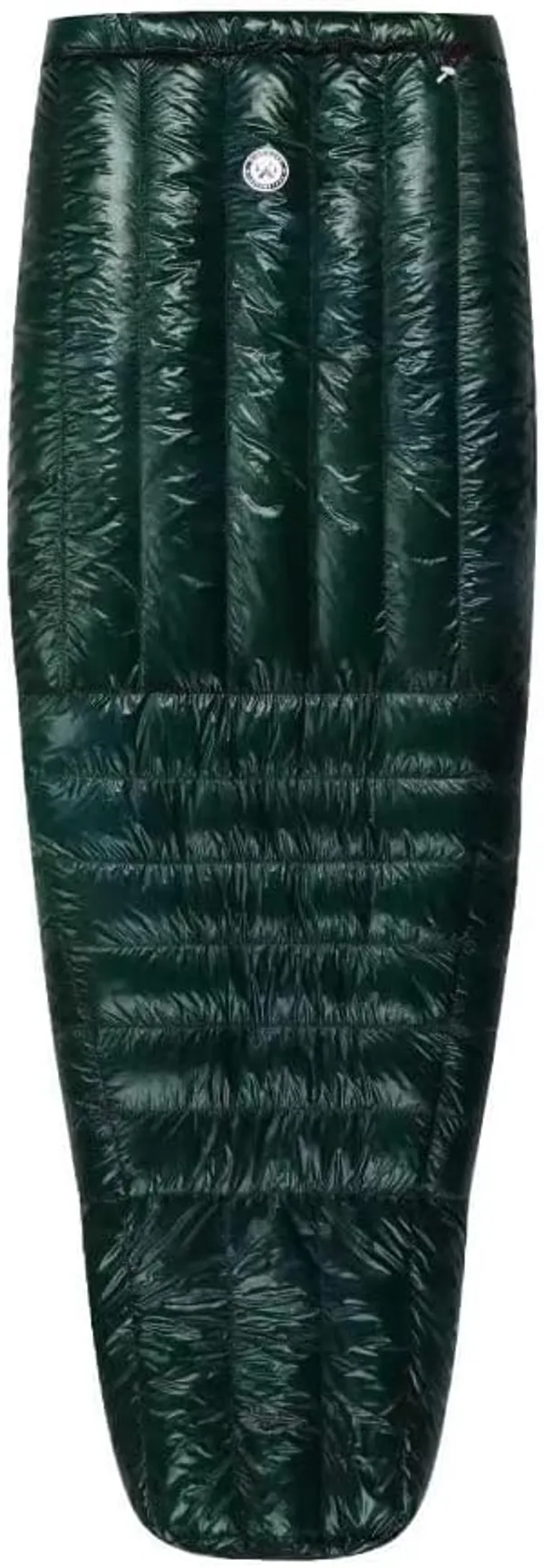
A 509 g 800FP quilt against a roomy 650FP bag about a third cheaper. Compared on warmth per gram, season range, shell, drafts and price.
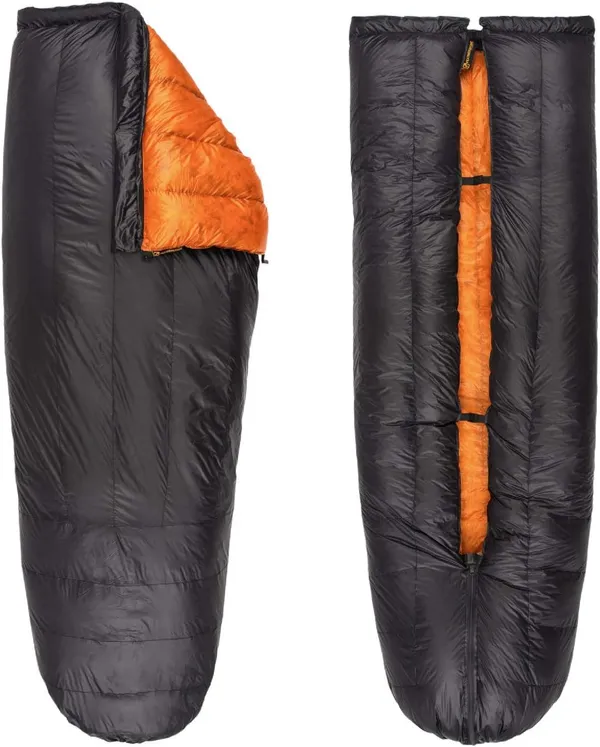
An 850FP quilt, a hooded down bag and a convertible hybrid compared on warmth per gram, drafts, packed size and price, and who should skip the quilt.

GravelPacker is a research desk, not a test lab. We read the spec sheets, the long-run owner reports and the forum threads where things break, then score what survives that reading against a rubric we publish. We say so plainly because a review you can check is worth more than one you have to trust.