Best Budget GPS Bike Computers: What Each One Gives Up Against a Garmin
Under about $150, every bike computer drops something a Garmin keeps: the map, the rerouting, the buttons or the track record. The budget unit worth buying is the one whose missing feature your route would never have asked for.
When you purchase through links on our site, we may earn an
affiliate commission. Here's how it works.
A Garmin Edge 540 was $327.99 when we checked in August. The five units here cost between about a tenth and a half of that, and each leaves out something the Garmin keeps. They are the budget end of our full GPS round-up, judged on what that missing piece costs on a loaded bike.
Four questions separate them. Does it show a map and find a way back when you leave the line, can you work it with buttons in rain and gloves, how long does the maker claim it runs, and how much owner evidence sits behind it? Price is a weaker guide than any of them, because the gaps move from month to month.
Specs come from the makers' own product pages where they publish them, read in October, and prices from Amazon listings with the month they were checked. GravelPacker is a research desk, so none of these units has been ridden here. Some links earn a commission, and none of them decided the order.
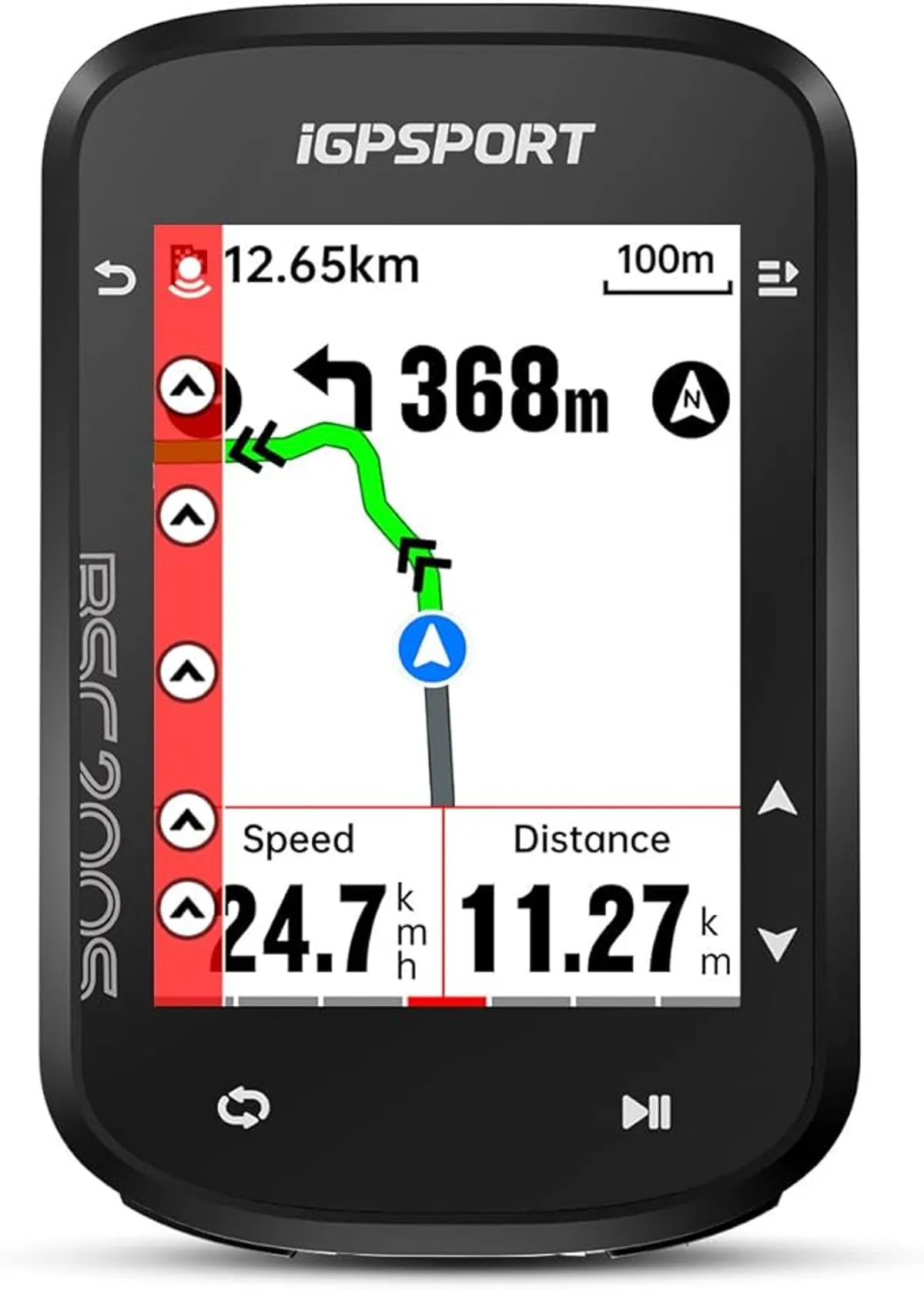
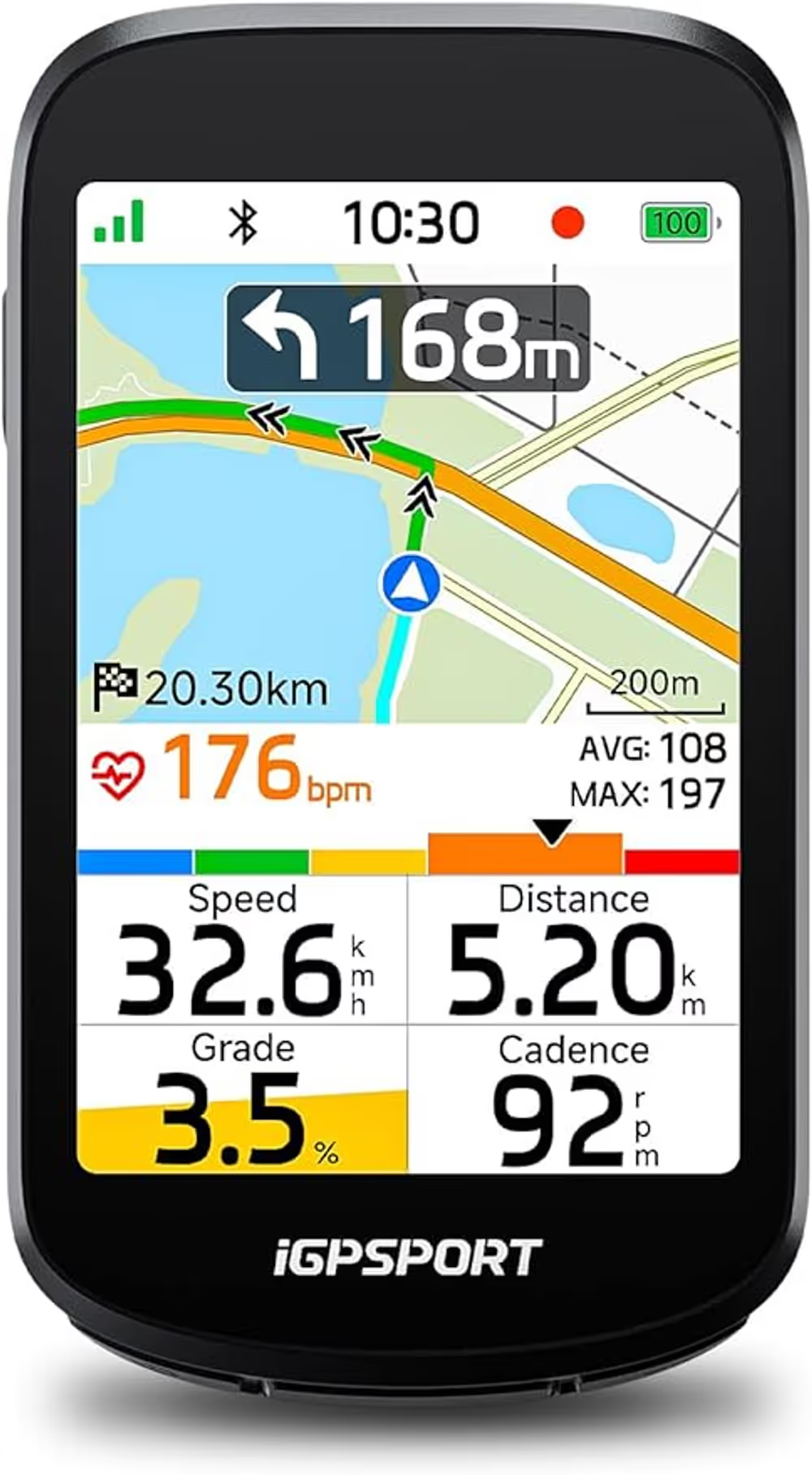
Route line with turn prompts and off-course alert, no map
Connectivity
Bluetooth and ANT+, Shimano Di2 and SRAM eTap (iGPSPORT)
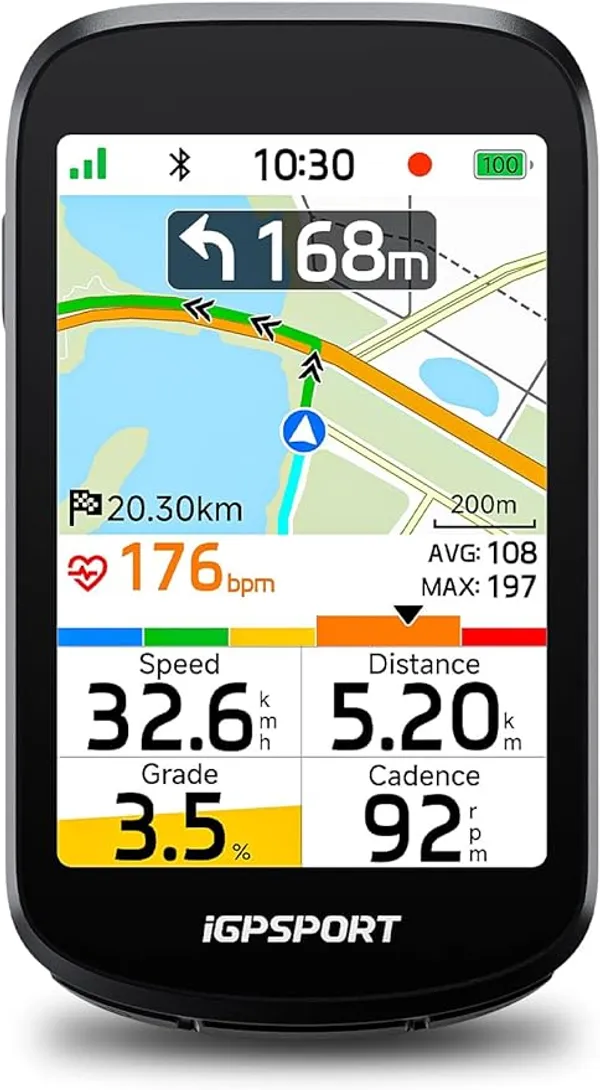
Follows a route you loaded, for a fifth of what a Garmin costs.
Most bikepacking navigation is following a route you planned at home, not asking a device to invent one. A unit that displays your GPX as a line and shows where you are on it covers that job completely, and that is what separates this from the twenty-dollar units that only count speed and distance.
Read the full review
Show less
ANT+ and Bluetooth mean it pairs with whatever speed, cadence or heart rate sensors you already own rather than forcing a new ecosystem, and battery life is comfortably long enough for multi-day use between charges. For a rider carrying a phone as the mapping backup, that combination is a complete and workable system.
What you give up is rerouting. Go off course and the device tells you that you are off the line, but it will not compute a way back, and that is exactly when a Garmin earns its price. On known roads with a phone in the frame bag it rarely matters, but on an unfamiliar route in poor weather it can.
On Amazon US it showed 4.2 stars from 212 ratings in October 2026. iGPSPORT has a much smaller support network than Garmin or Wahoo if something goes wrong halfway through a trip, and that is the honest trade at a fraction of the money.
Bluetooth and ANT+, Shimano Di2, SRAM eTap, Campagnolo EPS, radar tail lights (iGPSPORT)
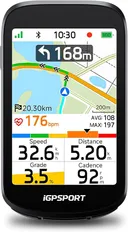
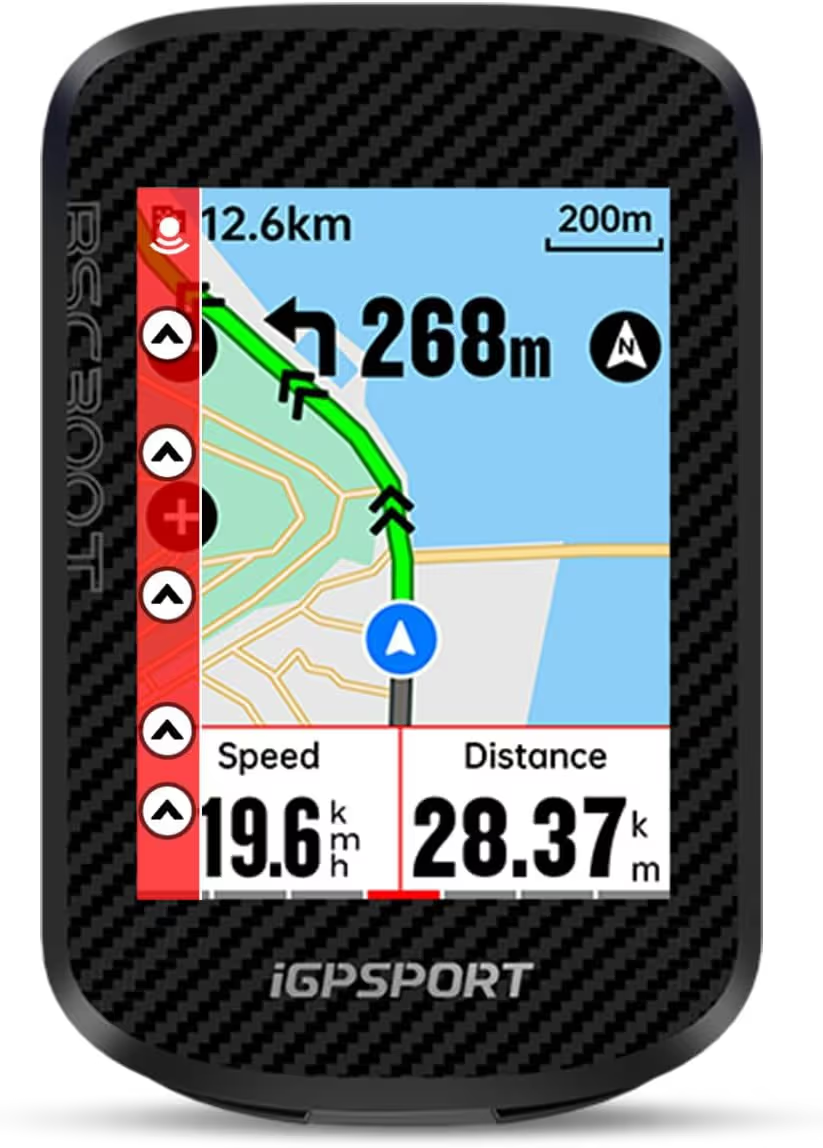
Offline maps on a 3.3 inch screen, for half what the big two charge.
Offline maps are the feature that separates a navigation device from a route follower. Being able to see the road network around you, rather than only the line you loaded, is what lets you improvise a detour or find a way to water, and until recently that meant Garmin or Wahoo money.
Read the full review
Show less
The 3.3 inch screen is larger than the Edge 540's and the voice prompts remove the need to look down at a junction. For a hundred and fifty dollars that is a genuinely strong specification, and the early rating reflects it.
Two things temper it. The one detailed independent review so far (smartzone.de, August 2026) found automatic rerouting only worked once the phone app had been started before the ride, which matters on a trip where the phone stays in flight mode. And with fifty-four reports there is very little evidence about how it holds up over a season of vibration and weather.
iGPSPORT has built a reasonable record at the budget end of this category, but the BSC500 is a considerably more ambitious device than the units that record was built on. The support ecosystem behind it remains far smaller than Garmin's, which is the thing you notice only when something fails mid-tour.
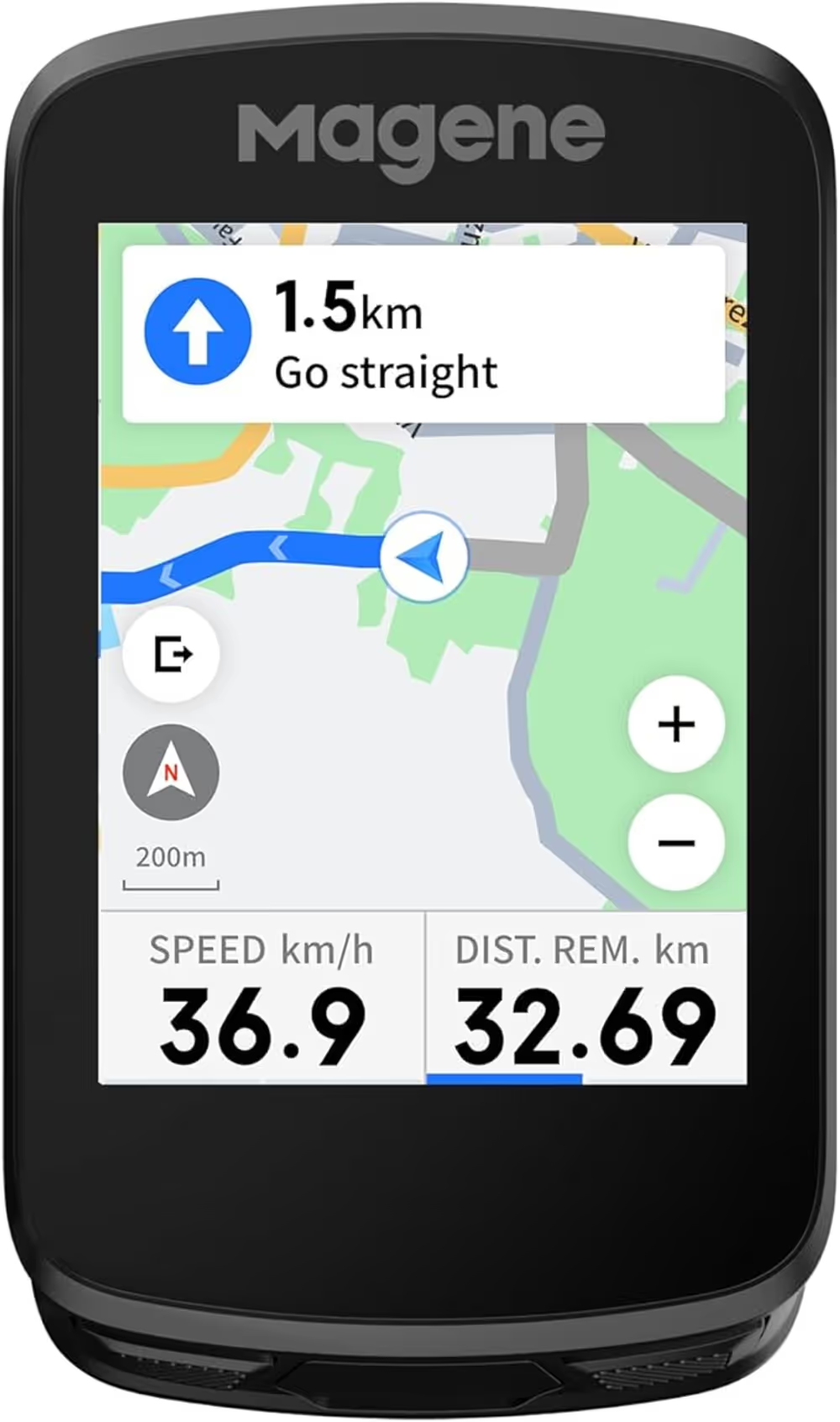
Bluetooth, ANT+ and Wi-Fi, Shimano Di2 and SRAM eTap (Magene)
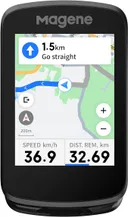
Colour touchscreen navigation for a hundred dollars, with the touchscreen caveat.
A colour screen makes a map readable in a way a monochrome line never is, and at a hundred dollars this is the cheapest credible way to get one. For riders who navigate by looking at terrain rather than following a bare breadcrumb, that is a meaningful step up from the sixty-dollar units.
Read the full review
Show less
Magene claims 17 hours in its normal mode and 24 in battery saver, with a three-hour charge, which is the slowest refill among the budget units. On a multi-day trip that means planning a full top-up overnight rather than at a cafe stop. Sensor support covers both Bluetooth and ANT+, so whatever you already own carries over without a second purchase.
The touchscreen is the honest reservation. Capacitive screens are defeated by water and gloves, which are the normal conditions on a shoulder-season gravel route, and this is the reason experienced tourers keep buying button-driven units at three times the price. It is a fair trade at a hundred dollars but it is a trade.
Magene is a smaller operation than iGPSPORT and very much smaller than Garmin. Owner reports are positive about how it works and much thinner on how it lasts, because there are simply fewer units out there with two seasons on them, and support is correspondingly limited if you need it.
The BSC300T puts a map on a small, light iGPSPORT body and keeps the six buttons of the cheaper BSC200S. What it does not do is find a way back for you.
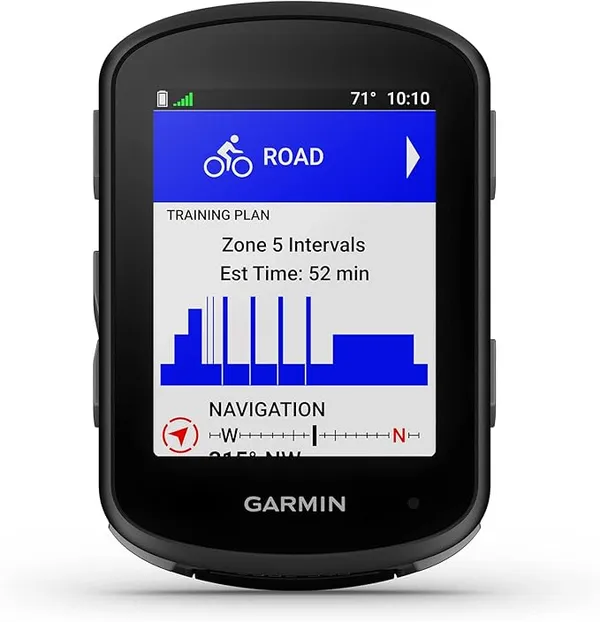
The Garmin Edge 540 is the yardstick because it is the unit most budget buyers are trying not to pay for. It is run from buttons alone, carries routable maps and claims up to 26 hours, and it was $327.99 in August.
Unit
Price in August
Map
Finds a way back
Controls
Claimed battery
What it gives up
iGPSPORT BSC200S
$62.99
No
No
6 buttons, no touch
25 h
The map and rerouting
iGPSPORT BSC500
$149.99
Yes
Yes
Touch plus 3 buttons
25 h (35 h saver)
All-button control, track record
Magene C506
$99.99
Yes
Yes
Touch plus 3 buttons
17 h (24 h saver)
Battery, all-button control
iGPSPORT BSC300T
$109.90 (iGPSPORT list)
Yes
No
Touch plus 6 buttons
20 h
Rerouting
CYCPLUS G1
$29.69
No
No
Buttons
Not published by CYCPLUS
Navigation entirely
Battery figures are the makers' own claims and are best read as ceilings. Prices move every month, so treat the gaps as rough multiples rather than exact sums.
A map, or a line to follow
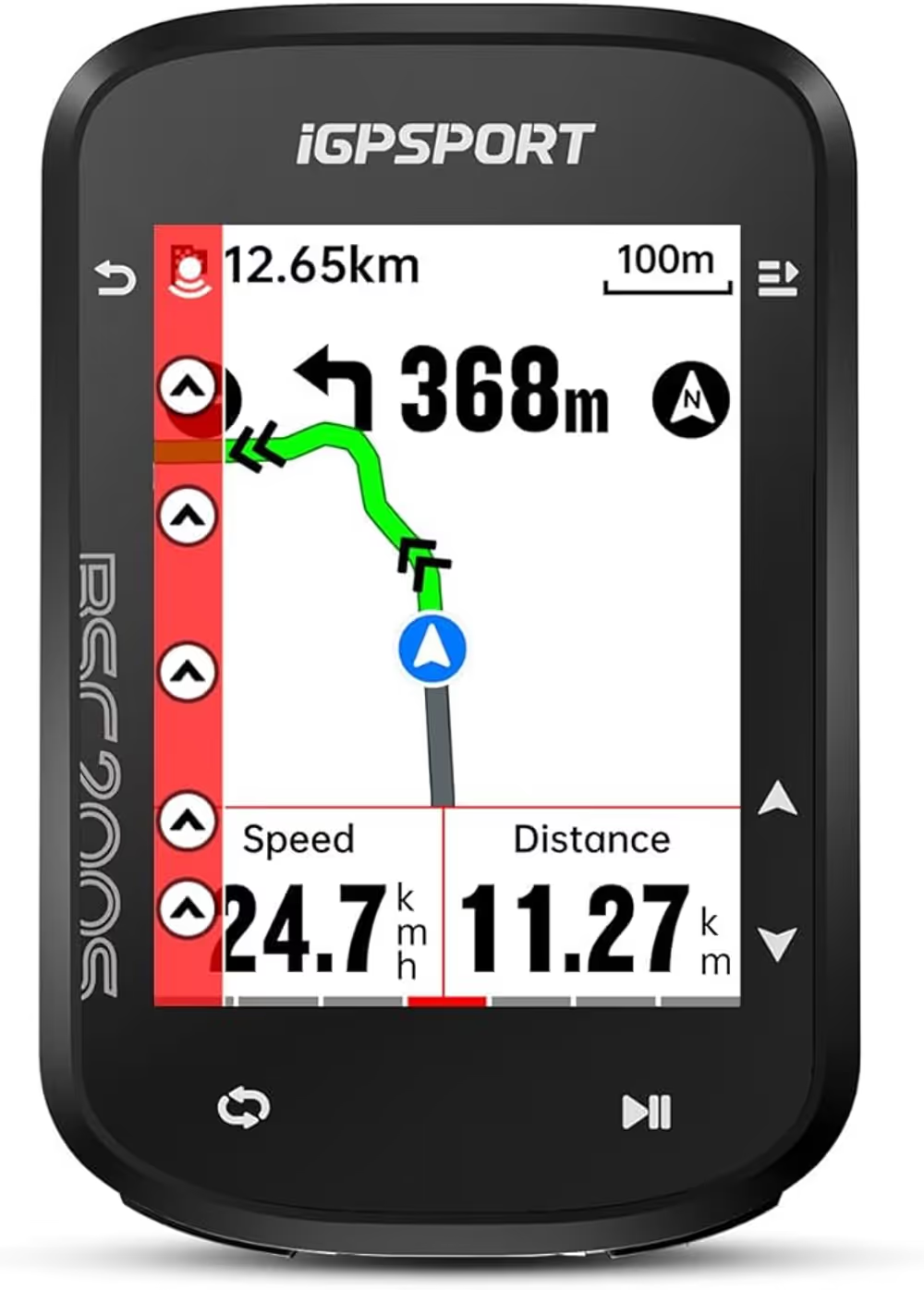
The iGPSPORT BSC200S has no map. It draws the route you loaded as a coloured line, gives turn prompts and warns you when you leave it, and iGPSPORT's own spec table marks both the map and offline back-on-track as absent.
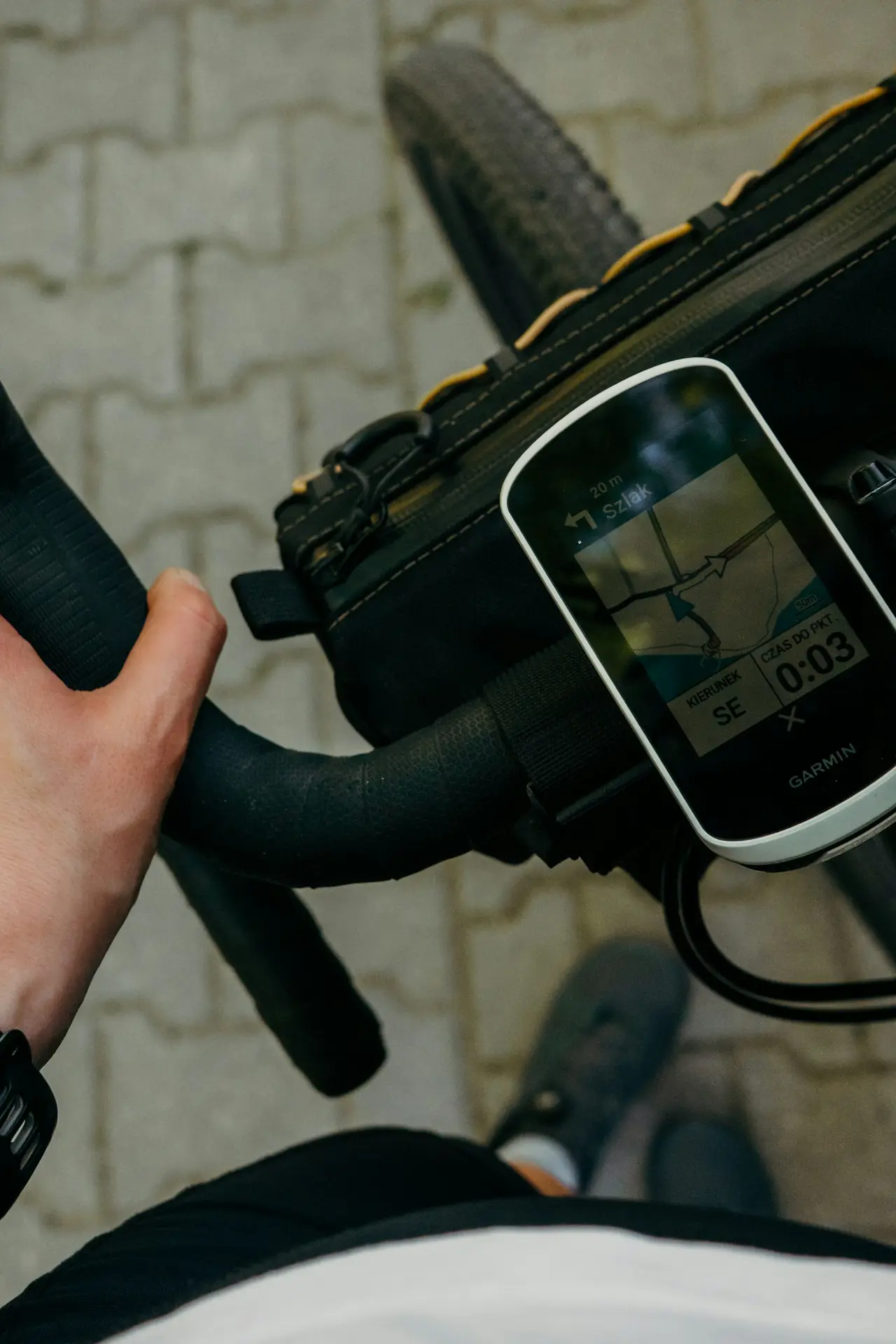
A Garmin following a route over its own map, with the next turn called out above it. The map is what the BSC200S leaves out: it draws the same line and gives the same prompts with nothing underneath.
Photo by Natalia Grela
on Unsplash. Not ours.
The BSC300T shows a map but cannot route you back to the line by itself, so off course it tells you where you are rather than how to rejoin. The Magene C506 and the BSC500 both recalculate, and Magene lets you choose between heading for the destination and rejoining at the nearest point.
Most bikepacking is following a file you planned at home, and for that a line is enough. A map earns its cost on remote routes where a washed-out track or a locked gate forces a detour you did not plan.
One reroutes, one shows a map but cannot reroute, one follows a line for under half the price. Specs from iGPSPORT, August prices and a clear pick.
Buttons, or a touchscreen
The BSC200S is the only navigating unit here with no touchscreen at all, run entirely from six buttons. The BSC300T pairs its touchscreen with the same six buttons, while the C506 and BSC500 have three each, and Magene describes the C506's as auxiliary, which tells you which control it expects you to use.
Wet fingers and full-finger gloves are where capacitive screens struggle, and those are normal conditions on a shoulder-season gravel route. How much of the map each touch unit lets you pan and zoom by button is not something the spec sheets answer, so assume touch on the three-button units.
All-button control is the clearest thing the Edge 540 keeps that most units here do not. The three-way comparison below sets it against the BSC300T and the Wahoo ROAM axis by axis.
Three bike computers from $173 to $419 compared on battery under navigation, screen legibility, route handling and what you actually lose at each price.
Battery is not where the savings come from
On paper the budget tier does not lose on runtime. The BSC500 and BSC200S each claim 25 hours against the Edge 540's 26, though iGPSPORT says its BSC200S figure is calculated at an average of 20km/h. The C506 is the outlier at 17 hours in its normal mode, or 24 in battery saver.
Charging time separates them more than capacity does. iGPSPORT quotes 1.5 hours for the BSC200S and about two for the BSC500, while Magene quotes three hours for the C506, which matters when the only socket is at a 40-minute cafe stop.
Across the head units we have scored, battery life runs opposite to price — the $110 unit lasts 20 hours and the $400 one lasts 17. For bikepacking that inverts the buying advice.
What no budget unit replaces
Garmin's advantage at this price gap is mostly the record behind it: a large support network and years of owner reports on how units survive vibration and weather. The BSC500 had 54 Amazon ratings when we checked in August, against more than 4,000 for the CYCPLUS G1, so the most capable unit here is also the least proven.
If budget is not the real constraint, the full round-up covers the Edge 540 and the Wahoo ELEMNT ROAM V3 on the same terms as the units below.
Bike computers that survive a triple-digit day without dying, plus the radar unit worth the handlebar space. Eight picks from $30 to $419.
Which compromise suits which rider
Following a planned GPX in wet or cold weather: the iGPSPORT BSC200S. Buttons, a 25-hour claim and the lowest price of any unit here that navigates.
Remote routes where you will need a detour: the iGPSPORT BSC500, if you can accept a touchscreen and a short track record.
Maps and rerouting for under $100: the Magene C506, with the shortest claimed battery of the four units that navigate.
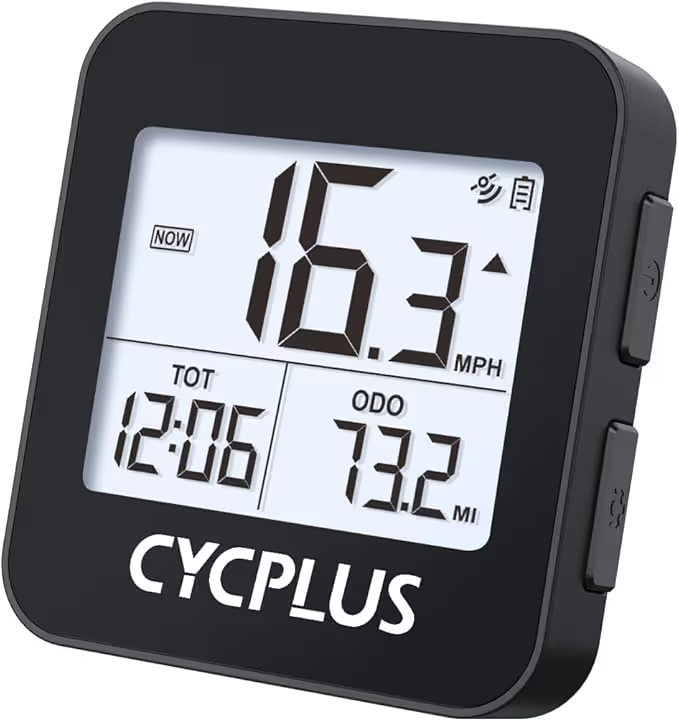
Already navigating on a phone: the CYCPLUS G1, as a cheap data screen that lets the phone stay in a bag.
A map with buttons for wet days: the iGPSPORT BSC300T, which pairs its touchscreen with six buttons but cannot reroute. iGPSPORT lists it at $109.90, and Amazon also sells it as a sensor bundle that has cost more than a BSC500, so buy the bare unit.
The rest of a cheap setup, from shelter to cooking, is in the budget gear list.
Methodology
How we chose
How these were chosen
A desk selection from the budget end of the full GPS round-up, limited to units under about $150 at list or August prices. The order is editorial and follows one question: how much of a bikepacking route can the unit handle on its own, in poor weather, for the money.
Where the figures come from
Screen, controls, map capability and claimed battery come from iGPSPORT's and Magene's own product pages, read in October 2026. CYCPLUS publishes no specification sheet on its G1 page, so the G1 figures come from our product record and retailer listings, and its battery claim is left out because those listings disagree between versions.
Battery claims are treated as ceilings. Manufacturers quote them at settings a rider on a loaded bike rarely uses, which is a widely reported pattern rather than a measurement taken here.
How the evidence was weighed
Touch-led units are marked down for wet and gloved use, because that is where capacitive screens struggle. Units that keep a full set of buttons are credited for it. The number of Amazon ratings behind each unit is read as a measure of how much is known about it, not of how good it is.
None of these units has been ridden, mounted or charged by the desk. Where a spec sheet does not answer a question, this page says so rather than guessing.
Q&A
Frequently Asked Questions
Is a cheap GPS bike computer good enough for bikepacking?
For following a route you planned at home, yes. The BSC200S and BSC500 both claim battery figures within an hour of the Garmin Edge 540's 26 hours. What you give up depends on the unit: rerouting on the BSC200S and BSC300T, a buttons-first interface on the C506 and BSC500, and on all of them the long support record behind Garmin.
What is the cheapest bike computer here that reroutes you?
The Magene C506, at $99.99 when we checked in August. Magene says it recalculates when you leave the route and lets you choose between heading for the destination or rejoining at the nearest point. The trade is the shortest claimed battery of the units that navigate, 17 hours in normal mode.
Magene C506 or iGPSPORT BSC200S for bikepacking?
The C506 if you ride remote routes where a detour is likely and you mostly ride in the dry. The BSC200S if you follow planned routes in wet or cold weather, because it runs from six buttons and claims 25 hours against the C506's 17. The BSC200S also cost about a third less in August.
Does the CYCPLUS G1 have navigation?
No. It records and shows speed, distance, time and altitude from its own GPS, with no map, no route line and no turn prompts. It makes sense as a cheap data screen for riders who navigate on a phone and want to keep that phone in a bag.
Is the iGPSPORT BSC300T still worth buying?
Only near iGPSPORT's US list price of $109.90, where it is a 67g map unit with six buttons as well as a touchscreen. Amazon also sells it as a sensor bundle that has cost more than a BSC500, so check you are buying the bare unit. At a similar price the BSC500 adds rerouting, a 3.3 inch screen and five more claimed hours.
Across the head units we have scored, battery life runs opposite to price — the $110 unit lasts 20 hours and the $400 one lasts 17. For bikepacking that inverts the buying advice.
Three bike computers from $173 to $419 compared on battery under navigation, screen legibility, route handling and what you actually lose at each price.
GravelPacker is a research desk, not a test lab. We read the spec sheets, the long-run owner reports and the forum threads where things break, then score what survives that reading against a rubric we publish. We say so plainly because a review you can check is worth more than one you have to trust.