iGPSPORT BSC500 vs Garmin Edge Explore 2: What Twice the Price Buys

Two touchscreen mapping units with three buttons each, IPX7 sealing and listed weights 3 g apart. The iGPSPORT wins most of the spec sheet at about half the price, so the real question is what Garmin charges double for, and whether a bikepacker needs it.

Published October 16, 2026
When you purchase through links on our site, we may earn an affiliate commission. Here's how it works.
Garmin Edge Explore 2 GPS Cycling Navigator
Our pick

Garmin Edge Explore 2 GPS Cycling Navigator

The safe mapping buy. It costs about twice a BSC500 and the extra money buys Garmin's maps, rerouting and a long support record.

View on Amazon

Riders shopping for the BSC500 tend to hold it against the Edge Explore 2 rather than the Edge 540, and that is the right comparison. Both are navigation-first units with offline maps, off-course rerouting and a climb planner, and neither is trying to be a training computer.

What matters on a multi-day route is whether the unit can find a new way when a track is gated, how long it runs with the map on screen, and whether wet gloves can work it. Price matters too, but here it is a ratio rather than a gap, and the ratio is roughly two to one.

This is a desk comparison. We read both manufacturers' spec pages, independent reviews from BikeRadar, DC Rainmaker and the German site smartzone.de, and the Amazon US owner ratings, and neither unit was in hand. Some links earn us a commission, which has no bearing on the pick.

Side by side

  iGPSPORT BSC500 GPS Bike Computer Garmin Edge Explore 2 GPS Cycling Navigator
Our score 4.1/5 4.0/5
Price $149.99 —
Screen 3.3 inch touchscreen, 320 x 4803.0 inch transflective touchscreen, 240 x 400
Controls Touchscreen plus 3 buttonsTouchscreen plus 3 keys (power, lap, start/stop)
Battery Claim 25 hours (lab figure)Up to 16 hours (Garmin)
Weight 107 g104 g
GNSS Dual-band GPS (L1 + L5)GPS, GLONASS, Galileo (Garmin)
Water Rating IPX7IPX7
Navigation Offline maps with voice promptsPreloaded Garmin cycling maps with on-device routing
Connectivity Bluetooth and ANT+, Shimano Di2, SRAM eTap, Campagnolo EPS, radar tail lights (iGPSPORT)Bluetooth and ANT+, Varia radar (Garmin)
Buy View on Amazon View on Amazon

Maps and rerouting

Winner: Garmin Edge Explore 2 GPS Cycling Navigator

Garmin's rerouting runs on the unit from its own preloaded cycling maps, with Trendline popularity data steering detours onto roads riders actually use, and BikeRadar's reviewer reported it never trapped them in a U-turn loop. iGPSPORT lists offline rerouting for the BSC500, but smartzone.de found automatic rerouting only worked when the phone app had been started before the ride, and judged the maps less detailed than a Hammerhead Karoo 3's. On a remote route that is the difference between a unit that solves a gated forest road by itself and one that may need your phone awake to do it.

Battery in practice

Tie

On paper this is a rout, with iGPSPORT claiming 25 hours against Garmin's 16. The independent figures close it, because BikeRadar got about 15 hours from the Explore 2 with sensors connected, and smartzone.de used 20 percent of the BSC500 in three hours of sun with the screen always on, which it projected to about 15 hours. One of those numbers is extrapolated from a short ride, so treat the gap as unproven rather than absent, and plan a nightly charge for either unit on long days.

Screen and satellite fix

Winner: iGPSPORT BSC500 GPS Bike Computer

The BSC500's 3.3 inch, 320 x 480 colour touchscreen is larger and sharper than the Explore 2's 3.0 inch, 240 x 400 transflective panel, which helps when you are reading a junction at speed. It also runs dual-band GPS (L1 and L5) across the full set of satellite systems, where the Explore 2 is single-band on GPS, GLONASS and Galileo. Dual-band is meant to hold a truer line under tree cover and between canyon walls, and it is the one hardware gain here that bears directly on navigation.

Gloves and rain

Winner: Garmin Edge Explore 2 GPS Cycling Navigator

Both units pair the touchscreen with three physical buttons, so neither leaves you stranded in a downpour. Garmin markets the Explore 2's screen as glove and rain friendly, and BikeRadar found it quick to respond through a range of long-fingered gloves, although its buttons only handle power, lap and start/stop, so map work stays on the glass. iGPSPORT makes no glove or wet-touch claim, and smartzone.de found the BSC500's touchscreen solid most of the time but sometimes sluggish, with buttons that were easy to hit.

Support record

Winner: Garmin Edge Explore 2 GPS Cycling Navigator

The Explore 2 has been on sale since July 2022 and showed 4.2 stars from 530 Amazon US ratings when we checked on 6 October. The BSC500 launched in May 2026 and has only a few dozen owner ratings, which is far too few to show how it handles a season of washboard, grit and rain. Garmin also brings incident detection, a Connect IQ app store and a quarter-turn mount with a large aftermarket, none of which matter until the day something fails a long way from a shop.

Value

Winner: iGPSPORT BSC500 GPS Bike Computer

At $149.99 when we checked in August, the BSC500 costs about half Garmin's $299.99 list price and matches or beats it on screen, satellite fix, Shimano Di2 support and claimed battery. For a rider who plans a GPX at home and follows it, almost nothing on the Garmin's side of the sheet changes the ride. The premium only earns its keep if you expect to leave the line, ride long stretches with the phone switched off, or want several seasons of evidence behind the unit you navigate by.

What Twice the Price Actually Buys

Strip out what the two units share and the list is short. Both carry offline maps (Garmin preloads them, iGPSPORT offers region packages to load over USB), turn prompts, a climb planner, IPX7 sealing, three buttons and a touchscreen, and Garmin lists 104 g against iGPSPORT's 107 g.

What the BSC500 adds is hardware: a bigger and sharper screen, dual-band GPS, Shimano Di2 support and an electronic bell. Every one of those is real, and none of them decides whether you reach camp when a forest road is gated.

What the Garmin adds is a routing engine with more than three years of owner reports behind it, popularity data that steers a detour onto roads people ride, and a support record long enough to judge. That is less exciting on a spec sheet and more useful 150 km from the nearest bike shop.

Related Read

Garmin Edge 540 vs Wahoo ELEMNT ROAM V3 vs iGPSPORT BSC300T

Three bike computers from $173 to $419 compared on battery under navigation, screen legibility, route handling and what you actually lose at each price.

The Phone Problem

The standard power advice for a multi-day trip is to switch the phone to flight mode at the trailhead and leave it there. A head unit whose automatic rerouting only works once the phone app has been started sits awkwardly with that advice, because the phone becomes part of the navigation system you were trying to protect.

One German review is thin evidence, and iGPSPORT's own page lists offline rerouting, so this may be a setup or firmware issue rather than a limit of the hardware. If later reviews show the BSC500 rerouting cleanly with the phone off, it becomes the pick here, because it wins most of what is left.

Until then, the Garmin is the safer unit to navigate a remote route by. Its on-device rerouting has independent reviews going back to 2022, so nobody has to take it on trust.

Related Read

Why Your GPS Died: Managing Power for Triple-Digit Days

Navigation failure is a major risk on long gravel routes. Learn how to stretch your GPS battery life for triple-digit days and manage your power effectively.

When the BSC500 Is the Better Buy

Most bikepacking navigation is following a GPX planned at home, and the BSC500 does that on a larger map with a dual-band satellite fix for half the money. If your routes are well ridden and resupply is never far off the line, the Garmin's rerouting is insurance you will rarely claim on.

It is also the obvious choice on a Di2 bike, where the Explore 2 cannot pair with the groupset at all. And if the BSC500 is the unit you want, the remaining question is whether you need it or one of the cheaper iGPSPORT models.

Related Read

iGPSPORT BSC500 vs BSC300T vs BSC200S: Which One to Buy

One reroutes, one shows a map but cannot reroute, one follows a line for under half the price. Specs from iGPSPORT, August prices and a clear pick.

Related Read

Best GPS for Bikepacking: 8 Units for Long Gravel Days

Bike computers that survive a triple-digit day without dying, plus the radar unit worth the handlebar space. Eight picks from $30 to $419.

Which one for you

Best for remote, unplanned routes Garmin Edge Explore 2 GPS Cycling Navigator

Buy it if you expect closed tracks and detours and want the unit to reroute from its own maps while your phone sits in flight mode.

View on Amazon
Best for following a planned GPX iGPSPORT BSC500 GPS Bike Computer

Half the price, a bigger and sharper screen, dual-band GPS and Di2 support. Plan the route at home and it does the job.

View on Amazon

The full reviews

iGPSPORT // Best For Offline Maps //
★ 4.7 (100 ratings at the retailer)

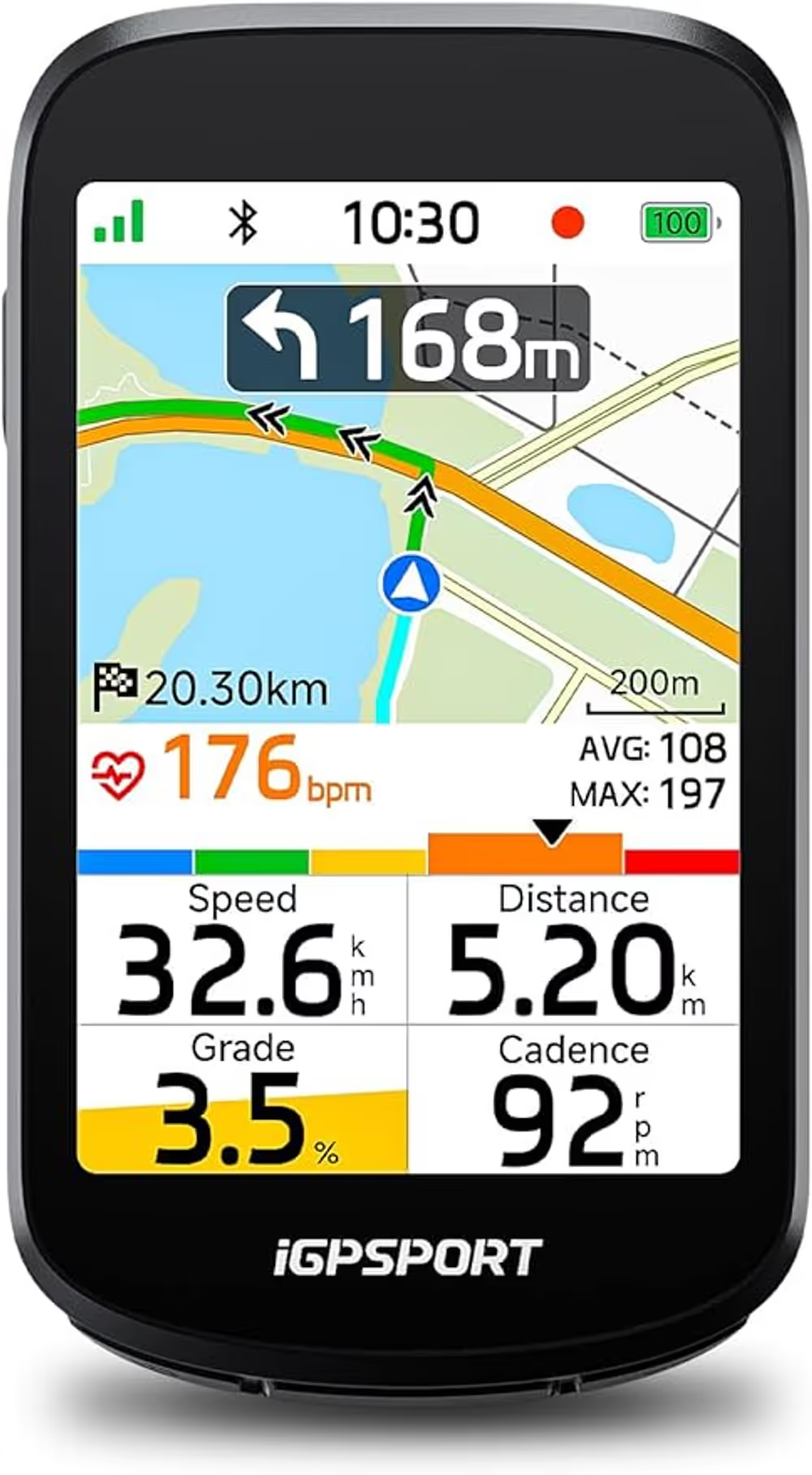
iGPSPORT BSC500 GPS Bike Computer

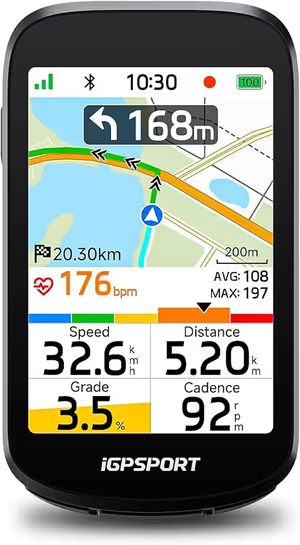
Product shot of iGPSPORT BSC500 GPS Bike Computer by iGPSPORT
Best For Offline Maps

Tech Specs

Screen
3.3 inch touchscreen, 320 x 480
Controls
Touchscreen plus 3 buttons
Battery Claim
25 hours (lab figure)
Weight
107 g
GNSS
Dual-band GPS (L1 + L5)
Water Rating
IPX7
Navigation
Offline maps with voice prompts
Connectivity
Bluetooth and ANT+, Shimano Di2, SRAM eTap, Campagnolo EPS, radar tail lights (iGPSPORT)
Offline maps on a 3.3 inch screen, for half what the big two charge.

Offline maps are the feature that separates a navigation device from a route follower. Being able to see the road network around you, rather than only the line you loaded, is what lets you improvise a detour or find a way to water, and until recently that meant Garmin or Wahoo money.

Read the full review

The 3.3 inch screen is larger than the Edge 540's and the voice prompts remove the need to look down at a junction. For a hundred and fifty dollars that is a genuinely strong specification, and the early rating reflects it.

Two things temper it. The one detailed independent review so far (smartzone.de, August 2026) found automatic rerouting only worked once the phone app had been started before the ride, which matters on a trip where the phone stays in flight mode. And with fifty-four reports there is very little evidence about how it holds up over a season of vibration and weather.

iGPSPORT has built a reasonable record at the budget end of this category, but the BSC500 is a considerably more ambitious device than the units that record was built on. The support ecosystem behind it remains far smaller than Garmin's, which is the thing you notice only when something fails mid-tour.

The Verdict

The most capability per dollar on this list. Touchscreen and a short track record are what you accept for it.

GravelPacker score How we score
4.1/5
Durability
3.5
Performance
4.5
Usability
4
Value
4.5
  • • Offline maps and voice navigation at half the price
  • • 3.3 inch screen, larger than the premium units
  • • Bluetooth and ANT+ sensor support
$149.99
Checked Aug 2026
Buy on Amazon

The Good

  • + Offline maps and voice navigation at half the price
  • + 3.3 inch screen, larger than the premium units
  • + Bluetooth and ANT+ sensor support

The Bad

  • − Rerouting reported to need the phone app
  • − Owner record still short, about 100 ratings
  • − Limited support if it fails on tour
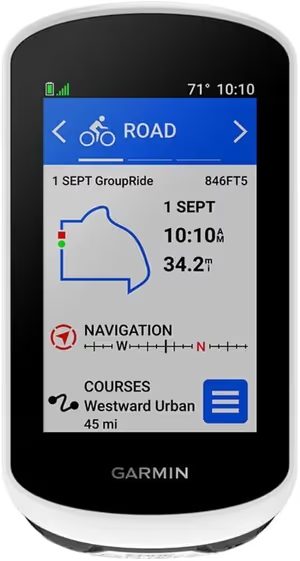
Garmin // Best For Route Following //
★ 4.2 (530 ratings at the retailer)

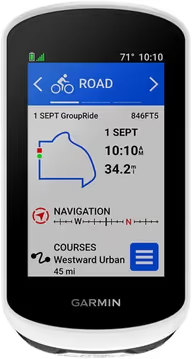
Garmin Edge Explore 2 GPS Cycling Navigator

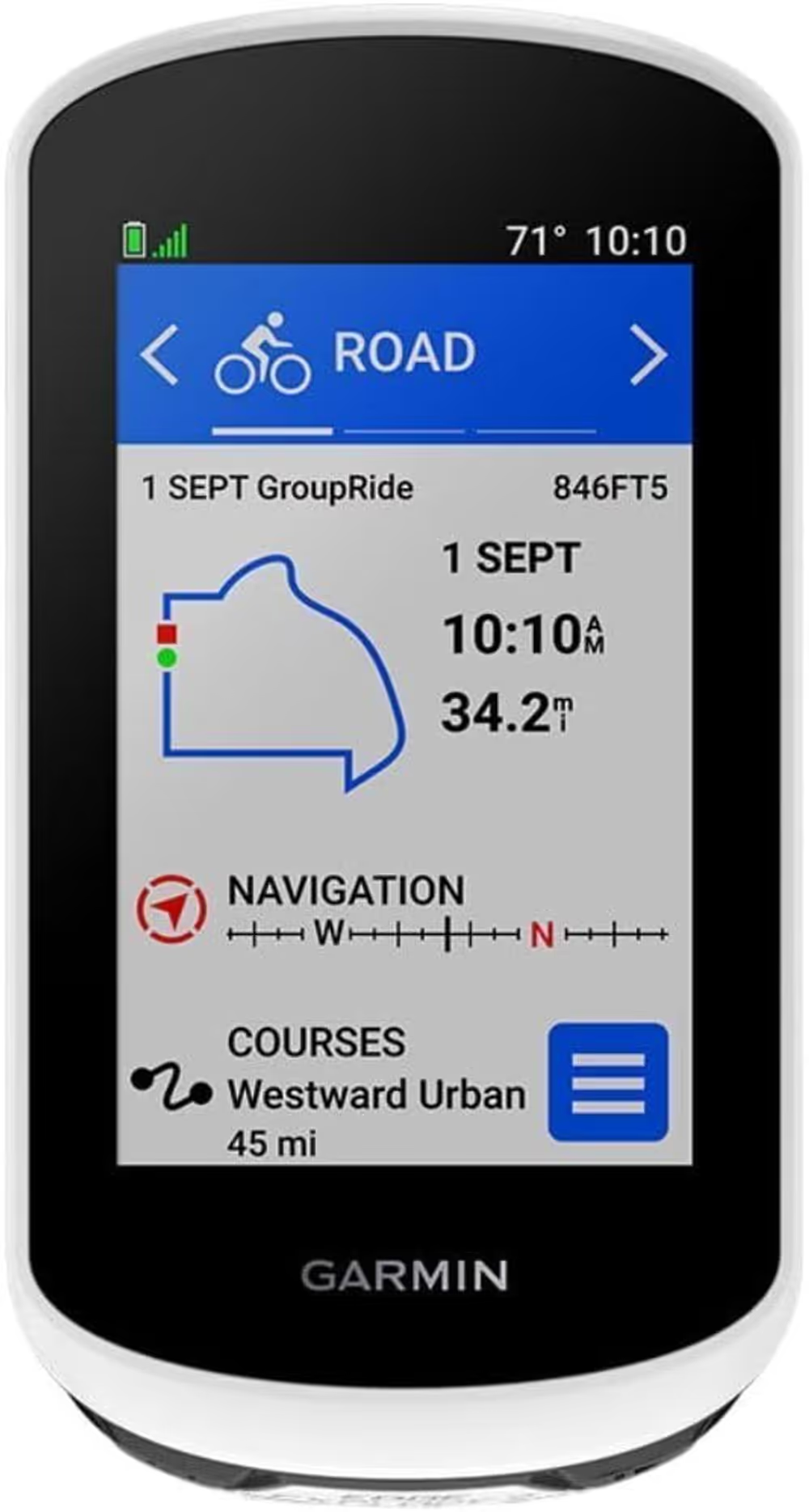
Product shot of Garmin Edge Explore 2 GPS Cycling Navigator by Garmin
Best For Route Following

Tech Specs

Screen
3.0 inch transflective touchscreen, 240 x 400
Controls
Touchscreen plus 3 keys (power, lap, start/stop)
Battery Claim
Up to 16 hours (Garmin)
Weight
104 g
GNSS
GPS, GLONASS, Galileo (Garmin)
Water Rating
IPX7
Navigation
Preloaded Garmin cycling maps with on-device routing
Connectivity
Bluetooth and ANT+, Varia radar (Garmin)
Garmin's navigation-first unit: full maps, proper rerouting, and none of the training dashboards a touring rider never opens.

The Explore 2 strips out the training features Garmin sells on its Edge 540 and above. There is no training load, no pedalling dynamics, no Wi-Fi and no electronic groupset pairing. What is left is preloaded Garmin cycling maps, on-device routing that finds its own way back when a road is closed, ClimbPro on a loaded route, and incident detection through a paired phone.

Read the full review

The 3 inch touchscreen is the same size class as the budget mapping units, and Garmin describes it as glove and rain friendly. Independent reviews broadly agree it responds well with full-finger gloves. Three physical keys handle power, lap and start/stop, but menus and the map are touch only, so a wet screen on a cold descent is a different job from the full button layout on an Edge 540.

Garmin claims up to 16 hours. BikeRadar reported roughly 15 with sensors connected, which is close to the claim for once. On a multi-day trip that still means charging every night. Garmin's Power Mount version is aimed at e-bikes, so on a pedal bike the answer is a power bank.

The real case for it is the support behind it. It had more than 500 owner reports on Amazon US at 4.2 stars when we checked in October, and a quarter-turn mount system with a large aftermarket. That track record is what you pay roughly double a BSC500's price for, and it matters most on the day a unit fails 200 km from a shop.

The Verdict

The safe mapping buy. It costs about twice a BSC500 and the extra money buys Garmin's maps, rerouting and a long support record.

GravelPacker score How we score
4.0/5
Durability
4.5
Performance
4
Usability
4
Value
3.5
  • • Preloaded maps with on-device rerouting
  • • ClimbPro on loaded routes, free
  • • Garmin support and mount aftermarket

The Good

  • + Preloaded maps with on-device rerouting
  • + ClimbPro on loaded routes, free
  • + Garmin support and mount aftermarket

The Bad

  • − Menus and map are touch only
  • − 16 hour claim means nightly charging
  • − No training metrics or groupset pairing

Frequently Asked Questions

Does the BSC500 need a phone to reroute?

iGPSPORT says no and lists offline rerouting. The one independent review we found that tested it, from smartzone.de, reported that automatic rerouting only worked once the phone app had been started before the ride. Before a trip, load a route, put the phone in flight mode and ride off the line on purpose to see what the unit does.

Is the Edge Explore 2 touchscreen only?

No. Garmin's manual lists three keys, for power, lap and start/stop, alongside the 3 inch touchscreen. Menus and the map are still worked by touch, which is why glove performance matters on both of these units.

Which lasts longer on a bikepacking day?

The claims say the BSC500, at 25 hours against 16. The independent figures we found put both at about 15 hours in real use, so on long days plan to top either one up from a power bank every night.

Does the Edge Explore 2 work with Di2 or Strava Live Segments?

No to both. It does not pair with Shimano Di2 or SRAM AXS, has no Wi-Fi and has no training-load analysis. The BSC500 lists Di2 support, and can ring its built-in electronic bell from the Di2 buttons.

How does iGPSPORT compare with Wahoo?

Wahoo's ELEMNT ROAM V3 is the button-operated alternative and cost $418.76 when we checked in August, close to three times the BSC500. Our three-way comparison sets it against the Garmin Edge 540 and iGPSPORT's cheaper BSC300T.
Reviewer

Louis Raveton

Louis runs GravelPacker and is accountable for what it publishes. He wrote the scoring rubric the product reviews are graded against and decides what ships. The pieces under his byline are the desk-research ones: comparisons and explainers built from spec sheets, owner reports and the rubric, not from a test lab.