
Guides
10 Best Kindle Books for Bikepackers (Weightless Adventure Reading)
Save weight and space on your next tour with our favorite Kindle reads for bikepackers, from technical maintenance guides to global adventure memoirs.

My brand new carbon frame sounded like a tin can full of rocks on its first rocky descent in the Ozarks. The chain was violently striking the chainstay over every piece of embedded chunk and root. By the bottom of the hill, the pristine factory paint job was chipped down to the raw carbon.
Chain slap is annoying and highly destructive to your bicycle frame. Riding fifty miles of severe washboard gravel will turn an unprotected chainstay into ground meat. You absolutely need a robust physical barrier between the metal chain and your frame.
Ignoring the problem will lead to structural damage over time. A bouncing chain will literally chew through aluminum and carbon fiber if subjected to enough repeated impacts.
The most common solution is a neoprene sleeve like the Lizard Skins Chainstay Protector that wraps around the tube. These are cheap and effective but look terrible once they get soaked in chain oil and peanut butter mud. They also trap moisture against the frame, which actively accelerates rust on steel bikes.
I strongly prefer a more permanent and customized approach tailored for severe conditions. Mastic tape is a far superior option used by professional mechanics worldwide for a very good reason. It is a thick rubberized tape that absorbs impacts silently and sticks tenaciously to the frame even in freezing rain.
We destroyed 7 bikepacking seatpacks on 500km of washboard gravel. Discover the waterproof large saddle bags that actually maintain stability under load.
You can cut mastic tape to the exact shape of your chainstay for a perfectly clean and integrated look. It provides far more damping than neoprene and will never absorb water or wet lube.
Clean the chainstay thoroughly with rubbing alcohol before applying any protective tape. Even a microscopic layer of chain lube or dust will prevent the adhesive from bonding permanently. You must let the alcohol flash off completely before proceeding.
Apply the tape carefully, starting near the chainrings and working your way back toward the cassette. Press it down firmly, especially around the edges, to ensure a solid and permanent bond. You can use a hair dryer to slightly warm the tape, making it far more pliable around curved tubes.
A loose frame bag will sand the paint off your bike in 20 miles. Learn how to stop frame rub and harness movement before your carbon gets compromised.
Pay close attention to the underside of the chainstay as well. When bombing down technical baby-head rock sections, the chain often wraps underneath and strikes the bottom of the tube.
A protective barrier is only half the battle. You also need to aggressively minimize the slack in the chain itself. Check your rear derailleur clutch immediately if your bike sounds like a machine gun on descents.
A worn or improperly adjusted clutch will allow excessive slack in the chain over rough terrain. Most Shimano gravel clutches are adjustable with a small hex key to increase the retention force. You must pop off the plastic clutch cover to access the tension band, and doing this in the dirt is a recipe for losing tiny bolts.
Finally, ensure your chain is cut to the proper length. A chain that is even two links too long will bounce uncontrollably regardless of your clutch tension. Keeping your drivetrain clean, properly tensioned, and your clutch engaged is the primary line of defense against chain slap.
Save weight and space on your next tour with our favorite Kindle reads for bikepackers, from technical maintenance guides to global adventure memoirs.

From practical guides like Bikepacking Illustrated to global epics like Two Years on a Bike, we review 13 essential books for every adventure cyclist's library.
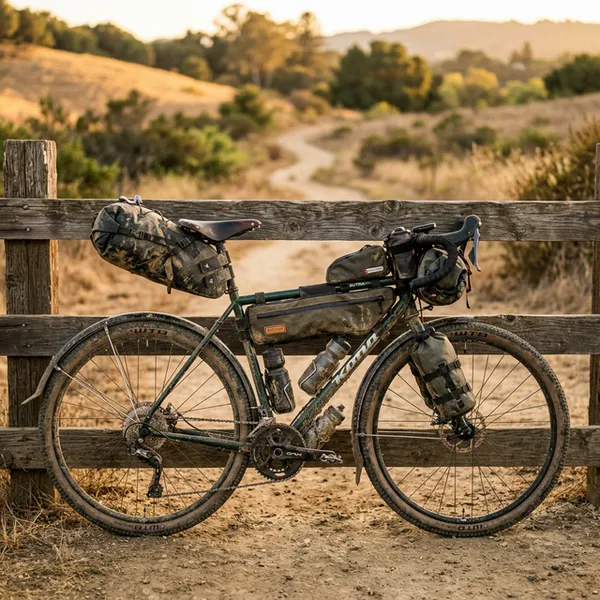
A swaying bikepacking saddle bag destroys your cornering and wastes energy. Learn how to pack your tail bag properly to completely kill the pendulum effect.
Mark is accustomed to carrying his body weight in water across the Southwest. Meticulous about load distribution, if a piece of gear rattles or rubs, Mark will find a way to fix it with a Voile strap and some duct tape.