Guides
10 Best Kindle Books for Bikepackers (Weightless Adventure Reading)
Save weight and space on your next tour with our favorite Kindle reads for bikepackers, from technical maintenance guides to global adventure memoirs.
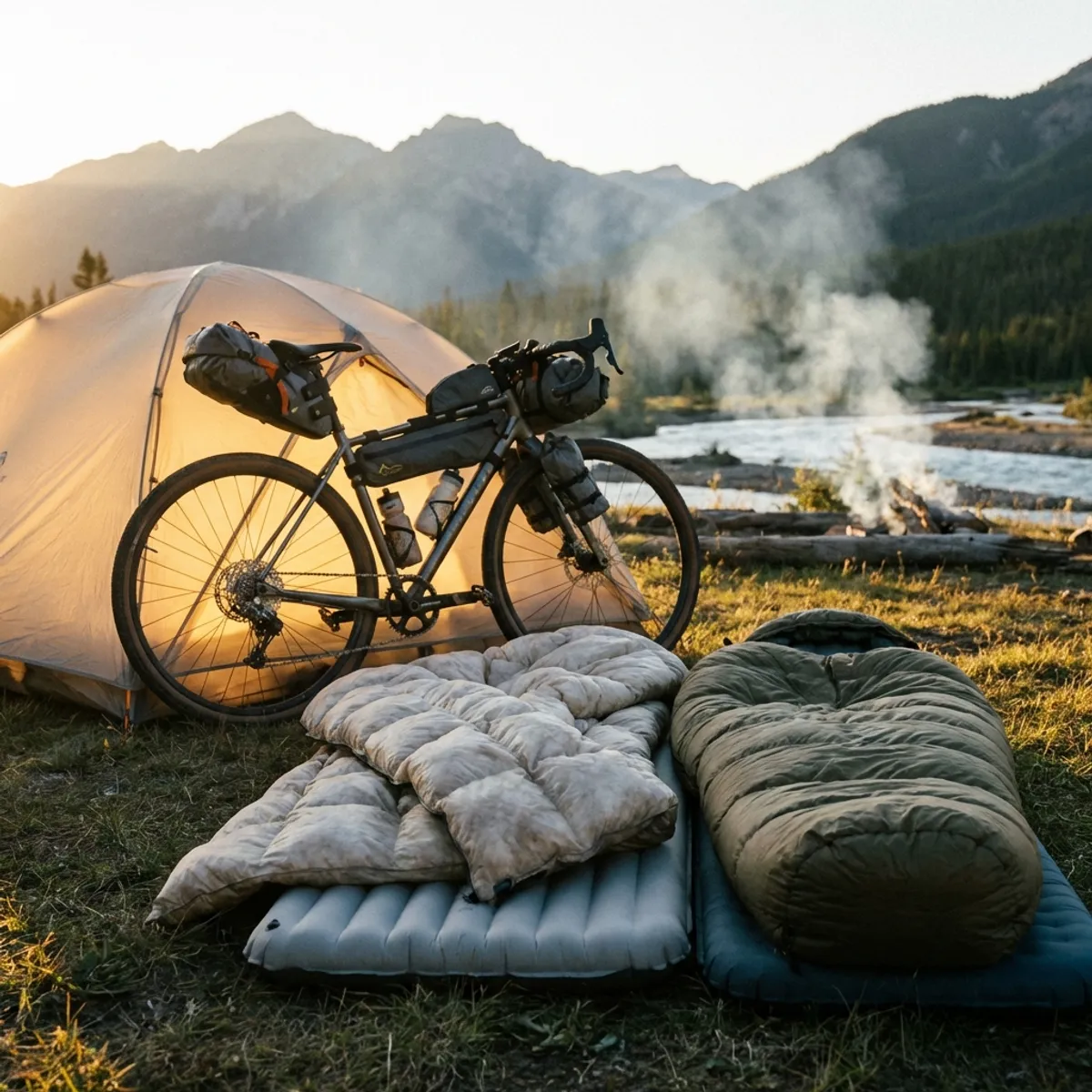
We have all done the math. You check the weather forecast, see a projected low of 40°F, and decide to bring your ultralight summer quilt to save a few hundred grams. Then at 3:30 AM the temperature drops to 32°F, the wind picks up, and you are suddenly shivering so hard your teeth are rattling.
I have been there. Curled into a tight ball in a bivy sack in Washington, I wondered if I should just get up and start riding in the dark to generate heat. The shiver limit is where ego meets physics.
If you find yourself underdressed for the conditions, you must get creative with the gear you have. You do not need a heavier bag. You need a drastically more efficient system.
This is the single most effective external engine for your sleep system. If you have a stove and a non-insulated water bottle, you can create a localized heater. You must use a hard plastic Nalgene or a specialized silicone bladder for this to work safely.
Boil a liter of water before you crawl in. Pour it into your bottle and ensure the seal is absolutely perfect. Leaking boiling water into your down quilt is a dangerous disaster, not a comfort hack.
Shove the hot bottle directly into the footbox of your sleeping bag. The large arteries in your feet and legs will pick up that radiant heat and circulate it through your core. It acts as a high-output furnace that will last roughly four hours before cooling down.
Avoid overpacking! Our ultimate beginner bikepacking gear list covers every essential for your first multi-day gravel trip, from bags to sleep systems.
I used to think that sleeping in just base layers was warmer because it allowed the down to loft properly. That is a total myth propagated by outdoor catalog copywriters. If you are freezing, put on every stitch of clothing you own.
Put your rain jacket over your puffy jacket to trap the warm air against your torso. Put your spare riding socks on your hands to protect your extremities. If you have a clean frame bag, empty it out and shove your feet into it for an extra layer of wind protection.
New to packing light? Our minimalist bikepacking checklist covers the 9 absolute essentials you need for a fast, lightweight overnight micro-adventure.
Take your damp riding jersey off immediately. If there is even a hint of moisture in your layers, they are actively pulling heat away from your skin through evaporation. Dry skin is warm skin.
Most people blame their quilt when they are cold, but the true culprit is almost always the ground. If you are on an uninsulated pad like the Klymit Static V2 in freezing temps, the earth is literally sucking the heat out of you.
Lay your empty frame bags and panniers directly under your hips and shoulders for extra insulation. These are your heaviest pressure points, and they require the most thermal separation from the dirt. In a survival situation, clear the snow and pile up dry pine needles under your groundsheet to create natural loft.
If your quilt is warm enough but your back is freezing, wear your down jacket backwards. This puts the insulation between you and the cold sleeping pad. A cold night is a brutal lesson, so use the shivers to refine your gear list for the next trip.
Save weight and space on your next tour with our favorite Kindle reads for bikepackers, from technical maintenance guides to global adventure memoirs.
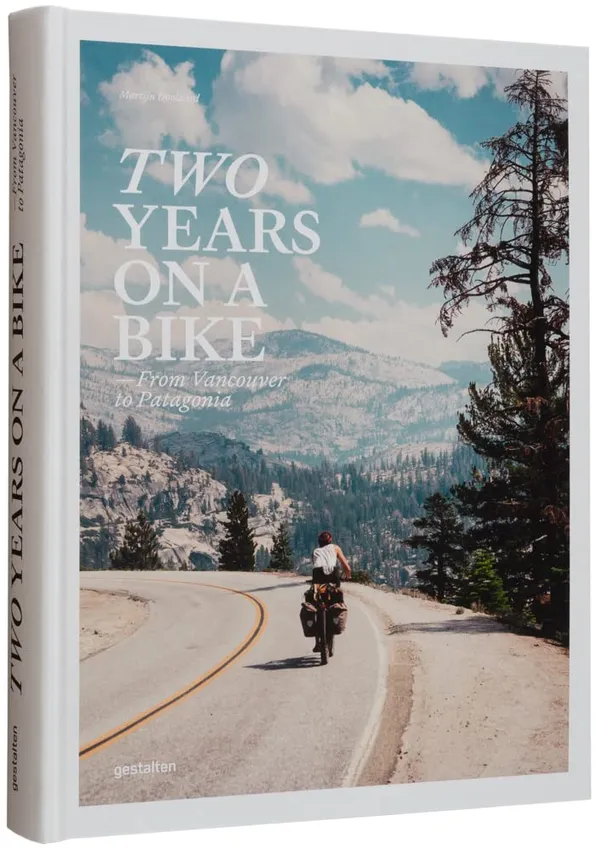
From practical guides like Bikepacking Illustrated to global epics like Two Years on a Bike, we review 13 essential books for every adventure cyclist's library.
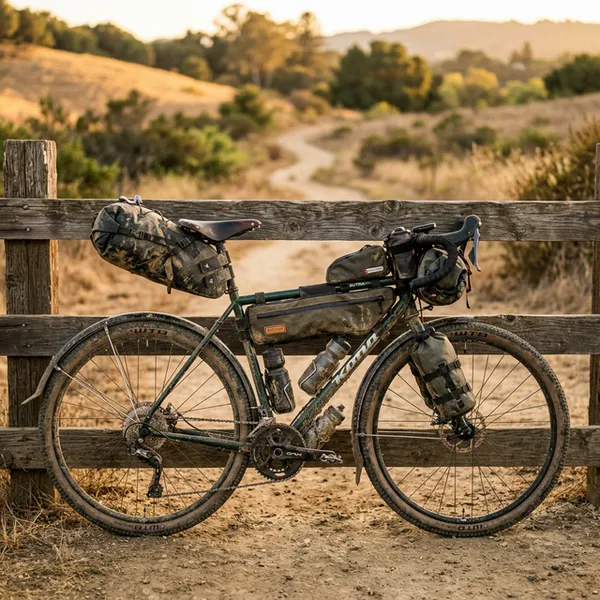
A swaying bikepacking saddle bag destroys your cornering and wastes energy. Learn how to pack your tail bag properly to completely kill the pendulum effect.
Jake has spent the last 5 years pushing his bike through the muddiest backroads of the Pacific Northwest. He isn't a professional racer, but he knows exactly what gear breaks first and what actually lasts when you're 40 miles from the nearest town.