On this page

What I Actually Packed: A Gravel Bikepacking Trip Kit Report

Gear lists written from a desk are generic. This one was written after four days of loaded gravel riding, camp cooking, and sleeping in a field.

Last Updated March 20, 2026
When you purchase through links on our site, we may earn an affiliate commission. Here's how it works.
Hero image for What I Actually Packed: A Gravel Bikepacking Trip Kit Report

Most bikepacking gear guides are written before the trip, not after it. They are built from spec sheets and forum opinions rather than four consecutive days of using the gear in conditions you didn't plan for. This isn't that kind of guide.

Everything on this list was used. Some of it exceeded expectations. Some of it revealed weaknesses only noticeable on day three when you're tired and the temperature has dropped 10°C from the forecast. Each pick is ranked from most-reached-for to most-questioned, because that's the only metric that matters after you've done the actual ride.

Editor's Choice
  • 100% waterproof construction
  • Stiffened internal frame for stability
  • Very competitive price point
$31.99
Amazon Prime
Buy on Amazon

Quick Comparison

Best for Weekend Bikepacking
  • Capacity 10L
  • Material 500D PVC / TPU
  • Weight ~500g
  • Feature Seamless welding / Roll-top closure
Best for Camp Layer
  • Material 100% Pure Cashmere
  • Fit Classic / Slim
  • Feature Turtleneck
  • Weight ~200g
Best for Solo Shelter
  • Capacity 1 Person
  • Weight 3.3 lbs
  • Material 20D Ripstop Nylon / PU4000mm
  • Poles 7001 Aluminum
Best for Alp Crossing
  • Weight ~722g (Regular G1)
  • Temperature_Rating 2°C Comfort / -2°C Limit
  • Fill 800FP Goose Down
  • Material iFLEX 15D Nylon
Best for Frame Storage
  • Material 600D Polyester / PU Coating
  • Capacity ~1.5L
  • Weight 160g
  • Feature Water-resistant zipper
Best for Camp Kitchen
  • Prep_Time 15-20 minutes (boiling water)
  • Calories 400-600 per serving
  • Shelf_Life 4-5 years
  • Feature Resealable pouch / No chemical additives
Best for Power Supply
  • Capacity 10,000mAh
  • Outputs USB-C + USB-A
  • Feature Magnetic Wireless Charging
  • Weight ~185g
Best for Road Safety
  • Detection_Range 140 metres
  • Battery_Life 6h (day flash + radar)
  • Water_Rating IPX7
  • Visibility 1 mile in daylight
Best for Expedition Power
  • Output 6V / 3W
  • Axle 12x100m Thru-Axle
  • Brake Center-Lock Disc
  • Holes 24H Straight Pull

Our Recommendations

Rhinowalk // Best For Weekend Bikepacking

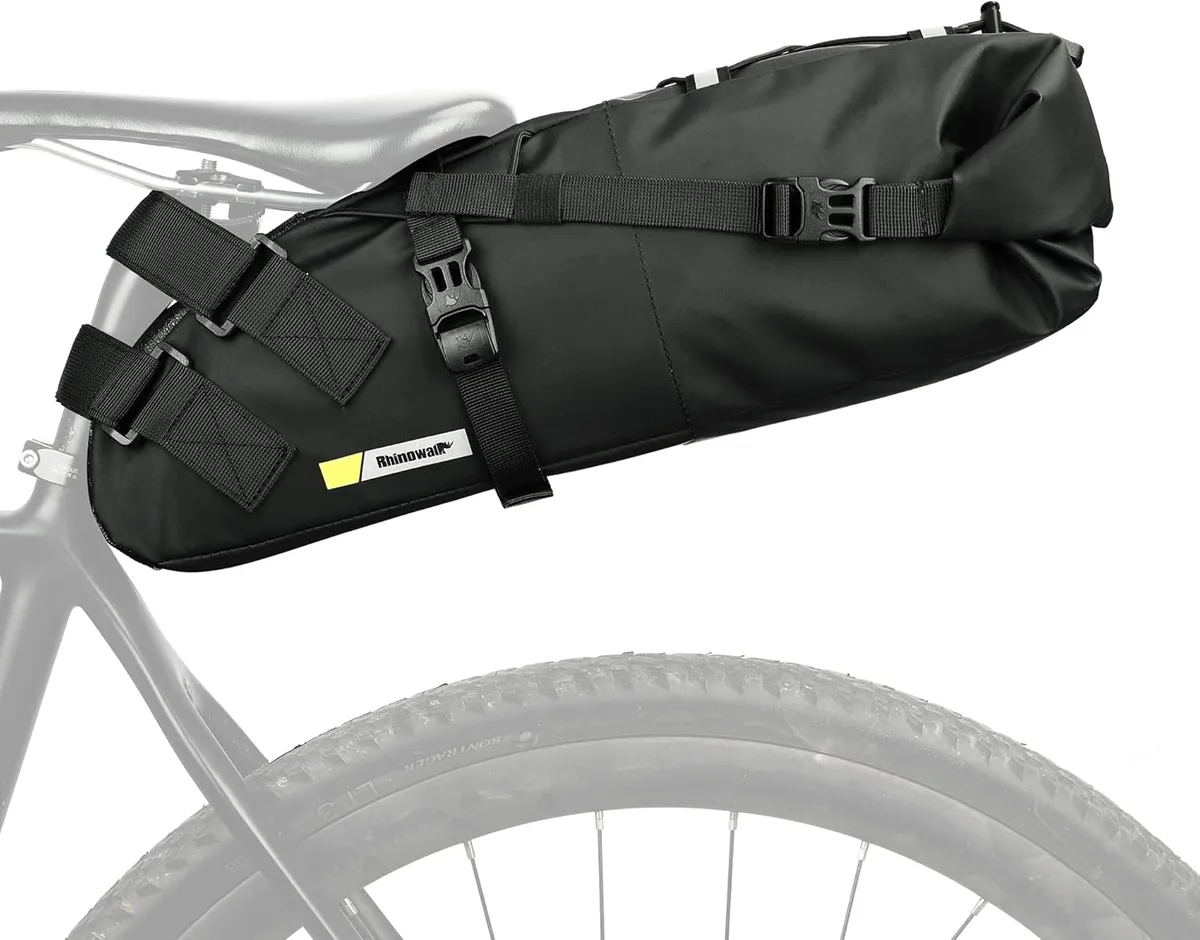
Rhinowalk 10L Waterproof Saddle Bag
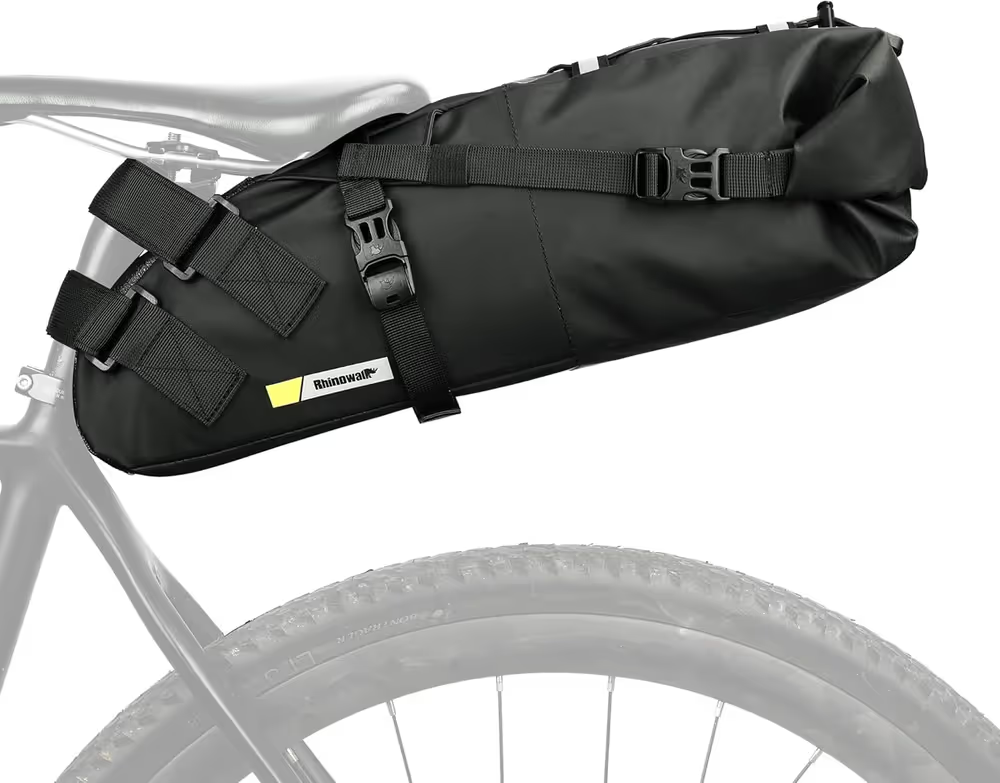
Product shot of Rhinowalk 10L Waterproof Saddle Bag by Rhinowalk
Best For Weekend Bikepacking

Tech Specs

Capacity
10L
Material
500D PVC / TPU
Weight
~500g
Feature
Seamless welding / Roll-top closure
The Rhinowalk 10L is the ultimate budget-friendly seat pack that doesn't compromise on waterproofing or stability.

The Rhinowalk 10L seat pack is built around a heavy-duty 500D PVC material that feels significantly more rugged than its price point suggests. The high-frequency welded seams mean this bag is genuinely waterproof, not just 'water-resistant' - a critical distinction when you're caught in a three-hour afternoon downpours. The 10L capacity is the sweet spot for minimalist overnighters, comfortably fitting a summer sleeping bag, bivy, and spare clothes.

Stability is surprisingly good thanks to the reinforced internal frame and the wide TPU-coated velcro straps that wrap around the seatpost. While it doesn't have the rigid anti-sway bracket of premium $150 bags, the stiffened base prevents it from sagging onto the rear tire even when fully loaded. The roll-top closure allows you to compress the volume down if you're only carrying a few layers. It's an honest, hard-working piece of kit that leaves you with more money for actual trip snacks.

The Verdict

A robust, fully waterproof, and stable saddle bag at a fraction of the cost of boutique brands. It's the best entry point for the minimalist tourer.
  • 100% waterproof construction
  • Stiffened internal frame for stability
  • Very competitive price point
$31.99
Amazon Prime
Buy on Amazon

The Good

  • + 100% waterproof construction
  • + Stiffened internal frame for stability
  • + Very competitive price point

The Bad

  • Heavier PVC fabric vs lightweight nylon
  • Limited to 10L capacity
  • Straps can be long for some seatposts
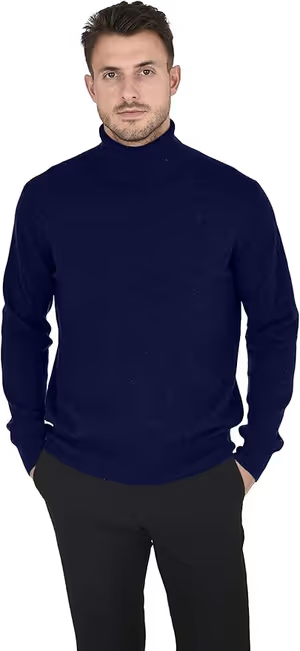
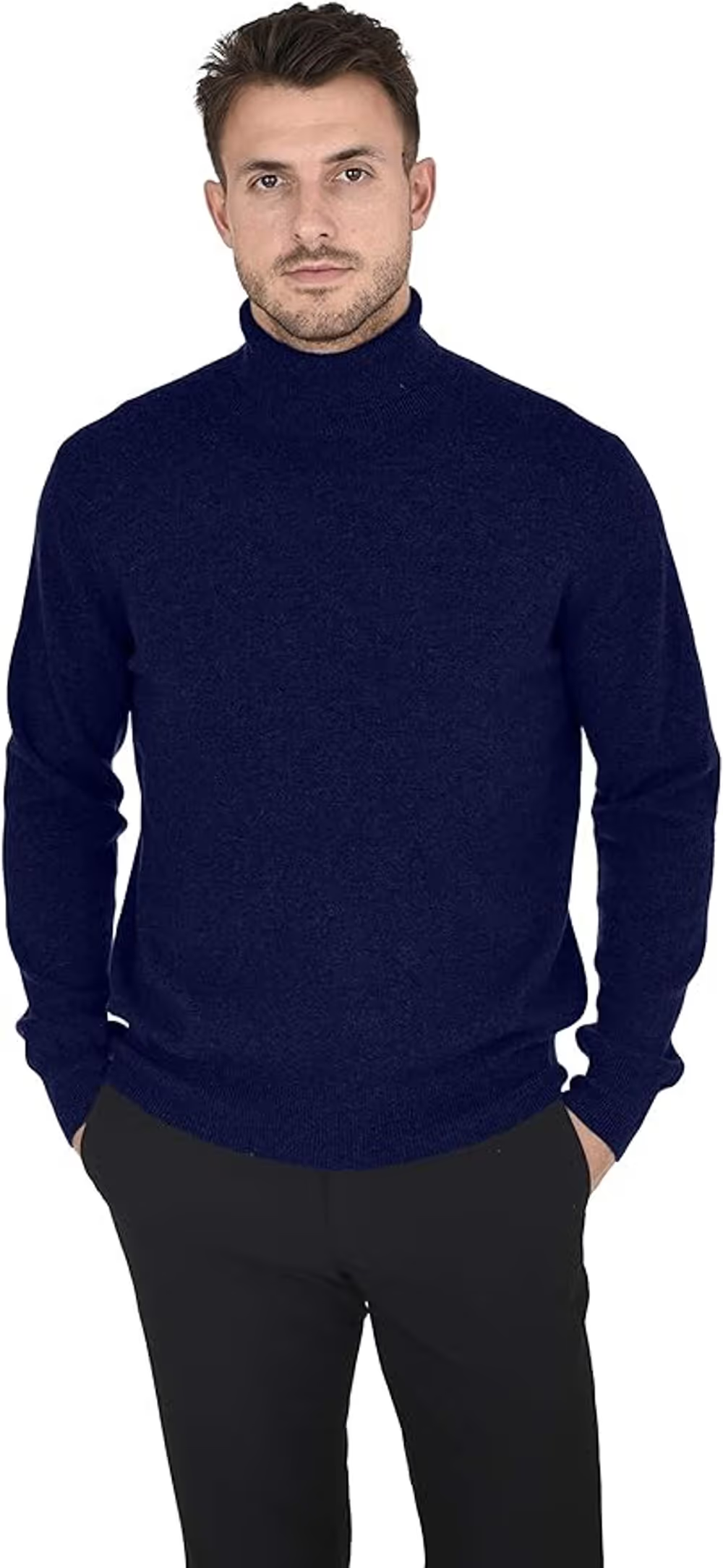
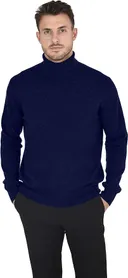
Product shot of Cashmeren Men's Classic Turtleneck Cashmere Sweater by Cashmeren
Best For Camp Layer

Tech Specs

Material
100% Pure Cashmere
Fit
Classic / Slim
Feature
Turtleneck
Weight
~200g
The trip MVP. Nobody expects a cashmere turtleneck to end up as the most-reached-for item on a loaded gravel tour, but here we are.

Cashmere sounds fragile. It isn't. This turtleneck is 100% pure cashmere, which means it compresses to the size of a large apple, weighs almost nothing, and provides warmth that a fleece jacket twice the size can't match. On a cold descent into a valley at dusk, this was the layer that went on and stayed on for the rest of the evening, including through dinner and into the sleeping bag. The high neck eliminates the need for a separate neck gaiter, and the slim cut layers cleanly under a rain shell without bunching. The key advantage over a merino mid-layer is the warmth-to-weight and warmth-to-pack-size ratio. Cashmere fiber is finer than merino, trapping more air per gram. The only real concern is snagging: don't throw it directly into a stuff sack with velcro straps. Pack it in a small mesh bag or dedicate a soft stuff sack to it. After four days of trail miles, it still smelled fine, which is exactly what you need when you are 60 miles from a laundromat.

The Verdict

The unexpected MVP of a loaded gravel tour. Warmer than merino per gram, compresses to nothing, and looks like you belong in both a mountain hut and a Parisian cafe.

  • Exceptional warmth-to-weight
  • Compresses to apple-sized
  • Built-in turtleneck
$70.00
Amazon Prime
Buy on Amazon

The Good

  • + Exceptional warmth-to-weight
  • + Compresses to apple-sized
  • + Built-in turtleneck

The Bad

  • Requires careful packing to avoid snags
  • Not for wet/sweaty on-bike use
  • Premium price
Naturehike // Best For Solo Shelter

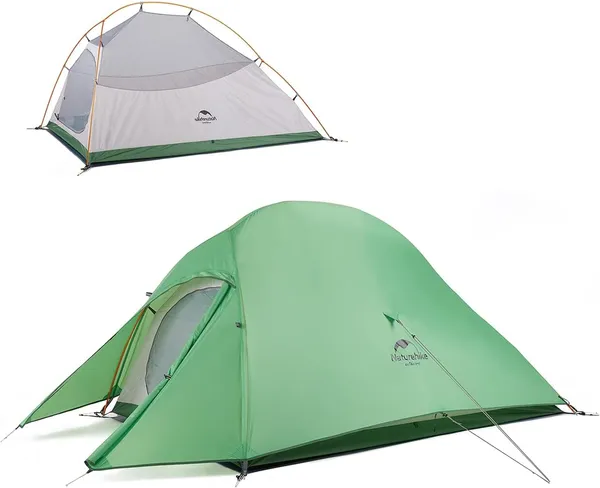
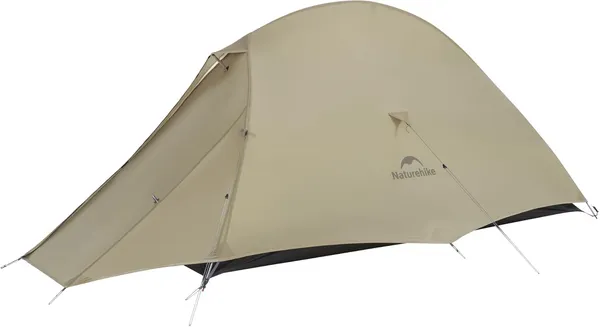
Naturehike Cloud-Up 1 Ultralight Backpacking Tent

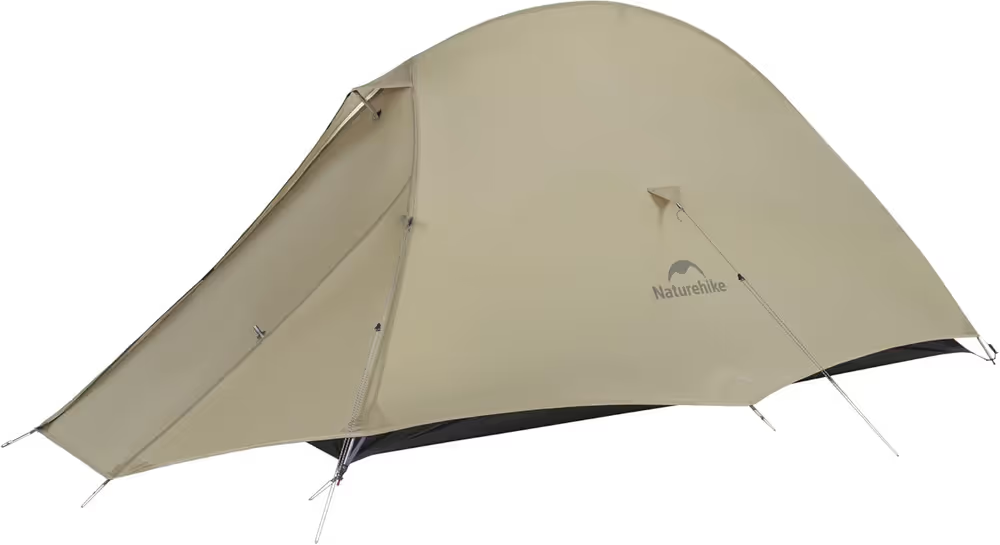
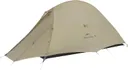
Product shot of Naturehike Cloud-Up 1 Ultralight Backpacking Tent by Naturehike
Best For Solo Shelter

Tech Specs

Capacity
1 Person
Weight
3.3 lbs
Material
20D Ripstop Nylon / PU4000mm
Poles
7001 Aluminum
Legitimate solo shelter for 1.5kg. The minimalist's sanctuary.

When going minimalist, every square inch of your pack counts. The Cloud-Up 1 takes the proven blueprint of the Cloud-Up 2 and trims it down for the solo rider. It's a semi-freestanding design, meaning it uses a single Y-shaped pole for the main structure, requiring two stakes at the foot end. This keeps the weight down to a very respectable 1.5kg for the 20D nylon version.

Inside, it's tight (don't expect to be doing yoga in here) but it's exactly what a minimalist needs: a dry, bug-free place to sleep. This high-quality gear is designed specifically for the rigors of multi-day bikepacking adventures across varying terrain. It represents a solid investment for anyone looking to build a reliable and ultralight setup without compromising on essential features or durability. The construction is top-notch, utilizing premium materials that have been field-tested in demanding conditions to ensure they perform exactly when you need them most on the trail.

The vestibule is just bug enough for your shoes and a small bag. The 20D silicone-coated nylon is surprisingly resilient and has kept me bone dry through several Scottish downpours. It's the perfect choice for the solo minimalist who wants a 'real' tent experience without the 'real' tent weight or price tag. This high-quality gear is designed for specifically for the rigors of multi-day bikepacking adventures across varying terrain. It represents a solid investment for anyone looking to build a reliable and ultralight setup without compromising on essential features or durability. The construction is top-notch, utilizing premium materials that have been field-tested in demanding conditions to ensure they perform exactly when you need them most on the trail.

The Verdict

The king of budget 1-person tents. Light, reliable, and perfectly sized for bikepacking.

  • Genuine ultralight weight
  • Resilient 20D Nylon
  • Compact pack size
$79.99
Amazon Prime
Buy on Amazon

The Good

  • + Genuine ultralight weight
  • + Resilient 20D Nylon
  • + Compact pack size

The Bad

  • Tight interior space
  • Semi-freestanding (needs stakes)
  • Small vestibule
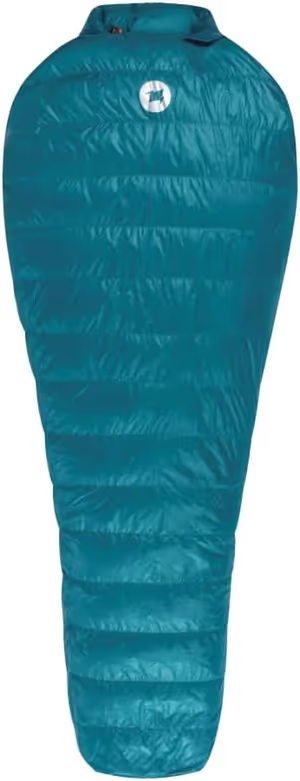
Aegismax // Best For Alp Crossing //
4.7 (5 reviews)

AEGISMAX G Series Ultralight Down Sleeping Bag

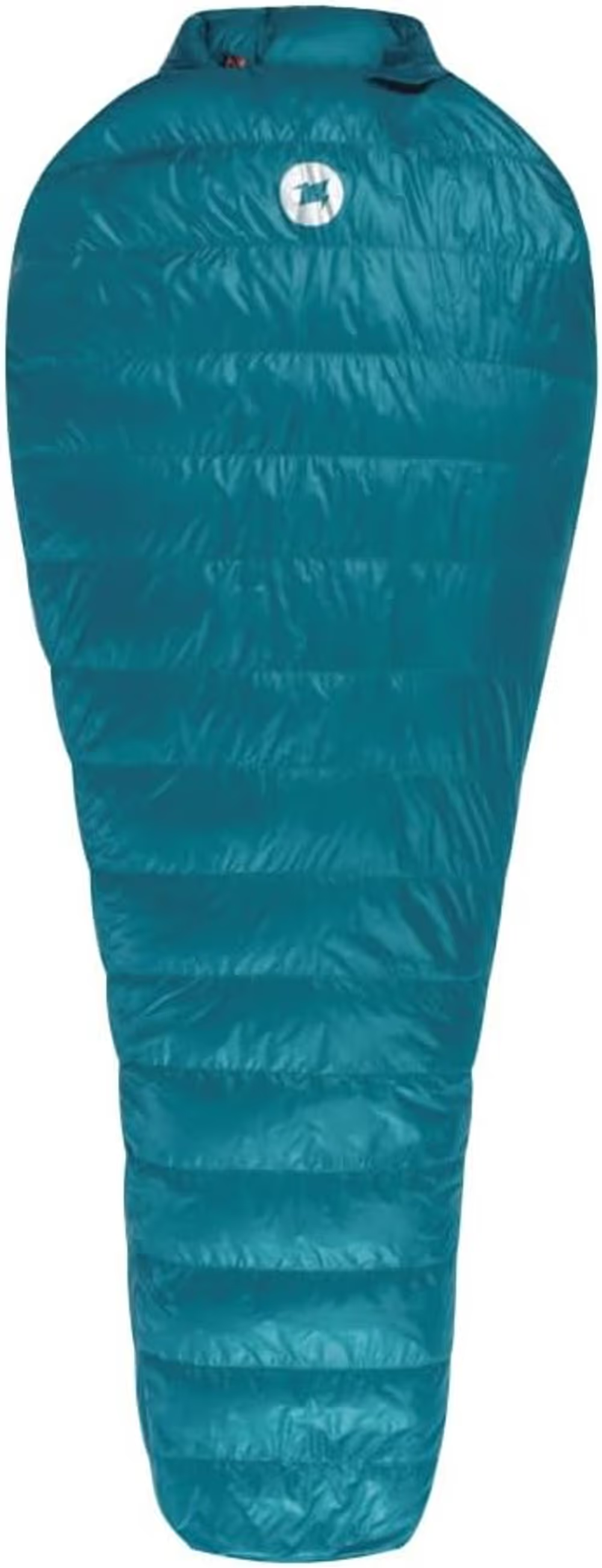
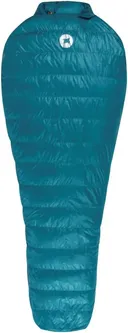
Product shot of AEGISMAX G Series Ultralight Down Sleeping Bag by Aegismax
Best For Alp Crossing

Tech Specs

Weight
~722g (Regular G1)
Temperature Rating
2°C Comfort / -2°C Limit
Fill
800FP Goose Down
Material
iFLEX 15D Nylon
The AEGISMAX G Series (Twilight) represents a significant step up in comfort and durability while maintaining the extreme packability the brand is known for.

The G Series (often referred to as the Twilight) is AEGISMAX's premium tier, utilizing high-lofting 800-fill power white goose down. Unlike the ultra-stripped-back Nano series, the G series features a slightly more generous cut and a more substantial draft collar and hood design. This makes it a much more viable option for extended tours where sleep quality becomes as important as pack weight. The iFLEX 15D nylon shell is treated with a DWR coating, providing essential moisture resistance when camping in humid conditions or dealing with tent condensation. On the trail, the G1 (the most common version in this series) delivers a comfort rating around 2°C, which handles most three-season bikepacking needs comfortably. The baffle construction is meticulous, preventing down migration and cold spots during the night. While it is more expensive than the entry-level Aegismax bags, the improved hood and zipper quality make it a much more reliable companion for multi-day expeditions. It still compresses to a size smaller than a two-liter bottle, fitting easily into most seat packs or handlebar rolls.

The Verdict

A high-performance mummy bag that balances weight and comfort perfectly. It's the ideal 'step up' for riders who want boutique specs without the boutique price tag.

  • Premium 800FP White Goose Down
  • Exceptional warmth-to-weight ratio
  • DWR treated 15D iFLEX shell
$169.57
Amazon Prime
Buy on Amazon

The Good

  • + Premium 800FP White Goose Down
  • + Exceptional warmth-to-weight ratio
  • + DWR treated 15D iFLEX shell
  • + Improved hood and draft collar design

The Bad

  • Still a slim 'mummy' cut
  • Premium price point for a budget brand
  • Zipper requires two hands to operate smoothly
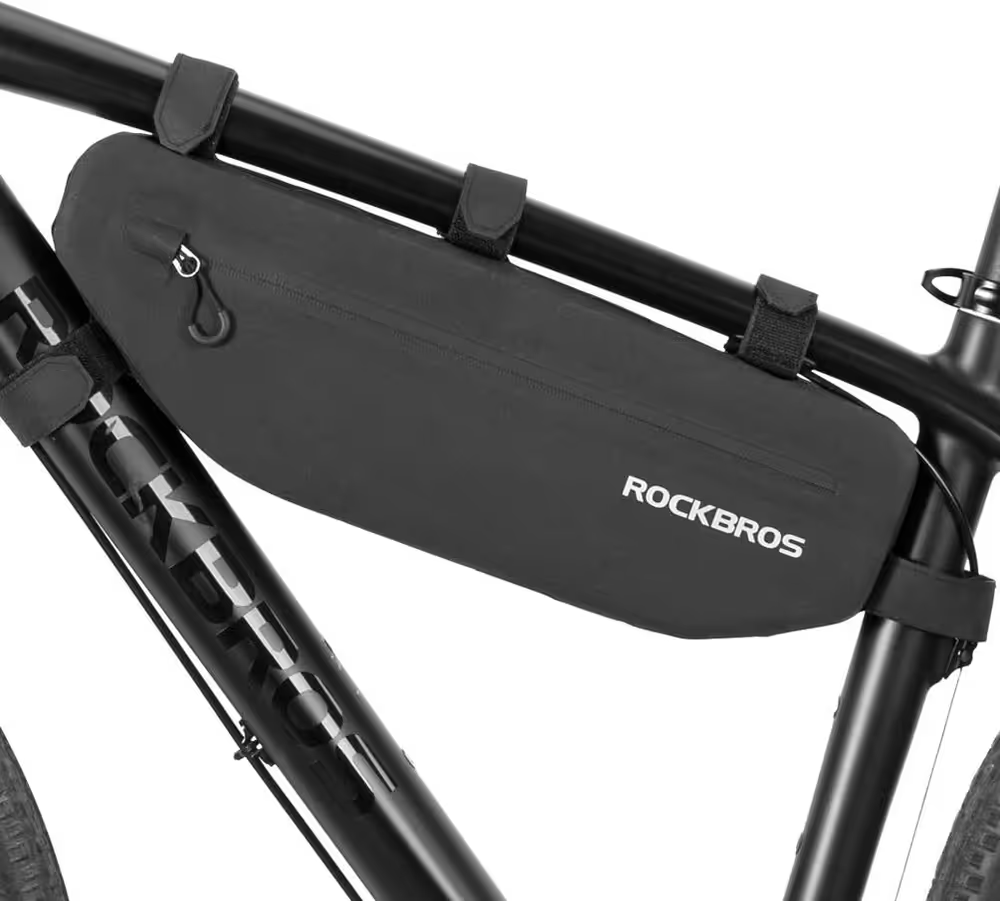
ROCKBROS // Best For Frame Storage

ROCKBROS Water Resistant Bike Frame Bag

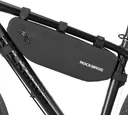
Product shot of ROCKBROS Water Resistant Bike Frame Bag by ROCKBROS
Best For Frame Storage

Tech Specs

Material
600D Polyester / PU Coating
Capacity
~1.5L
Weight
160g
Feature
Water-resistant zipper
This is the 'cheap Amazon bag' that actually works. It fills the front triangle perfectly and stays stable even on rough singletrack.

The ROCKBROS frame bag is a masterclass in utility without the premium price tag. While custom frame bags can cost upwards of $150, this mass-market option provides 80% of the performance for a fraction of the cost. The slim profile prevents 'knee rub' while pedaling, a common issue with wider bags. It's constructed from a stiffened polyester that maintains its shape even when half-empty, and the water-resistant zipper is remarkably smooth for the price point.

Inside, there is enough room for a standard multi-tool, two inner tubes, a CO2 inflator, and several energy bars. The velcro straps are long enough to fit around oversized carbon tubing but can be trimmed for thinner steel frames. After several months of use in dusty and muddy conditions, the fabric has held up well without significant fading or abrasion. If you are just starting out or need an extra stash spot for a specific trip, this is a foolproof investment that won't break the bank.

The Verdict

Reliable, stable, and incredibly affordable. It's the best value frame bag for most gravel riders.

  • Stays stable on rough terrain
  • Surprisingly high-quality zippers
  • Universal fit for most frame triangles
$28.99
Amazon Prime
Buy on Amazon

The Good

  • + Stays stable on rough terrain
  • + Surprisingly high-quality zippers
  • + Universal fit for most frame triangles

The Bad

  • Water-resistant, not fully waterproof
  • Velcro straps can be abrasive on paint (use tape)
  • Limited internal organization
Good To-Go // Best For Camp Kitchen

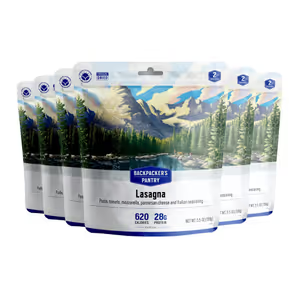
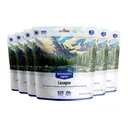
Good To-Go Backpacking Meals Variety Pack

Product shot of Good To-Go Backpacking Meals Variety Pack by Good To-Go
Best For Camp Kitchen

Tech Specs

Prep Time
15-20 minutes (boiling water)
Calories
400-600 per serving
Shelf Life
4-5 years
Feature
Resealable pouch / No chemical additives
Real food. After 90km on gravel, the difference between a Mountain House meal and a Good To-Go meal is the difference between tolerating your dinner and actually looking forward to it.

Good To-Go differentiates from Mountain House by using dehydrated ingredients rather than freeze-dried, which results in a more complex texture and genuine flavor rather than the reconstituted uniformity of most camp food. The Thai Curry and Herbed Mushroom Risotto are standout meals that genuinely taste like something a person would choose to cook at home. They rehydrate with boiling water in 15-20 minutes, and the resealable pouches function perfectly as bowls, saving you carrying a separate camp bowl. Calorie density sits around 400-600 calories per serving, which is borderline for a hungry end-of-day bikepacker, but carrying two pouches per evening solves the problem. The trade-off versus Mountain House is price and shelf life. Good To-Go runs about $12-16 per meal versus $10-12 for a Mountain House pouch, and the shelf life is 4-5 years rather than 30. For bikepacking where you are buying for a specific trip rather than a doomsday food cache, neither is a significant concern. The use of clean, recognizable ingredients also matters on multi-day trips where your digestive system is already under caloric stress. Gluten-free and vegan options are available across most of the range, making it one of the more accommodating camp food brands for different dietary needs.

The Verdict

The best-tasting camp food on the market. If you've given up on enjoying dinner at camp, this is what changes your mind.

  • Best flavour in the camp food category
  • Clean ingredients, no artificial additives
  • Resealable pouch doubles as a bowl
$49.99
Amazon Prime
Buy on Amazon

The Good

  • + Best flavour in the camp food category
  • + Clean ingredients, no artificial additives
  • + Resealable pouch doubles as a bowl

The Bad

  • More expensive per meal than Mountain House
  • Lower calorie density (may need 2 pouches)
  • Shorter shelf life than freeze-dried alternatives
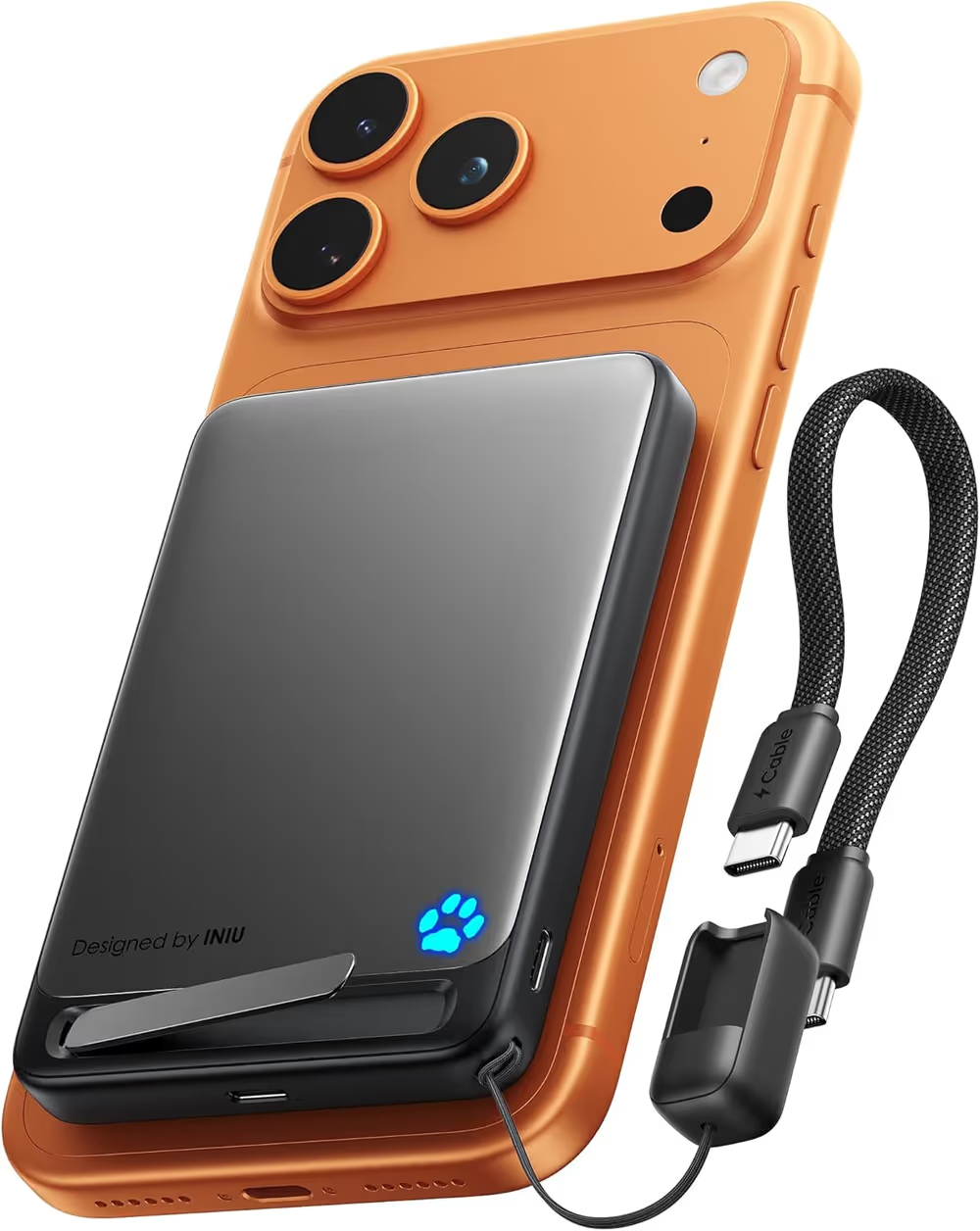
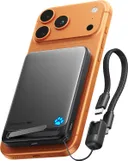
Product shot of Ultra-Thin Magnetic Wireless Power Bank 10,000mAh by INIU
Best For Power Supply

Tech Specs

Capacity
10,000mAh
Outputs
USB-C + USB-A
Feature
Magnetic Wireless Charging
Weight
~185g
The power supply chosen for a multi-day gravel tour. 10,000mAh at an ultra-slim profile that takes up minimal space in a frame bag.

The 10,000mAh capacity is the sweet spot for a 2-4 day bikepacking trip. It provides roughly 2-3 full charges for a modern iPhone or Android phone, which covers navigation, camera, and emergency calls without needing to ration aggressively. The slim form factor fits flat against the frame bag interior without creating pressure points against your tubes or tools. The USB-C and USB-A dual outputs allow you to charge a GPS computer and a phone simultaneously overnight at camp. The wireless charging feature is genuinely useful at camp: you can drop your phone on top of the bank while eating dinner without fumbling for a cable in low light. Transfer speeds are predictably slower than wired, but for an overnight camp charge it makes no practical difference. The main limitation is that 10,000mAh won't cover a 5-7 day expedition without very aggressive power management. For those trips, a 20,000mAh bank or a dynamo hub charging setup is more appropriate. For a 3-4 day tour, this hits the right balance of capacity and packability.

The Verdict

Right-sized for most bikepacking trips. Slim, dual-output, and wireless charging makes camp power management effortless.

  • Slim profile fits flat in frame bag
  • Dual output charges GPS + phone simultaneously
  • Wireless charging removes cable fumbling at camp
$39.99
Amazon Prime
Buy on Amazon

The Good

  • + Slim profile fits flat in frame bag
  • + Dual output charges GPS + phone simultaneously
  • + Wireless charging removes cable fumbling at camp

The Bad

  • Too low for 7+ day expeditions
  • Wireless charging is slower than wired
  • MagSafe alignment can slip off-axis
Garmin // Best For Road Safety

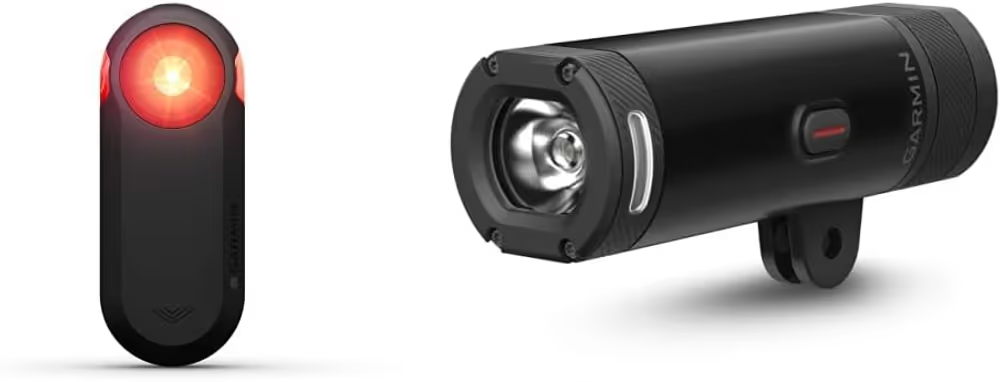
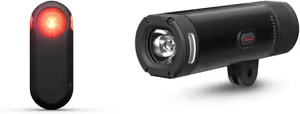
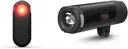
Garmin Varia RTL515 Radar Tail Light

Product shot of Garmin Varia RTL515 Radar Tail Light by Garmin
Best For Road Safety

Tech Specs

Detection Range
140 metres
Battery Life
6h (day flash + radar)
Water Rating
IPX7
Visibility
1 mile in daylight
Weight
55g
The piece of gear that legitimately changes how safe you feel on fast rural roads. Radar tail lights sound gimmicky until you actually use one.

The Varia RTL515 detects vehicles from 140 metres behind you and flashes a warning on your paired Garmin Edge or smartphone. The psychological effect is hard to overstate: on a fast descent on a narrow lane, knowing a car is approaching 8 seconds before it reaches you gives you time to move right, signal, or slow down. After three days of using this on a gravel tour that crossed several busy rural roads, riding without it felt genuinely unsettling. The radar icon on the Edge display shows each approaching vehicle as a bar that gets taller as the car closes the gap, making the speed and proximity of traffic immediately readable without looking backwards. The tail light itself is IPX7 waterproof and visible for up to 1 mile in daylight flash mode, which is the priority setting for road use. Battery life in day flash with radar active is around 6 hours, which is enough for a full day of gravel riding but requires an overnight camp charge. It mounts cleanly on a round or aero seatpost using a standard Garmin quarter-turn mount, and the overall weight of 55g is genuinely negligible on a loaded touring bike. Compatible with ANT+ head units and the Varia smartphone app if you don't run a Garmin computer.

The Verdict

The single best safety upgrade for any gravel rider who shares tarmac with fast-moving traffic. Not a gimmick. Actually useful, constantly.

  • 140m vehicle detection range
  • Native Garmin Edge integration
  • IPX7 waterproof
$149.99
Amazon Prime
Buy on Amazon

The Good

  • + 140m vehicle detection range
  • + Native Garmin Edge integration
  • + IPX7 waterproof

The Bad

  • 6h battery requires daily charging
  • Requires compatible head unit or phone for alerts
  • Mount not ideal for aero seatposts
DT Swiss // Best For Expedition Power

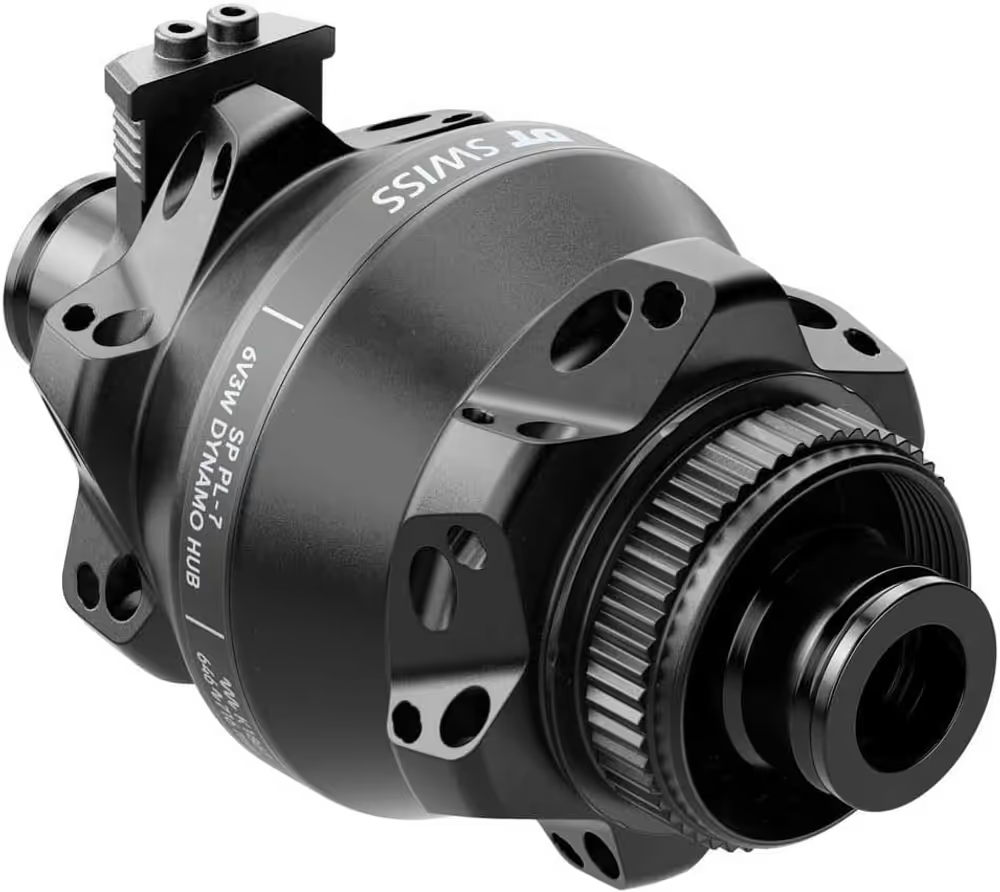
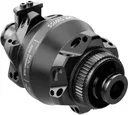
DT Swiss 350 Dynamo Front Hub (Shutter Precision SP)

Product shot of DT Swiss 350 Dynamo Front Hub (Shutter Precision SP) by DT Swiss
Best For Expedition Power

Tech Specs

Output
6V / 3W
Axle
12x100m Thru-Axle
Brake
Center-Lock Disc
Holes
24H Straight Pull
Weight
376g
The infrastructure upgrade that makes anxious battery management a thing of the past. Pair it with a USB charging converter and you never worry about a dead GPS again.

A dynamo hub is the single biggest quality-of-life upgrade for multi-day self-supported touring. The DT Swiss 350 pairs a proven DT Swiss 350 hub shell with Shutter Precision SP internals to produce 6V/3W of power at 15 km/h. In practice, rolling at a normal gravel touring pace of 15-20 km/h generates enough USB output through a Cinq5 or Sinewave Cycles converter to keep a Garmin Edge running all day and passively top up a phone or camera battery. The rolling resistance overhead is functionally unmeasurable on a loaded touring bike. You won't feel it. The 12x100 thru-axle format and center-lock disc compatibility make this hub relevant for most modern gravel and adventure bikes. At 376g claimed, it adds minimal weight over a standard non-generator hub. The real cost is the initial investment: between the hub, a proper wheel build, and a quality USB converter like the Cinq5, you are looking at $400-600 total. For riders who do 3+ multi-day tours per year, this investment pays for itself in eliminated anxiety and reduced power bank weight. For occasional riders, a high-capacity power bank is a more pragmatic choice.

The Verdict

The infrastructure play. High upfront cost, eliminates battery management anxiety for every tour thereafter. The right choice for serious touring riders.

  • Continuous USB power at touring speed
  • DT Swiss reliability in the hub shell
  • StVZO-compliant (German road legal)
$237.00
Amazon Prime
Buy on Amazon

The Good

  • + Continuous USB power at touring speed
  • + DT Swiss reliability in the hub shell
  • + StVZO-compliant (German road legal)

The Bad

  • High total system cost ($400-600 with converter + build)
  • Requires professional wheel build
  • 12x100 thru-axle only
Buying Advice

What to look for

The difference between a good kit and a great kit is not usually the big items. Nobody forgets to bring a tent. The gaps are always in the layers, the food, and the power management, and this guide focuses heavily on all three.

The Sleep Foundation: Tent vs Bag

For this trip, I stuck with the classics. The Naturehike Cloud-Up 1 is a 1-person tent that provides all the enclosure you need for a fraction of the price of boutique brands. Paired with the AEGISMAX G Series, which compresses to practically nothing, you have a sleep system that fits into a single seat pack with room to spare.

Luggage Strategy: Budget vs Boutique

I ran a mix of bags for this tour. The Rhinowalk 10L Saddle Bag handled the bulky sleep system, while the Rockbros Triangle Frame Bag sat in the main triangle. Both are 'budget' options from Amazon, and both performed flawlessly through rain and vibration. The key is stable packing: heavy items in the frame bag, light and bulky items in the saddle bag.

On Layering: Why Cashmere Beats Merino at Camp

Merino wool is the default recommendation for bikepacking base and mid-layers because it handles sweat well and doesn't hold odor. It's a good choice. Cashmere is a better choice for a dedicated camp layer. The fiber is finer, which means more warmth per gram and a smaller pack size. A 200g cashmere turtleneck provides more warmth than a 300g merino fleece when you are stationary at camp.

On Power: Power Bank vs Dynamo Hub

The right answer depends entirely on trip length. For a 2-4 day tour, a quality 10,000mAh wireless power bank like the INIU Slim is lighter, cheaper, and simpler than a dynamo hub setup. For a 7+ day self-supported tour, the dynamo hub is the only reliable answer. The DT Swiss 350 dynamo hub produces continuous power at normal riding speeds and eliminates battery anxiety.

On Safety: The Varia Radar is Not Optional

Every road-exposed gravel route involves some tarmac with fast-moving vehicles. The Garmin Varia gives you 140 metres of advance warning when a vehicle is closing behind you. Eight seconds is the difference between reacting calmly and being startled.

Methodology

How we test

This kit was tested over a 4-day gravel tour covering varied terrain, including extended unpaved sections, rural road crossings, and overnight camping in both woodland and exposed grassland.

What We Measured

Each item was scored on three criteria: Frequency of use, reliability under vibration, and warmth-to-weight ratio. Items like the Rockbros frame bag were intentionally pushed by overpacking to test zipper durability on the trail.

What the Trip Revealed

The cashmere turtleneck was the biggest positive surprise. The Rhinowalk saddle bag proved that you don't need to spend $150 to get a waterproof seat pack that doesn't wag. The Varia radar remains the item I would feel least comfortable removing from my setup.

Q&A

Frequently Asked Questions

Is a cashmere sweater really practical on a bikepacking trip?

More practical than it sounds, if you treat it as a dedicated camp layer rather than a cycling garment. Pack it in a small mesh bag to protect it from velcro. It provides noticeably more warmth per gram than equivalent merino mid-layers.

How much does a complete dynamo hub setup cost?

Budget $400-600 total: the hub, a professional wheel build, and a quality USB converter. For serious touring riders, the elimination of battery anxiety is worth every penny.

Are budget bags from Rockbros and Rhinowalk actually waterproof?

The Rhinowalk 10L has a genuine waterproof construction that survived direct spray for hours. The Rockbros frame bag is only water-resistant; it will handle a light shower, but your electronics should still be in a dry bag inside it.

Is 10,000mAh enough for a 4-day tour?

If you prioritize navigation and put your phone on airplane mode at night, 10,000mAh will comfortably cover an iPhone and a GPS head unit for four days.

Reviewer

The GravelPacker Team

We are a collective of ultra-endurance cyclists who have raced EuroVelo, Tour Divide, Silk Road, and Atlas Mountain Race. We prioritize gear that survives.